Best Time to Visit Whistler
When is the best time to visit Whistler?
It depends on the activity. Deep winter (roughly December to March) is best for skiing and snowboarding. Alpine hiking to places like Joffre Lakes or Garibaldi Lake usually only opens from mid-July, once the high trails clear of snow. The lakes around the village are warm enough to swim from July to early September.
There is no single “best” season in Whistler
Ask ten people when to visit Whistler and you will get ten different answers, because Whistler is really two resorts stacked on top of each other. One runs on snow, the other on rock, water and forest, and they barely overlap. The honest answer to “when should I go” is another question: what do you actually want to do once you get there?
This guide breaks the year down by activity rather than by calendar month, because that is how the choice actually plays out. If you want deep snow and a full lift system, you are choosing a completely different window than someone who wants to swim in Alta Lake or stand on Panorama Ridge. One caution up front: exact opening and closing dates for lifts and trails change every year depending on snowpack, and nobody can promise you a fixed date months in advance. Treat every month below as a strong pattern, not a guarantee.
Deep winter: December to March, for skiing and snowboarding
If skiing or snowboarding is the whole point of the trip, the deep winter window, roughly December through March, is when Whistler Blackcomb is at its best. Snowpack is typically at its deepest and most consistent through this stretch, the PEAK 2 PEAK Gondola links both mountains at full capacity, and Whistler Village is at its busiest and most festive, with every restaurant, bar and shop open.
The trade-off is obvious: this is also the most expensive and most crowded period of the year, with lift lines, packed restaurants and premium accommodation rates. Exact opening dates for the ski season are covered in a dedicated guide, since they shift from year to year and should never be assumed — see when do Whistler lifts open and close and Whistler Blackcomb ski season: when does it open for the detail. What matters for planning purposes here is simply that “deep winter” means December, January, February and March, with February widely considered the most reliable single month for snow quality across the whole season.
Winter is also when Vallea Lumina, the night-time forest walk north of the village, feels most atmospheric, and when the Scandinave Spa hydrotherapy circuit is genuinely restorative rather than merely pleasant. If a slower, warmer evening appeals after a day on snow, this is a reasonable window to build one in.
a guided evening walk through Vallea Lumina’s illuminated forest trail pairs naturally with a day on the mountain, since it runs in the evening and needs no snow experience at all.
Spring shoulder: April and May, quiet but in-between
April and May sit awkwardly between seasons, and that is exactly their appeal for some travellers and their drawback for others. Blackcomb’s glacier terrain often keeps skiable snow into late spring even after Whistler Mountain has wound down, which is covered in more depth in spring skiing on Blackcomb: the in-between season.
Meanwhile, valley trails like Lost Lake and the Train Wreck Trail are thawing out but the high alpine routes — Garibaldi Lake, Panorama Ridge, Joffre Lakes — are still snow-covered and not yet safely walkable.
The upside of this window is value and calm: hotel rates drop, the village empties out, and you can walk the Village Stroll without weaving through crowds. The downside is that some restaurants and businesses close for a break between the winter and summer seasons, and neither the full ski experience nor the full hiking experience is really on offer. Spring rewards travellers who want a cheap, quiet, low-key few days rather than a headline activity.
Alpine hiking season: roughly mid-July through September
This is the number that trips people up most often. The high alpine trails around Whistler — Garibaldi Lake, Panorama Ridge, the Black Tusk and Joffre Lakes — sit at elevation and hold snow long after the valley floor has warmed up. In most years these trails only become reliably snow-free and safely walkable from around mid-July onward, and they stay open through September before autumn weather starts closing them down again.
That means a hiking trip planned for June, however tempting the weather forecast looks at valley level, can run straight into snow-covered switchbacks, obscured trail markers and dangerous stream crossings higher up. Snowpack varies significantly from year to year, so mid-July is a pattern, not a fixed date — always check current trail conditions before setting out on a long alpine day, and never treat a calendar date alone as proof a trail is clear.
Both Garibaldi Provincial Park and Joffre Lakes Provincial Park require a free BC Parks day-use pass in high season, booked online in advance, and Joffre Lakes in particular has been closed for extended periods in recent years. Checking the official BC Parks page before you drive out is not optional caution — it is the difference between a full day well spent and a wasted two-hour drive each way.
If you would rather have an experienced guide handle route-finding and permit logistics, a guided wilderness hike into the alpine terrain around Whistler takes that pressure off, particularly useful earlier or later in the window when conditions are more variable.
Swimming and paddling: July to early September
The lakes around Whistler — Alta Lake, Lost Lake and Green Lake — follow their own, shorter warm window. Water temperatures generally only become comfortable for swimming from July through to early September; outside that stretch the water is genuinely cold, even on a warm, sunny afternoon, because these are glacier and snowmelt-fed lakes at altitude.
This same July-to-early-September window is also when the River of Golden Dreams, the gentle paddle connecting Alta Lake to Green Lake, is most pleasant, and when Lost Lake’s swimming beaches and floating docks are actually worth the walk out from the village. If lake time is central to your trip, treat this window as a hard constraint rather than a preference — a June or late-September date built around swimming will likely disappoint.
Mountain biking and festivals: peak in July and August
The Whistler Mountain Bike Park runs its full lift-served network through the warmer months, with July and August as the peak of the season when every trail from the green runs to the famous A-Line is typically open and in top condition. August is also when Crankworx, the world’s best-known mountain bike festival, fills the village with events, crowds and atmosphere — worth timing a trip around if biking is the priority, and worth avoiding if you want a quieter village, since accommodation books up and prices rise accordingly. See Crankworx: what is it and when does it happen for the detail.
Summer is not a secondary season here, even though winter tends to dominate Whistler’s reputation — for a fuller comparison of what each season actually offers, see Whistler summer vs winter: which season.
The golden weeks: September and October
Early autumn is arguably the most underrated stretch of the Whistler calendar. The alpine hiking trails are usually still open, the summer crowds have thinned noticeably, nights turn cool and crisp, and by late September the region’s larch trees turn a striking gold that draws hikers up specifically to see them — covered in golden larches in September: Whistler’s best-kept secret. This is also the season when black bears are most active, feeding heavily ahead of winter; see best time to see black bears in Whistler for what that means for sightings and safety.
October brings shorter days and a real chance of early snow at elevation, which starts to close out the alpine trails again toward the end of the month. Treat September as the more reliable golden-season month and October as increasingly transitional.
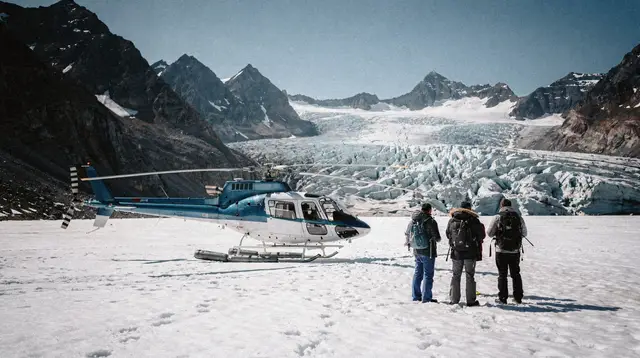
For a wide view over the whole valley while the larches are turning, a helicopter tour over Whistler and Blackcomb covers ground on a single flight that would otherwise take a full day of hiking, and it runs independently of trail conditions on the ground.
November: the quietest month, deliberately skipped by most itineraries
November falls squarely between the end of the hiking season and the start of winter, and it shows: it is consistently the quietest month of the year in the valley. Businesses run reduced hours, trails higher up are typically closing under early snow, and the resort is usually only opening for the winter season later in the month, with the exact date varying year to year.
Value-focused travellers who do not need summer trails or a fully open ski season sometimes deliberately pick November for a cheap, low-key few days — more detail in November is Whistler’s quietest month, and that’s good — but it is a poor choice for anyone expecting either headline season to be running at full strength.
A quick reference by goal
| If you want to… | Best window | Why |
|---|---|---|
| Ski or snowboard | December to March | Deepest, most consistent snowpack |
| Hike Joffre Lakes, Garibaldi Lake or the Black Tusk | Mid-July to September | Alpine trails typically snow-free only from mid-July |
| Swim in the lakes | July to early September | Only period the water is comfortably warm |
| Ride the Mountain Bike Park | July and August | Full lift-served network typically open |
| See golden larches, fewer crowds | September | Cooler, quieter, trails often still open |
| Save money, avoid crowds | April, May or November | Shoulder seasons between the two main seasons |
Building the rest of your trip around timing
Once you have picked a season, the length of your stay and the shape of your itinerary follow from it. A winter trip pairs naturally with an itinerary like Whistler winter without skiing if snow sports are not the focus, while a summer visit fits better with a family summer week in Whistler or, for committed hikers, an alpine hiking week in Whistler.
Whatever the season, packing correctly matters more here than in most destinations — see what to pack for Whistler in winter — and anyone driving up from Vancouver in winter should read driving Highway 99: what to know before setting off, since winter tyres are a legal requirement on that road from October through April.
If evenings need filling regardless of season, a ziplining experience through the forest canopy runs across most of the year and does not depend on either snow depth or trail conditions, making it one of the more reliable bookings whatever month you land on.
FAQ: choosing when to visit Whistler
What is the single best month to visit Whistler?
There is no single best month, because winter and summer reward completely different plans. February is the classic peak-winter month for reliable snow and full village energy. August is the classic peak-summer month for warm lakes, open alpine trails and the biggest festival, Crankworx.
When do the alpine hiking trails open around Whistler?
Most years the high trails, including Garibaldi Lake, Panorama Ridge, the Black Tusk and Joffre Lakes, only become snow-free and safely walkable from around mid-July onward. Snowpack varies a lot year to year, so always check current trail conditions before committing to a long alpine day.
When can you swim in the lakes at Whistler?
Alta Lake, Lost Lake and Green Lake are generally warm enough for a comfortable swim from July to early September. Outside that window the water is very cold even on a hot, sunny day.
Is Whistler quieter in spring or fall?
Both shoulder seasons are quieter than winter or midsummer, but for different reasons. April and May sit between ski season and hiking season, with some businesses closed. September and October bring cooler nights, golden larches and noticeably thinner crowds while many trails are still open.
Is November a good time to visit Whistler?
November is the quietest month of the year in Whistler, sitting between the end of the hiking season and the start of winter. It is a good time for value and calm, but a poor time to count on either open alpine trails or reliable snow, since the resort is typically only opening for the season later in the month.
Do I need to book alpine trail permits in advance?
For Garibaldi Provincial Park and Joffre Lakes Provincial Park, BC Parks requires a free day-use pass in high season, booked online ahead of time. Joffre Lakes has also closed for extended periods in recent years, so checking the official BC Parks page before driving out is essential, whatever month you plan to go.
What is the weather like in Whistler in summer versus winter?
Winter, roughly December to March, brings heavy snow at the resort and often rain at valley level near the coast, with cold, shorter days. Summer, June to August, is mild and mostly dry, with long daylight hours that make full alpine days possible.
Trip-planning essentials on GetYourGuide
Verified deep-linked GetYourGuide tours. Book through these links and we earn a small commission at no cost to you.
GetYourGuide does not provide a product photo for this activity — the image shows the meeting point, photographed by us.