Whistler in Summer or Winter: Which Season Should You Choose?
Should I visit Whistler in summer or winter?
Winter, from December to March, is Whistler at its busiest and most expensive, built entirely around deep snow on Whistler Blackcomb. Summer, from July to early September, is a full season in its own right, with the PEAK 2 PEAK Gondola opening alpine hiking on trails like High Note and lakes warm enough to swim. Neither season is a lesser version of the other; the right pick depends on what you actually want to do.
Two Different Resorts on the Same Mountains
Ask ten people whether Whistler is a winter place or a summer place and most will answer “winter” without thinking twice. That answer is not wrong, but it is incomplete. Whistler Blackcomb sells lift tickets and gondola rides in both seasons, and each one supports a genuinely different trip: different terrain, different crowds, different clothes in your bag, and a different bill at the end of it. Deciding between them is less about which season is “better” and more about matching the season to what you actually want to do at Whistler Blackcomb.
This guide sets the two seasons side by side on the points that actually change a trip: snow and terrain, what the PEAK 2 PEAK Gondola opens up once the skis come off, when the lakes are actually swimmable, crowd levels, and cost. It does not cover the exact calendar dates when lifts open and close each year — that changes annually and lives on its own page — and it is not a technical comparison of skiing Whistler Mountain versus Blackcomb Mountain, which is also covered elsewhere. Consider this the season-level decision that comes before either of those questions.
Deep Winter: December to March
Deep winter is Whistler’s headline season, and for good reason. From roughly December through March, snow covers the valley floor as well as the alpine, and Whistler Blackcomb runs at full capacity across its full terrain — the largest ski area in North America by skiable acreage, spread over two mountains and three glaciers. Everything the resort is famous for is built for this window: groomed runs down to the village, deep alpine bowls above the treeline, night skiing on lit runs, and a village that fills every restaurant and bar the moment the lifts close.
It is also the busiest and most expensive stretch of the year. Rooms in Whistler Village book out well in advance for the December holidays and February school breaks, lift-ticket-equivalent prices sit at their highest, and Highway 99 demands winter tires or chains by law from 1 October to 30 April — a real planning point, not a formality, since the road closes for rockfall or snow several times most winters. None of that is a reason to skip winter; it is simply the trade-off for skiing and riding the terrain the resort is built around.
Winter is also when Whistler leans hardest on its Olympic history. The alpine runs at Whistler Creekside and the Nordic trails at Whistler Olympic Park in the Callaghan Valley both hosted events at the 2010 Winter Olympics, and both are still open to the public, alongside public bobsleigh and skeleton runs at the Whistler Sliding Centre. A private summer bobsleigh experience on the Olympic track exists too, which is a small clue that Whistler’s Olympic venues are not strictly seasonal either — but the ski and snowboard terrain absolutely is, and that terrain is winter’s whole argument.
For visitors who want the postcard version of Whistler — snow to the door, PEAK 2 PEAK cabins gliding over a white valley, a hot tub after a day on Whistler Mountain — deep winter delivers it more completely than any other window. A guided small-group winter sightseeing tour is a low-commitment way to see the resort at its snowiest without renting gear or booking lift tickets at all.
The Case for Summer: A Full Season, Not a Consolation Prize
Here is the trap worth naming directly: treating summer as the off-season, a quiet gap to visit only if winter does not work with your schedule. That framing gets Whistler backwards. Summer is a complete, self-contained season with its own terrain, its own festival calendar and its own reasons to plan around it — not a smaller version of winter with the snow removed.
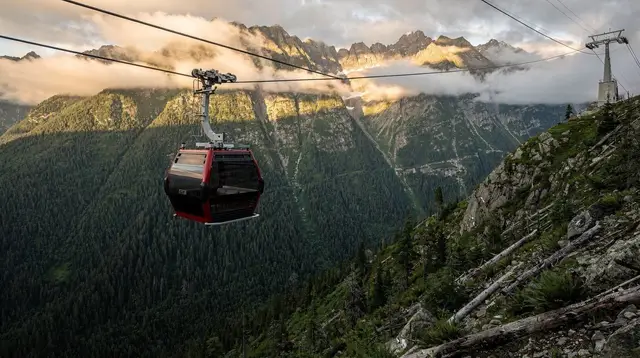
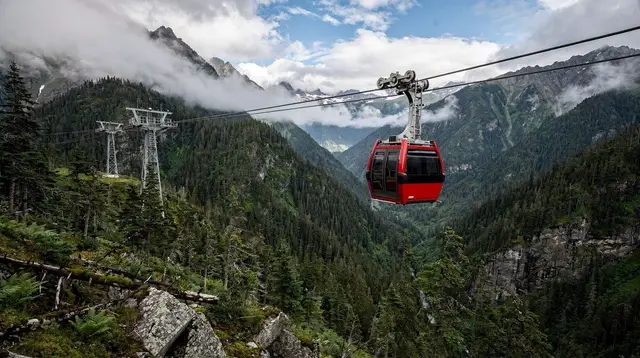
The single biggest difference is what the mountains offer once the snow melts off the alpine trails, usually by mid-July. The PEAK 2 PEAK Gondola, which links Whistler Mountain and Blackcomb Mountain in eleven minutes over a valley floor 436 metres below, keeps running through summer — not as ski transport but as trail access.
It puts hikers onto the alpine in minutes rather than after a multi-hour climb, opening routes like the High Note trail, Half Note and the Harmony Lake area with sweeping views back over Cheakamus Lake and the coastal peaks. A guided wilderness hike into this alpine terrain is the easiest way to do it properly with a local who knows the current trail conditions.
Below the gondola, the Whistler Mountain Bike Park is the reference lift-served downhill park in the world, open since 1999, with graded trails running from beginner-friendly green runs to the legendary A-Line. This is not a niche activity tacked onto summer; it is one of the resort’s core commercial engines in July and August, filling lifts, lodges and bike shops the same way ski season fills them in winter.
Then there is the water. Alta Lake, Lost Lake, Green Lake and Alpha Lake are all warm enough to swim in from roughly July to early September — a genuinely different Whistler than the one most visitors picture, with paddleboards and canoes on the water and beach towels laid out at Lost Lake’s swim area. The River of Golden Dreams, the easy paddle between Alta Lake and Green Lake, only makes sense as a summer activity; it is frozen or irrelevant the rest of the year.
August adds Crankworx, the mountain biking festival that takes over the village for competitions, demos and free public events, and turns Whistler’s summer peak into something closer to a carnival than a quiet trail town. Anyone planning a summer trip around a relaxed, empty village should check the Crankworx dates first, because that week behaves more like a winter holiday weekend than a typical August day.
Above the treeline and off the lift network entirely, summer is also when the serious alpine hikes of Garibaldi Provincial Park and Joffre Lakes Provincial Park become possible at all — these are snow-covered and effectively closed the rest of the year. None of that terrain is casual, and none of it belongs in a same-day plan built around a Whistler village stay, but it is squarely part of why summer at Whistler deserves to be judged on its own terms rather than as winter’s understudy.
Month by Month, in Brief
| Window | What it feels like | Best for |
|---|---|---|
| December – March | Deep winter, snow to the valley floor, busiest and most expensive | Skiing, snowboarding, the full winter village atmosphere |
| April – May | Spring skiing on Blackcomb, quieter village, some closures between seasons | Value skiing, fewer crowds, flexible plans |
| June | Alpine trails still snow-patched, valley trails and lakes opening up | Early summer without peak crowds |
| July – August | Alpine trails open, bike park at full speed, lakes swimmable, Crankworx in August | Hiking, mountain biking, swimming, festival energy |
| September – October | Golden larches, cooler nights, fewer visitors, bears feeding before winter | Quiet hiking, photography, wildlife watching |
| November | The quietest month of the year, between seasons | Budget travel, off-season calm, not much open on the mountain |
This table intentionally avoids exact lift opening and closing dates, since those move every year — see the dedicated page on when the ski season opens and closes for the current picture before booking.
Crowds and Cost
Crowd patterns roughly mirror the terrain calendar. Deep winter and the August Crankworx week are Whistler’s two busiest stretches, with lodging booked out and lift-ticket-equivalent prices at their annual peak. Late June, September and especially November sit at the other end: quieter streets, easier restaurant tables, and noticeably lower prices — though also a shorter list of open activities, since some operators pause between seasons.
Anyone weighing how much a Whistler trip costs will find that winter’s ski-day maths — lift tickets, rentals, ski school — has no direct summer equivalent; summer spending instead concentrates on activities like biking, hiking tours, ziplines and gondola access. A helicopter tour over Whistler Blackcomb runs in both seasons and is one of the few experiences that looks dramatically different depending on whether the peaks below are white or green.
Shoulder Seasons: The Honest Middle Ground
Between the two headline seasons sit April–May and late September–October, and neither should be dismissed as dead time. Spring on Blackcomb keeps skiable snow well after Whistler Mountain’s season winds down, at a fraction of peak-season prices and with almost none of the crowds. Autumn brings golden larches on the alpine trails, cool clear days, and the last good bear-viewing window of the year before hibernation. November, by contrast, is genuinely the quietest month — a good pick for budget travel and a slow pace, but a poor one for anyone expecting either deep snow or open alpine trails.
Matching the Season to the Trip
For a first-time visitor whose main goal is skiing or snowboarding on Whistler Blackcomb’s full terrain, deep winter is not really a choice — it is the season the trip is built around, snow tires and all. For a family with young children, or anyone drawn to hiking, mountain biking or lake days rather than lift lines, summer — particularly July into early September — usually suits better, with lower stakes if plans change and no need to rent winter gear. Adventure travellers chasing an adrenaline day can find it either way: a zipline experience through the forest canopy runs through the warmer months, while winter answers with deep-snow sightseeing and Nordic terrain instead.
Whoever is deciding, the same principle holds: winter and summer are not the same trip with the weather changed, they are two different reasons to come to the Sea to Sky corridor. Picking between a multi-day winter itinerary and a summer week built for families is a better starting question than asking which season is objectively best — because for Whistler Blackcomb, there genuinely isn’t one.
Whistler Summer vs Winter: Common Questions
Is Whistler better in summer or winter?
Neither is objectively better; they are different resorts sharing the same mountains. Winter delivers deep snow, ski and snowboard terrain, and the busiest village atmosphere. Summer delivers alpine hiking, mountain biking, warm lakes, and a quieter, cheaper valley outside of August festival weekends.
What months count as deep winter in Whistler?
December through March is deep winter, when snow reliably covers the valley floor and the resort runs at full capacity. This guide does not cover exact lift opening and closing dates, which shift year to year.
Can you swim in the lakes at Whistler?
Yes. Alta Lake, Lost Lake, Green Lake and Alpha Lake are warm enough for swimming from roughly July to early September, with Lost Lake the most popular spot thanks to its sandy beach and lifeguard-watched swim area.
Is summer a quiet season in Whistler?
Only in June and parts of September. July and August are busy, with the Whistler Mountain Bike Park running full days of lift-served riding and Crankworx filling the village every August with competitions and free public events.
What can you do on the PEAK 2 PEAK Gondola in summer?
In summer the gondola runs as sightseeing and trail access rather than ski transport, connecting Whistler Mountain and Blackcomb Mountain and putting hikers onto alpine trails such as High Note, Half Note and the Harmony Lake area without a long climb on foot.
Is Whistler cheaper in summer than winter?
Generally yes, outside of Crankworx week. Lift-ticket-equivalent sightseeing passes, lodging and restaurant demand all ease once the snow melts, though July and August weekends still fill up and should be booked ahead.
Which season is better for a family trip to Whistler?
Summer tends to suit families with young children better, since valley trails, lake beaches and the gondola sightseeing rides ask less of small legs than a ski day, and there is no need to rent winter gear.
Do black bears affect the choice between summer and winter?
Bears are a summer and shoulder-season consideration, most active in the valley between May and October, including around ski runs, the village edge and Highway 99. Guided viewing tours run on the mountain in that window.
Seasonal experiences on GetYourGuide
Verified deep-linked GetYourGuide tours. Book through these links and we earn a small commission at no cost to you.
GetYourGuide does not provide a product photo for this activity — the image shows the meeting point, photographed by us.