When Do Whistler Lifts Open and Close?
When do the lifts run at Whistler Blackcomb?
Whistler Mountain's lifts usually operate from late November to late April, and Blackcomb Mountain stays open into late May because of its glaciers. The PEAK 2 PEAK Gondola linking the two runs in both winter and summer. Exact opening and closing dates depend on snowfall and change every year, so always confirm on the resort's own snow report before booking.
The Short Answer, and Why It Isn’t a Fixed Date
Whistler Blackcomb runs two mountains and one connecting gondola, and each has its own rhythm. Whistler Mountain typically operates from late November to late April. Blackcomb Mountain usually keeps going into late May, courtesy of the glacier terrain near its summit, which holds snow longer than anything on Whistler Mountain. The PEAK 2 PEAK Gondola connecting the two sits outside that whole calendar: it runs in both winter and summer, which makes it the one lift a visitor can plan around with real confidence.
None of those windows are promises. Whistler Blackcomb sets its exact opening and closing dates each year based on how much snow has actually fallen and how it has settled on the terrain, and those calls are made close to the date, not months in advance. A light snow year can push the opening back by a week or two. A deep one can extend Blackcomb’s glacier skiing further into June. Treat every date on this page as a typical pattern to plan a trip around, then confirm the real dates on the resort’s own snow report before you book flights, lodging or a lift pass.
Whistler Mountain: Late November to Late April
Whistler Mountain is the lower-elevation half of the resort in ski terms, even though its summit sits at roughly 2,182 m. Its lifts generally start turning in the last week of November and keep running through the last week of April, which covers the core five-month ski season most visitors plan for. Early in that window — the first two or three weeks — expect a limited number of lifts and runs open, mostly on the upper mountain where snow coverage builds first. The rest of the terrain comes online through December as more snow falls and grooming catches up.
By January and February, snowfall on Whistler Mountain has usually built a base deep enough that almost the full lift network and trail map are open, which is also when the Whistler Mountain Bike Park sits buried and closed for the season — the same lifts that carry bikers in summer carry skiers in winter, on the same fixed schedule of one season at a time. Late March and April bring spring skiing conditions: warmer days, softer snow, and a gradual reduction in operating lifts as the lower-elevation runs lose coverage first.
Blackcomb Mountain: The Glacier Adds a Month
Blackcomb Mountain follows the same opening pattern as its neighbour in late November, but it closes later — typically in late May rather than late April. The reason is elevation and geology rather than marketing: Blackcomb’s summit terrain sits above 2,280 m and includes glacier ice that holds snow through spring long after the lower slopes on Whistler Mountain have gone bare. That glacier terrain is what lets Whistler Blackcomb bill itself as having one of the longest ski seasons in North America.
In practice, this means the last few weeks of the season — through May — are Blackcomb-only, with a small number of lifts serving glacier and upper-mountain runs while the rest of the resort has already shut down for the year. It is a real skiing option for visitors chasing a late-season trip, but it comes with fewer open runs, warmer daytime temperatures, and a schedule that can end earlier than usual in a low-snow year. If a late-May ski day is the whole point of a trip, verify that Blackcomb’s glacier lifts are still confirmed open before travelling.
The PEAK 2 PEAK Gondola: The One Lift That Runs All Year
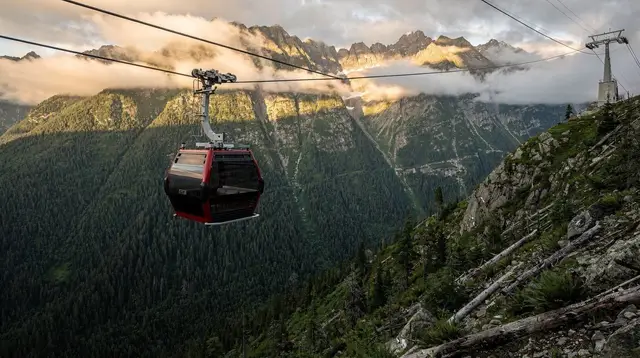
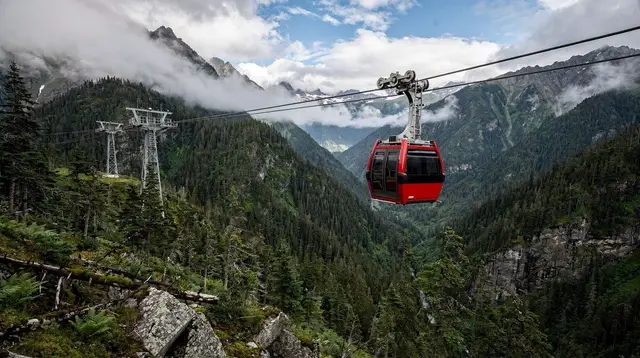
The PEAK 2 PEAK Gondola, which opened in December 2008, is the exception to every seasonal rule on this page. It links Whistler Mountain and Blackcomb Mountain across roughly 4.4 km, with an unsupported span of about 3 km between its two towers and cabins running as high as 436 m above the valley floor — an 11-minute ride end to end. Unlike the chairlifts and gondolas that serve ski terrain, PEAK 2 PEAK is built and staffed for year-round sightseeing as well as ski access, so it keeps operating through the summer months after the ski lifts on both mountains have shut down.
That makes it a dependable fixture whether a trip lands in January or July. In winter it moves skiers between the two mountains without a trip back down to the village. In summer it becomes the access point for the alpine hiking network above the treeline, including the High Note and Half Note trails, and it is worth riding purely for the view even without a hike attached. Anyone weighing it against the newer cable car in Squamish should note they serve different purposes — see the comparison of PEAK 2 PEAK against the Sea to Sky Gondola for how the two actually differ.
A Season at a Glance
| Period | Whistler Mountain | Blackcomb Mountain | PEAK 2 PEAK Gondola |
|---|---|---|---|
| Late November | Opens (limited terrain) | Opens (limited terrain) | Running |
| December–February | Full operation | Full operation | Running |
| March–Late April | Spring skiing, gradual reductions | Full to late-season operation | Running |
| Late April–Late May | Typically closed | Glacier terrain only | Running |
| June–October | Closed for ski season | Closed for ski season | Running (sightseeing) |
| November (early) | Not yet open | Not yet open | Running (limited winter prep) |
This table shows typical patterns built from recent seasons, not a fixed calendar. Every row can shift by a week or more depending on snowfall, and the resort is the only source that confirms dates for the season you are actually booking.
Why Whistler Blackcomb Never Commits to a Calendar Date
Whistler Blackcomb sits in a coastal mountain range that gets an average of around 11 m of snow a year on its upper slopes, but “average” hides a lot of year-to-year swing. A season that starts with a heavy November storm cycle can open a week early with strong coverage. A dry autumn can delay opening, or force the resort to open with fewer lifts and thinner terrain than usual. The same logic applies in reverse at closing: a cold, snowy spring extends the season, while an early heat wave can shorten it, especially on Whistler Mountain’s lower-elevation runs.
This is also why Whistler Blackcomb is deliberately vague in its own marketing about exact calendar dates until a season is close. If you are planning around a fixed date — a trip booked months out for early December or late May — build in the possibility that lift operations have not started yet, or have already wound down, and have a backup plan. Early and late-season visitors who are flexible on dates, or who are coming primarily for non-ski activities, have far more room to absorb that uncertainty than someone flying in for a single ski day.
What Fills the Gaps Around the Ski Season
The weeks just before the winter season opens and just after it closes are quiet in the village, but they are not empty. This is when a helicopter tour over the glaciers and alpine terrain gives a different kind of access to the mountains that doesn’t depend on lift operating hours — a scenic helicopter flight over Whistler Blackcomb covers ground the lift network can’t reach at all, glacier terrain included, regardless of the calendar.
For visitors on the ground, forest-floor activities keep running through the shoulder weeks too: a zipline run through the forest canopy near the village and a guided wilderness hike on the valley trails both operate independently of whether the ski lifts are turning. Evenings fill a similar gap: the Vallea Lumina night walk through the forest runs on its own schedule and works equally well as an activity on a ski trip or on a shoulder-season visit when the lifts are between seasons.
For hikers, the alpine trails accessed from the PEAK 2 PEAK side of the mountain, along with routes like Garibaldi Lake and Panorama Ridge, typically only open once the snow has cleared in summer — well after the ski lifts have shut down for the year, not immediately after. Anyone planning a summer alpine hike should check trail conditions separately from the ski season dates on this page.
Where to Check Before You Book
Because the dates shift every year, the single most useful step before booking flights, a lift pass, or lodging around either end of the season is to check Whistler Blackcomb’s own snow report and season calendar directly. It is updated more frequently and more reliably than any third-party article, including this one. The same caution applies to nearby alpine areas that depend on snow clearing rather than a resort’s operating schedule, such as Joffre Lakes and Garibaldi Provincial Park, both of which the BC Parks system opens and closes on its own separate timeline tied to trail conditions and access agreements, not to the ski season.
Travellers building a longer trip around the shoulder seasons may also find it useful to compare Whistler Mountain against Blackcomb Mountain for which side tends to hold usable terrain longer in a given year, and to look at how Whistler Blackcomb’s terrain and glaciers are laid out before deciding which end of the season best suits a trip. Pass pricing and ticket options are a separate question from timing and are covered in the guide to Epic Pass and lift ticket pricing at Whistler Blackcomb.
Frequently Asked Questions About the Whistler Blackcomb Lift Season
What are the typical opening and closing dates for Whistler Blackcomb?
Whistler Mountain typically opens in late November and closes in late April. Blackcomb Mountain, helped by its glaciers, usually stretches into late May. These are typical windows, not guaranteed dates — the resort adjusts them every season based on snowfall and terrain conditions.
Does the PEAK 2 PEAK Gondola run all year?
Yes. The PEAK 2 PEAK Gondola operates in both winter and summer, which makes it the one lift on the mountain that a visitor can count on regardless of the ski season’s exact dates. In summer it also becomes the access point for alpine hiking trails.
Why does Blackcomb stay open later than Whistler Mountain?
Blackcomb Mountain has glacier terrain at higher elevation, which holds snow longer into spring than the runs on Whistler Mountain. That extra few weeks of skiable snow is why Blackcomb’s closing date typically runs into late May while Whistler Mountain closes in late April.
Can I ski at Whistler in early November or in June?
Not usually. Early November falls before the season opens on either mountain, and June is normally after Blackcomb has closed for the summer. A handful of exceptionally snowy years have pushed dates slightly earlier or later, but neither should be assumed or booked around.
Where can I check this year’s exact lift opening and closing dates?
Check Whistler Blackcomb’s own snow report and season calendar shortly before your trip, not a date printed in an article or blog post. Snowfall varies enough from year to year that the resort itself only confirms firm dates a few weeks out.
Are all lifts open on the first and last days of the season?
No. Whistler Blackcomb typically opens with a limited number of lifts and runs on higher terrain, then adds more as snow coverage builds. The same happens in reverse at the end of the season, when lower-elevation lifts close first and only the glacier terrain on Blackcomb keeps running.
Does the mountain close completely between winter and summer seasons?
There is a short gap, typically in late spring, between the end of ski lift operations and the start of the sightseeing and hiking lift schedule, and dates vary each year. The PEAK 2 PEAK Gondola is the exception, since it is built for year-round use and bridges that gap.
Seasonal experiences on GetYourGuide
Verified deep-linked GetYourGuide tours. Book through these links and we earn a small commission at no cost to you.
GetYourGuide does not provide a product photo for this activity — the image shows the meeting point, photographed by us.