Best Time to See Black Bears in Whistler
When is the best time to see black bears in Whistler?
Black bears are seen most often between May and October, on ski runs, around the village edges and along Highway 99. The Whistler valley holds an established population of roughly 50 bears, and sightings peak in September and October, when bears feed intensively before winter denning.
When Are Black Bears Most Active in Whistler?
Ask anyone who works a lift in Whistler through the summer and they will give you roughly the same answer: bears are a May-to-October story, not a year-round one. The Resort Municipality of Whistler sits inside an unusually rich patch of coastal forest, and it supports an established population of black bears commonly estimated at around 50 animals living in and around the valley. They are not a rare, lucky spot here the way they might be elsewhere — they are a normal, expected part of the landscape for half the year, seen on ski runs, along forest edges near Whistler Village, and repeatedly along Highway 99.
What changes through the season is not whether bears are present, but how visible and how food-driven they are. Understanding that curve is the difference between a trip where you see two or three bears without trying and one where you never spot a single track.
This guide covers timing only: when sightings cluster, why, and where within the valley they tend to happen. It does not cover the mechanics of booking a guided bear-viewing outing — that lives in its own dedicated category — and it is not a safety manual for encounters. Treat any bear you see, at any distance, as a wild animal: never approach it, never feed it, and never block its path or its route away from you.
Month by Month: Reading the Bear Calendar
Bear activity in the Sea to Sky corridor follows the plant calendar more than the calendar on the wall, so exact dates shift a little year to year with snowpack and berry timing. The pattern below is a reliable planning guide, not a guarantee for any specific week.
| Period | Bear activity | What’s driving it |
|---|---|---|
| November – April | Dormant, dens up | Cold, snow cover, no food; most bears are denning |
| Late April – May | Bears emerge, activity low to moderate | Bears leave dens hungry, forage early greens at lower elevation |
| June – July | Activity builds | Green vegetation, early berries, more daylight foraging |
| August | Steady, visible activity | Berries ripening on valley slopes and trailsides |
| September – October | Peak activity, most sightings | Hyperphagia — bears feed intensively to build fat before denning |
| Late October – early November | Activity tapers off fast | First hard frosts, bears moving toward den sites |
The September–October peak is worth underlining on its own, because it is the single best-documented window for sightings in Whistler. This is the period of hyperphagia, the biological drive that pushes bears to eat for nearly every waking hour ahead of winter dormancy. Bears that were cautious and elusive in June become far more visible in September simply because they are spending so much more time out in the open, feeding.
Where Bears Turn Up
Three places account for most reported sightings in the valley, and each has a slightly different rhythm.
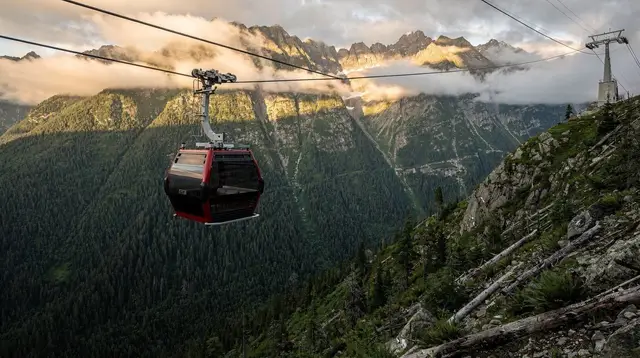
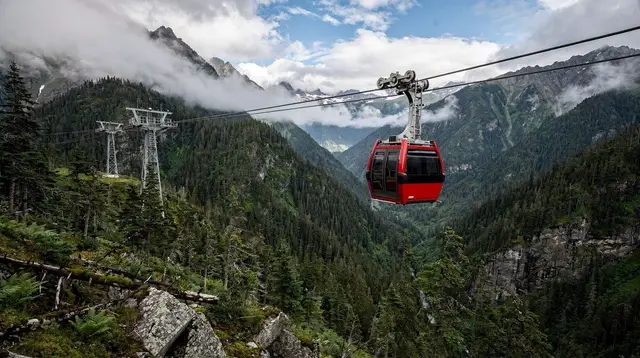
Ski runs and mountain slopes. Cleared runs on Whistler Blackcomb green up earlier than the surrounding forest and grow the kind of low vegetation bears favor, which makes the open runs on both Whistler Mountain and Blackcomb Mountain reliable feeding ground from late spring through autumn. Riders on the PEAK 2 PEAK Gondola in summer regularly spot bears grazing the slopes below.
Highway 99 and its shoulders. The Sea to Sky Highway cuts directly through bear habitat, and roadside vegetation along the corridor between Whistler and Squamish draws bears close to the road edge, especially at dawn and dusk. Slow down through forested stretches in summer and autumn; a bear at the shoulder is one of the more common wildlife encounters visitors report on the drive itself. If you are behind the wheel, keep both eyes on the road first — a bear jam is a real hazard for the other direction of traffic too.
Village and trail edges. Bears move along the forested margins around Whistler Village and cross popular walking routes such as the Train Wreck Trail and the paths around Lost Lake, particularly once berries ripen in late summer. Sightings inside the pedestrian core itself are less common than on the runs or the highway, but they do happen, which is why bear-proof bins are standard equipment on every corner of the village.
The Callaghan Valley, home to Whistler Olympic Park, sits in the same forest belt and sees a similar pattern, generally a few weeks behind the main valley depending on elevation and snowmelt.
Why September and October Stand Out
The short explanation is caloric math. A black bear needs to roughly double its body fat before denning, and it has one growing season to do it in. Once the days start shortening in late August, feeding stops being opportunistic and becomes close to constant: bears will feed for 20 hours a day when food is abundant, at almost any hour, in almost any weather. That is why guides and locals alike point first-time visitors toward September and October rather than the technically-longer May-to-October window as a whole — the odds per day out are simply higher in early autumn than in early summer.
It is also, conveniently, one of the nicer times to be outdoors in the valley: cooler nights, thinner crowds than peak summer, and the added bonus of turning larch and alpine color at elevation. A hiking day on trails near Ancient Cedars or lower forest loops in this window often delivers both good color and a reasonable chance of a distant, respectful bear sighting.
What About Grizzlies?
It needs saying plainly, because it is the single most common misunderstanding visitors bring to this question: grizzly bears are extremely rare in the Whistler and Sea to Sky corridor. The animal you are realistically going to see here, in the village, on the runs, or along the highway, is a black bear. Do not plan a trip, or set expectations for a group, around seeing a grizzly — it would be an exceptional and highly unusual event, not something any operator or guide can promise, and no legitimate tour markets itself on grizzly sightings in this specific area.
Seeing Bears Without a Dedicated Tour
Booking a guided bear-viewing outing is its own subject with its own considerations — for a full look at how those tours work and when to book one, see Whistler bear-viewing tours: when to go and the dedicated bear-viewing and wildlife activities page. But plenty of visitors see bears simply while doing something else during peak season, and a few activities put you in bear country more than others without being wildlife tours themselves.
A morning safari-style outing such as the Land Rover scenic excursion into bear habitat is built around exactly this early-morning window, when feeding activity is highest and light is best for spotting animals at a safe distance. A guided walking route through the forest, like the guided wilderness hike, moves through the same berry-rich understory bears favor in late summer and autumn, with a guide reading the terrain for fresh sign along the way.
For a different vantage entirely, an aerial pass such as the Whistler Blackcomb helicopter tour occasionally turns up bears grazing open alpine meadows and cleared runs far below, visible in a way that is impossible from the ground. And treetop routes like the ziplining experience run through the same forest corridors bears use to move between feeding areas, so guides on these lines are typically well versed in reading recent activity even though the outing itself is not framed as wildlife viewing.
None of these activities guarantee a sighting — nothing in the wild does — but running them during the September-October window meaningfully improves the odds over a random summer afternoon.
Winter: Where Do the Bears Go?
From roughly November through April, the bear question effectively answers itself: they are denned. Most of Whistler’s black bears enter dormancy as the first hard frosts and consistent snow cover set in, and they stay there through the ski season, living off the fat reserves built during that September-October feeding push. This is one of the clean, useful trade-offs of the valley’s two seasons — winter visitors get the mountains without the bears, while the reverse is true from late spring into fall.
If wildlife is your priority and skiing is not, planning around the best time to visit Whistler for warm-season travel, or reading how the summer versus winter trade-off plays out more broadly, will help set the right expectations before you book.
One near-opposite case worth knowing: the valley’s other headline wildlife season runs in deep winter, when bald eagles gather in large numbers at Brackendale to feed on salmon runs. It is a good pairing to keep in mind if a trip spans both edges of the calendar — see eagle watching in Brackendale for that season’s own timing.
Practical Notes for Timing a Visit
A few points worth carrying into trip planning, beyond the calendar itself:
- Weather years shift the calendar. A late, heavy snowpack can push spring emergence and early-summer activity back by two to three weeks; a warm, early spring can pull it forward. Treat the month-by-month table as a strong pattern, not a fixed schedule.
- Daylight windows matter more than the season alone. Within any given month, dawn and dusk carry higher activity than midday, though September’s hyperphagia period is the exception that brings meaningful daytime feeding too.
- Highway driving in bear season deserves a bit more attention. If you are self-driving the Sea to Sky Highway between Vancouver and Whistler in summer or autumn, budget for the possibility of slowing for wildlife at the roadside, and never stop in a travel lane to look — pull fully off if you want to watch.
- A single sighting is common; a guaranteed one is not. Even in the peak window, no operator, guide or trail can promise a bear. Treat any encounter, guided or not, as a bonus rather than the trip’s centerpiece.
- Keep distance the default, always. Never approach, feed or crowd a bear, and never position yourself between an adult and anything it is guarding, whether that is food, a den site or a cub. If a bear changes its behavior because of you — stops feeding, stares, moves toward you — you are already too close.
Best Time to See Black Bears in Whistler: FAQ
When are black bears most active around Whistler?
Bears are visible from roughly May through October, with the busiest sighting window in September and October, when they feed heavily to build fat reserves before denning for winter.
How many black bears live in the Whistler area?
Local estimates commonly put the population in and around the resort at roughly 50 black bears, though the exact number shifts year to year with food availability and range.
Are there grizzly bears in Whistler?
Grizzly bears are extremely rare in the Whistler and Sea to Sky corridor. Only black bears are a realistic, regular sighting here, so do not plan a trip around seeing a grizzly.
Can you see bears in Whistler Village itself?
Yes. Bears occasionally move along the forested edges of the village and cross nearby trails, especially in berry season, though the pedestrian core sees far fewer bears than the ski runs and Highway 99 corridor.
Do bears disappear from Whistler in winter?
Most black bears den and become inactive from roughly November through April, which is why sightings drop to almost nothing during the ski season and pick up again once snow starts melting.
What time of day are bears most often seen?
Black bears are generally most active at dawn, dusk and overnight, though in a quiet, food-rich valley like Whistler’s they are also regularly seen feeding in daylight, particularly in early morning.
Is a summer visit to Whistler more likely to include a bear sighting than a winter one?
Yes, by a wide margin. Bears are dormant through the ski season, so a summer or early-autumn trip carries a far higher chance of a sighting than a December-to-April visit.
Seasonal experiences on GetYourGuide
Verified deep-linked GetYourGuide tours. Book through these links and we earn a small commission at no cost to you.
GetYourGuide does not provide a product photo for this activity — the image shows the meeting point, photographed by us.