Whistler Twilight Snowmobile and Axe Throwing: What to Expect
What is a twilight snowmobile and axe throwing tour in Whistler?
It is a single winter package that pairs a guided snowmobile ride starting at dusk with an axe throwing session, usually at a base lodge before or after the ride. It runs on Pacific Time in the short daylight months and does not include bear or wildlife viewing, since Whistler's bears are active from roughly May to October, not in winter.
A winter evening built around two activities, not one
A twilight snowmobile and axe throwing tour is a packaged product, not two things you book separately. Operators in Whistler sell it as a single winter outing: a guided snowmobile ride timed to start as the light fades, combined with a session throwing axes at a wooden target, usually at the same base lodge where the sleds are parked. The two halves are bundled for a reason — winter days in the Sea to Sky corridor are short, and pairing a ride in the dark with an indoor or covered activity fills an evening slot that a straight daytime tour cannot.
This page covers that specific combination. If you are only interested in axe throwing on its own, without a snowmobile attached, that is covered on the separate guide to rainy-day adventure activities in Whistler, where axe throwing sits alongside other indoor options for a wet or snowed-out afternoon. If you are set on snowmobiling but do not care about axe throwing, a standard backcountry snowmobile tour or beginner snowmobile tour will get you onto the trails without the add-on.
What actually happens, in order
Most twilight snowmobile and axe throwing packages follow a similar shape, though the order can vary by operator:
- Check-in at a staging area, usually a short shuttle or drive from Whistler Village, where you are fitted for a snowmobile suit, boots, gloves and a helmet.
- A safety briefing and practice run on flat ground before the group heads out, covering throttle, brake and basic turning.
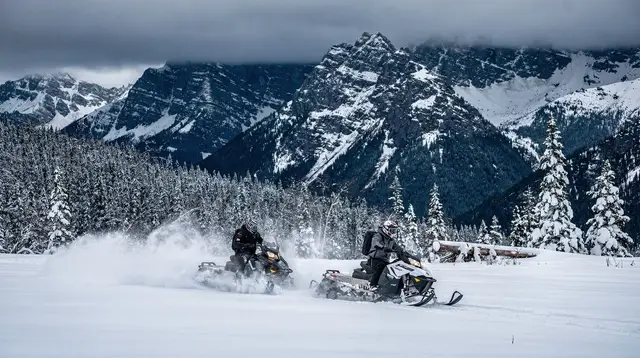
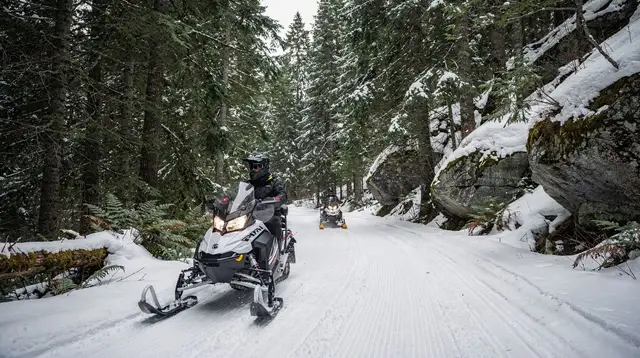
- The snowmobile ride itself, on groomed backcountry trails, starting in daylight or at dusk and continuing as darkness falls, with headlights doing the work for the second half of the route.
- The axe throwing session, typically at the base lodge, either before the ride as a warm-up activity or afterwards as a way to warm up and unwind once the machines are parked.
- Return transport back to the village, with the whole package usually running two and a half to three hours door to door.
The axe throwing portion is instructor-led: a target, a few practice throws, then a scored round. It is not a separate booking or a separate venue visit — it happens inside the same tour window, with the same guide group.
Timing: why “twilight” means something different in winter
Whistler runs on Pacific Time, and the corridor’s winter daylight is short. Sunset in December falls as early as roughly 4:15 pm, and civil twilight is gone well before 5:30 pm. That compresses the usable daylight window for any outdoor activity and is exactly why snowmobile operators built a dusk-to-dark product around it rather than fighting the clock. A tour advertised as departing mid-afternoon in winter is not starting late — it is timed so the ride crosses from daylight into headlamp-lit trail riding, which is the point of calling it a twilight tour rather than a daytime one.
Because start times are pegged to sunset rather than a fixed clock hour, they shift through the season. Check the exact departure time on the booking page rather than assuming it matches what you rode on a different date. For a broader read on how the season’s daylight and conditions change month to month, the guide on best time to visit Whistler lays out the pattern across the whole winter.
What this tour is not: no bears, no wildlife
This is the point worth being blunt about. Whistler’s black bear population is active roughly from May to October and dens through the winter months. A tour that runs in December, January or February on a snowmobile at dusk is not going to include a bear sighting, because there are no active bears to see. Guided bear-viewing tours are a real, popular product in Whistler, but they run in spring and summer, on the mountain, not in winter on snowmobiles.
If a listing, a photo, or a conversation with a booking agent implies wildlife will be part of a winter snowmobile package, treat that as marketing rather than a realistic expectation. The honest sell for a twilight snowmobile and axe throwing tour is the ride itself — fresh snow, backcombing trails, the transition from daylight to dark — plus the axe throwing as a warm, social finish. For the actual bear season, see the guide to the best time to see black bears in Whistler and plan that trip separately, in the warmer months.
Choosing between the snowmobile products
Not every snowmobile tour in Whistler includes axe throwing, and the differences matter more than the marketing names suggest.
| Tour type | Includes axe throwing | Best for | Typical duration |
|---|---|---|---|
| Beginner snowmobile with activities | Yes, on this product | First-timers, couples, groups wanting a combo evening | ~2.5-3 hours |
| Family snowmobile (ages 6-12) | Sometimes, check the listing | Parents riding with children as passengers | ~2 hours |
| Backcountry alpine snowmobile | No, riding only | Confident riders who want longer trails and viewpoints | ~3-4 hours |
the Whistler beginner snowmobile tour that pairs riding with an added activity is the product built for exactly this combination, and it is the one to start from if the axe throwing is a genuine draw rather than an afterthought.
Families travelling with younger children should check the family snowmobile adventure designed for kids from age six instead, since minimum ages and machine arrangements differ from the adult-focused combo tour. Riders who want more trail and less lodge time, without axe throwing, are better served by a backcountry snowmobile tour that spends more time on alpine trails.
What to wear and bring
Operators supply the bulk of cold-weather gear, but a few personal items make the evening more comfortable:
- Base layers under your own clothes — the snowmobile suit goes over what you are already wearing, so thin, warm layers work better than one bulky sweater.
- Warm, non-cotton socks, since the supplied boots fit better over a thinner sock than a thick cotton one.
- A neck gaiter or balaclava for face protection; helmets cover the head but wind at speed still finds gaps.
- Glove liners, if you run cold, worn under the supplied snowmobile gloves.
- A phone in an inside pocket, since exposed skin and touchscreens do not mix well below freezing, and battery life drops fast in the cold.
For a fuller cold-weather packing list beyond this one tour, see what to pack for Whistler in winter.
Fitness, driving and who should book
No snowmobile licence is required, and no prior riding experience is assumed — the practice run before departure covers what you need. Most tours put two people on one machine, with one person driving and the other riding behind, which is the standard setup for couples or a parent riding with an older child. Operators generally ask the driver to hold a valid driver’s licence, though the exact requirement varies by company, so confirm it at booking if it affects your group.
The ride itself is moderate in physical terms: you are seated, gripping handlebars, and absorbing some jolt on rougher sections of trail, rather than exerting continuous effort. Cold tolerance matters more than fitness. Anyone uneasy on motorised vehicles, or travelling with very young children as drivers, should look at the family-oriented snowmobile tour built around younger passengers rather than the standard adult combo product.
If a snowmobile evening is not the right fit
Not everyone wants to ride a machine after dark, and it is worth naming the alternatives rather than assuming this is the only winter evening option in Whistler Village. The Vallea Lumina night walk through the illuminated forest covers similar ground — an after-dark, guided winter experience — on foot rather than on a snowmobile, and works better for groups with mixed ages or anyone who would rather walk than ride.
For a broader comparison of what a snowed-in evening in Whistler can look like without skis, see the Whistler winter without skiing itinerary, and for the full menu of Whistler snow-machine products side by side, the snowmobiling category page lists what else is bookable beyond this one combo tour. A general roundup of what else fills an evening or a bad-weather block sits on the multi-activity day packages compared guide.
Getting there and driving conditions
Most twilight snowmobile tours meet at a staging area a short drive or shuttle from the village rather than starting in Whistler Village itself, so check your exact meeting point on the confirmation rather than assuming it is a walk from your hotel. If you are driving your own vehicle to reach Whistler for the evening, winter tyres or chains are a legal requirement on Highway 99 from 1 October to 30 April — details worth reading before the trip on the driving Highway 99 guide, since conditions on the Sea to Sky corridor can change quickly after dark in winter.
Booking notes
Twilight snowmobile and axe throwing combos sell out on peak winter dates — weekends over the December and February school-holiday windows especially — more than they do on quiet midweek evenings. Because the tour depends on daylight fading during the ride, dates close to the winter solstice give the shortest, darkest rides, while later in the season the ride starts and ends in more daylight even at the same clock time. If lift-served skiing is also on your itinerary, cross-check operating dates on the when do Whistler lifts open and close guide, since the ski season and the snowmobile season broadly overlap but are not run by the same operators or on the same schedule.
The short version
A Whistler twilight snowmobile and axe throwing tour is one bundled winter product: a guided snowmobile ride that starts as daylight fades, paired with an axe throwing session at the base lodge, run in the Pacific Time zone’s short winter days. It does not include bear or wildlife viewing — Whistler’s bears are active from May to October, not in the winter months this tour runs in — and axe throwing as a stand-alone activity, without the snowmobile, is a different booking covered on the rainy-day activities guide. Choose the beginner combo tour for the paired experience, the family product if children are riding, or a straight backcountry tour if axe throwing is not the point.
Whistler twilight snowmobile and axe throwing: frequently asked questions
Does the twilight snowmobile tour include bear or wildlife viewing?
No. Whistler’s black bears are active from roughly May to October and den through the winter, so a twilight snowmobile tour running in December, January or February will not include bear sightings. Tours that market bear viewing run in spring and summer on the mountain, not on snowmobiles at dusk.
Is axe throwing part of every snowmobile tour, or only this one?
Only tours explicitly labelled as a combo, such as a beginner or family snowmobile tour with activities, add axe throwing. A standard backcountry or alpine snowmobile tour is riding only. Axe throwing as a stand-alone activity, without a snowmobile, is covered separately on the guide to rainy-day adventure activities in Whistler.
What time does a twilight snowmobile tour start in winter?
Start times shift with sunset and are set by the operator, typically somewhere in the mid to late afternoon so the ride is underway as light fades. Whistler is on Pacific Time, and winter sunset falls as early as around 4:15 pm in December, so a 3:30 or 4:00 pm start is common.
How cold is it on a twilight snowmobile ride?
Temperatures in the Whistler backcountry after dark commonly sit well below freezing, and wind chill on a moving snowmobile adds to that. Operators supply an insulated snowmobile suit, boots, gloves and a helmet, but base layers, warm socks and anything to cover the face are worth bringing yourself.
Do I need snowmobile experience or a licence?
No licence is required and no prior experience is expected. Guides give a briefing and a practice run before the tour departs, and most tours allow two riders to share one machine, with one person driving. A valid driver’s licence is usually asked of the person driving, but not always required depending on the operator.
Can children take part in the axe throwing and snowmobile combo?
It depends on the specific tour. Family-oriented snowmobile products exist with minimum ages around six, usually as a passenger on an adult-driven sled, but axe throwing itself typically has its own minimum age set by the venue, often in the young teens. Check the age limits on the exact product before booking for children.
Is this the same as the Vallea Lumina night walk?
No. Vallea Lumina is a walking, multimedia forest experience with no snowmobile and no axe throwing. It is a gentler evening alternative worth considering if snowmobiling itself is not the draw.
Snowmobiling on GetYourGuide
Verified deep-linked GetYourGuide tours. Book through these links and we earn a small commission at no cost to you.
GetYourGuide does not provide a product photo for this activity — the image shows the meeting point, photographed by us.