A Beginner's Guide to Your First Whistler Snowmobile Tour
What should a beginner expect from a first snowmobile tour in Whistler?
A beginner snowmobile tour in Whistler is a guided, no-experience-needed ride through the Callaghan Valley near Whistler Olympic Park, usually lasting two to three hours including a full safety briefing and practice loop. Riders drive their own machine at a controlled pace behind a guide, on groomed trails through deep snow forest, with no license or prior riding needed.
Your First Time on a Snowmobile in Whistler
Whistler’s snowmobile tours get sold as one big category, but they are actually three different products aimed at three different riders. The version most first-timers should book is the beginner tour: no license-holder experience required beyond a regular driver’s license, a controlled group pace, and a route through the forested Callaghan Valley rather than exposed alpine terrain. This guide covers exactly that tour — what happens from check-in to the last stop, what to wear, what it costs to add on, and how it differs from the family and backcountry options, which each have their own dedicated guides linked below.
It helps to understand why Whistler works so well for this in the first place. The resort sits under some of the heaviest average snowfall of any major North American ski destination — on the order of 11 metres a year on the surrounding mountains — and the Whistler Olympic Park area in the Callaghan Valley was purpose-built with wide, groomed corridors for Nordic and biathlon events at the 2010 Winter Olympics. Those same corridors, plus adjoining forestry roads, are what beginner snowmobile tours use today. The result is deep, reliable snow on trails wide and groomed enough for someone who has never touched a throttle.
What a Beginner Tour Actually Includes
A typical beginner departure runs two to three hours door to door, though the riding time itself is usually closer to ninety minutes to two hours once the briefing, gearing-up and photo stops are factored in. Most operators run several departures a day through the winter season, with morning and afternoon slots and sometimes a shorter twilight option.
The standard structure looks like this:
- Pickup or check-in. Many tours include shuttle pickup from central Whistler Village hotels; others meet directly at a staging area a short drive from the village.
- Suiting up. A full snowmobile suit, boots, gloves and a helmet are fitted. Layer your own warm clothing underneath rather than relying on the suit alone.
- Safety briefing. A guide walks the group through the controls — throttle, brake, hand warmers — plus hand signals used on the trail, group spacing rules and what to do if you need to stop.
- Practice loop. Before joining the main trail, riders do a short, flat practice circuit to get comfortable with acceleration and braking at low speed.
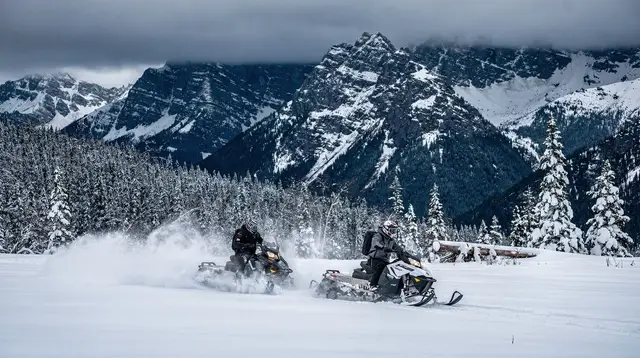
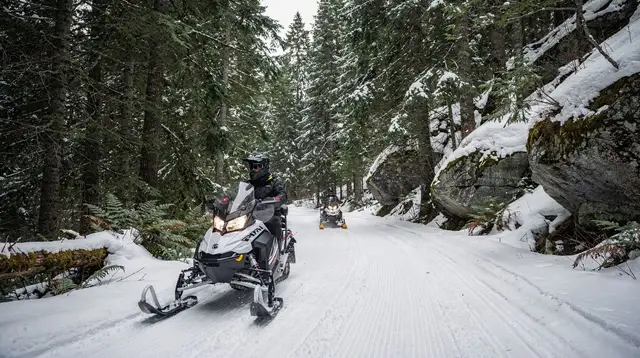
- The ride. The group rides in a single file behind the lead guide, typically at a pace comfortable for a first-timer, through forest trails in and around the Callaghan Valley, with at least one photo stop at a viewpoint.
- Return and debrief. Suits and helmets go back, and most tours end with hot chocolate or a hot drink at the staging lodge.
One detail worth checking before you book: whether the listing price is per person or per machine. Most beginner tours are priced so that two adults can share one snowmobile, with one person driving and the other riding as a passenger; solo machines, where each rider drives their own sled, usually cost more per person. If you and a travel partner are happy sharing, sharing is both cheaper and, for a genuinely nervous first-timer, often less intimidating than driving solo from the first minute.
Whistler’s standard beginner snowmobile tour with guide-led activities is the version built around exactly this structure, and it is the one to check first if this is your first time on a sled.
What to Wear (and What’s Provided)
Operators supply the bulky outer layer — a heavyweight, waterproof snowmobile suit, insulated boots, thick gloves and a full-face or open-face helmet — because renting that gear separately would be impractical for a one-time ride. What you bring underneath makes the difference between a comfortable ride and a cold one.
| Bring | Skip |
|---|---|
| Thermal base layer (top and bottom) | Cotton t-shirts or jeans |
| Mid-layer fleece or wool sweater | Your own bulky winter coat (won’t fit under the suit) |
| Warm wool or synthetic socks | Regular sneakers |
| A neck warmer, buff or balaclava | Loose scarves (can catch on machinery) |
| Sunglasses or goggles for bright days | Contact lenses without backup glasses in high wind |
| A phone in a zipped inner pocket | Anything you’re not prepared to drop in snow |
Callaghan Valley temperatures regularly sit well below freezing through the winter, and the wind chill of riding at even moderate speed adds a noticeable bite on top of that. Dress for the temperature you’d expect for a day of winter hiking, not just standing around, since the ride itself generates its own cold.
The Callaghan Valley Route
Beginner tours stay almost entirely within the Callaghan Valley system rather than climbing toward the alpine, which is the main structural difference from the backcountry product. Trails wind through snow-laden subalpine forest — thick with hemlock and fir bent under snow load — following a mix of former logging roads and the same wide corridors built for the Whistler Olympic Park Nordic venues. Guides usually pause the group at one or two open viewpoints where the valley opens up toward Whistler and the surrounding peaks; on a clear day these are the best photo stops of the tour.
Because the terrain is groomed and largely flat to rolling, the beginner route does not require the throttle control or route-finding judgment that backcountry alpine terrain does. That is by design: it lets a first-time rider focus on getting comfortable with the machine rather than managing steep pitches or deep untracked powder.
Season and Snow: What Varies Year to Year
Snowmobiling in the Callaghan Valley generally follows the same broad window as skiing on Whistler Mountain — commonly late November into late April — because both depend on a reliable base of snow across the same terrain. That said, the exact date a season opens or closes is never fixed: it depends on how early the snowpack builds and how it holds up through spring, and operators confirm live availability rather than committing to a printed calendar months in advance.
If you’re planning a trip around a specific date, check current tour availability directly rather than assuming the season will be open, and read our broader guide to when Whistler Blackcomb’s ski season typically opens and closes for the pattern behind that variability.
Average annual snowfall on the mountains around Whistler runs on the order of 11 metres, among the heaviest of any major resort in North America, and the Callaghan Valley sits within that same snow belt. That volume is what keeps trails deep and reliably groomed through a normal winter, though a lean snow year can still shorten the season or delay its start at the margins.
Beginner vs Family vs Backcountry: Which Tour Fits
Whistler sells three distinct snowmobile products, and mixing them up is the easiest way to book the wrong one. This guide covers only the beginner tour in depth; the other two have their own dedicated guides.
| Beginner | Family (ages 6-12) | Backcountry | |
|---|---|---|---|
| Experience needed | None | None | Some comfort with powersports helps |
| Terrain | Groomed valley trails | Groomed valley trails, shorter loop | Alpine bowls and higher-elevation terrain |
| Typical pace | Steady, guide-led | Slow, child-friendly | Faster, more technical |
| Who drives | Any licensed adult | Adult driver, child rides along | Any licensed adult comfortable on snow |
| Best for | First-time adult riders, couples | Families with young children | Confident riders wanting bigger views |
If you’re travelling with children under twelve, the dedicated family snowmobile tour guide covers age limits, weight requirements and what a shorter child-friendly loop looks like. If you’ve ridden before and want alpine views and a longer route, the backcountry snowmobile guide covers that higher-terrain option in full, including what makes it noticeably more demanding than the beginner ride described here.
Whistler’s family-oriented snowmobile adventure for kids aged six to twelve and the backcountry snowmobile tour with alpine views are the two adjacent products worth knowing about even if neither is the right fit for a first outing.
There’s also an evening variant worth knowing about if you’d rather ride under headlamps than daylight: see the twilight snowmobile and axe-throwing combo guide for how that after-dark format differs from the standard daytime beginner ride.
Booking Tips and Add-Ons
A few practical points that don’t fit neatly elsewhere:
- Book ahead in peak weeks. Christmas–New Year and February school-break weeks fill snowmobile departures fast; a beginner slot booked the day before is far less reliable than one booked days or weeks out.
- Minimum age to drive is typically 16 or higher with a valid license, and minimum age to ride as a passenger is usually around 6, though this varies by operator — always check the specific listing.
- Weight and pregnancy restrictions are common on snowmobile tours industry-wide; check the fine print if either applies to your group.
- Pair it with lunch. Several operators or nearby restaurants offer a multi-course meal that works well either side of a morning or afternoon ride; Whistler’s guided four-course progressive lunch tour is a popular way to warm up afterward without leaving the village.
- Combine with a different vantage point. If snowmobiling gave you a taste for the scale of the terrain from ground level, a scenic helicopter tour over Whistler and Blackcomb shows the same mountains from above on the same trip.
- Photos are usually extra or included selectively. Some tours include a guide-taken photo package; others expect you to bring your own securely stashed phone or action camera.
For the wider seasonal picture — what else is realistic to combine with a winter snowmobile morning, and how the shoulder seasons compare — see what to pack for a Whistler winter trip, when to visit Whistler generally, and what to know about driving Highway 99 in winter if you’re arriving by car rather than joining from the village.
If Whistler’s Olympic history interests you beyond the trail itself, the Whistler Olympic Park and Callaghan Valley guide and the broader look at which 2010 Olympic venues are still open today cover the same valley from a sightseeing angle. For a wider view of everything on offer, browse the full snowmobiling category or things to do in Whistler overall, and if you’re stringing several winter activities into one trip, the winter-without-skiing itinerary shows how a snowmobile morning fits alongside other non-ski days.
First Whistler Snowmobile Tour: Frequently Asked Questions
Do I need a driver’s license or riding experience to snowmobile in Whistler?
No riding experience is required for a beginner tour, and operators generally ask for a valid driver’s license (car or motorcycle) from the person driving the machine. Passengers who are not driving do not need a license. Every tour opens with an on-snow briefing and a short practice loop before the group heads out.
Can two people ride one snowmobile?
Yes, most beginner tours are sold per machine with room for a driver and one passenger, and couples or parents with an older child commonly share a sled. Two solo machines cost more than one shared machine, so check whether the price shown is per person or per snowmobile before booking.
What should I wear on a beginner snowmobile tour?
Dress in warm, non-cotton layers under a waterproof outer shell, with insulated waterproof boots, gloves and a neck warmer or balaclava. Operators supply the snowmobile suit, boots, helmet and gloves in most package prices, so check the inclusions before packing your own gear.
How cold does it get, and is the tour cancelled for weather?
Callaghan Valley temperatures commonly sit well below freezing in midwinter, colder again once wind chill from riding is added, which is why full snowmobile suits are provided. Tours run in snow and light-to-moderate storms; only extreme weather, avalanche control closures or unsafe trail conditions cancel a departure, and operators rebook or refund those dates.
When does the snowmobile season run in Whistler?
Snowmobiling in the Callaghan Valley generally follows the same window as Whistler Mountain’s ski season, roughly late November to late April, but the exact opening and closing dates shift every year with snowfall and are set closer to the date. Always check current availability when booking rather than assuming a fixed calendar.
How is the beginner tour different from the family or backcountry snowmobile tours?
The beginner tour uses groomed valley trails at a steady pace and welcomes first-timers with no experience. The family version is built around younger children and shorter distances, while the backcountry tour climbs into alpine terrain for confident riders wanting bigger views and longer distances. All three are separate bookable products aimed at different riders.
Is snowmobiling in Whistler safe for someone who has never ridden before?
Guided beginner tours are designed specifically for first-time riders: groups stay together, guides set the pace, speeds are kept moderate on groomed trails, and a full safety and controls briefing happens before anyone leaves the staging area. As with any powersport, following the guide’s instructions and staying within your comfort level is what keeps the ride safe.
Where do beginner snowmobile tours in Whistler actually go?
Most beginner tours leave from a staging area near Whistler and ride into the Callaghan Valley, the forested area southwest of the village that also holds Whistler Olympic Park, following groomed forestry and Nordic-adjacent trails rather than exposed alpine ridgelines.
Snowmobiling on GetYourGuide
Verified deep-linked GetYourGuide tours. Book through these links and we earn a small commission at no cost to you.
GetYourGuide does not provide a product photo for this activity — the image shows the meeting point, photographed by us.