Backcountry Snowmobile Tours in Whistler: Bigger Terrain, Real Alpine Views
What does a backcountry snowmobile tour add over a beginner tour in Whistler?
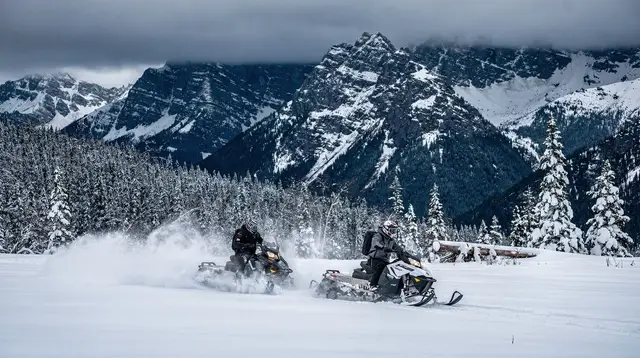
A backcountry tour leaves the groomed valley trails used by beginner tours and climbs into the alpine terrain above the Callaghan Valley, near Whistler Olympic Park, reaching open ridgelines and glacier and mountain views that the beginner route does not access. It runs on faster, more powerful machines and requires more riding time and, usually, a minimum age or experience level.
Beginner trails and backcountry terrain are not the same product
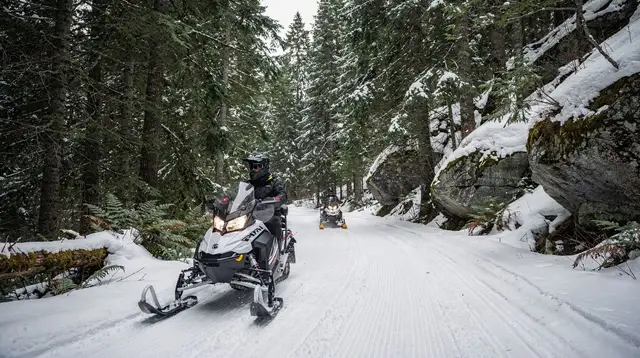
Every Whistler snowmobile operator sells some version of two products, and it is worth being blunt about the difference before booking either one. A beginner tour keeps riders on groomed, forest-lined trails at a controlled pace, usually within a defined loop near the staging area. A backcountry tour uses the same machines and the same general area — the Callaghan Valley, southwest of Whistler — but keeps climbing, out of the trees and onto open alpine terrain above the treeline. The two rides share a starting point and not much else once the trail forks.
This page is about what the backcountry route adds: bigger terrain, faster riding, and alpine views that the beginner loop never reaches. It does not cover the beginner format itself — that is its own guide — and it does not cover the evening or twilight snowmobile-and-activities format, which is a different product built around a different time of day. If either of those is what you are actually looking for, the beginner tour guide and the twilight tour guide are the right pages.
Why the Callaghan Valley is the terrain that makes this work
The Callaghan Valley sits southwest of Whistler Village, reached by a dedicated access road off the Sea to Sky Highway. It is not an arbitrary patch of snow: it is the valley that hosted the Nordic skiing, ski jumping and biathlon events of the 2010 Winter Olympics, built around Whistler Olympic Park. That Olympic infrastructure — stadium, trail network, biathlon range — sits on the valley floor, and it is one of the reasons the surrounding terrain was developed for winter access in the first place.
Above the valley floor, the terrain rises quickly into subalpine forest and then into open alpine bowls and ridgelines. That vertical relief is the whole point of a backcountry tour. A beginner loop, built for first-time riders with no experience, stays low and stays in the trees, where the trail is predictable and the consequences of a mistake are small. A backcountry route climbs through that same forest and keeps going, onto terrain where the trees thin out, the wind shapes the snow into features rather than a groomed surface, and the view opens up in a way it simply cannot inside a forest corridor.
It helps to have a sense of scale for what surrounds this valley. Whistler Blackcomb, the ski resort a short distance to the northeast, has a vertical drop on the order of 1,500 metres and is the largest ski area in North America by skiable terrain — more than 8,000 acres across two mountains and three glaciers. A backcountry snowmobile tour does not ride into the ski resort itself, but it operates in the same mountain range, on terrain that shares the same alpine character: real elevation, real exposure, and views that reflect it.
What the alpine sections actually look like
Once a backcountry route clears the treeline, riders are typically looking across the Callaghan Valley toward Whistler Olympic Park below, with the wider ridgelines of the Sea to Sky corridor beyond it. On a clear day, that includes a sense of the surrounding peaks and, depending on the specific route and where guides judge conditions to be safe that day, glimpses toward the Whistler Blackcomb massif itself.
These are working mountain views, not staged photo stops — the kind of open alpine outlook that, at ground level in summer, would normally require a serious hike to Garibaldi Provincial Park or the ridge below the Black Tusk to reach. A snowmobile gets riders into comparable open terrain in a fraction of the time and effort, on a winter surface that makes that terrain accessible in the first place.
This is also why the pacing and the machines differ from a beginner tour. Backcountry routes generally use more powerful machines suited to variable snow, run at a faster pace once clear of the forest, and cover considerably more ground over the course of the day. Where a beginner loop might occupy an hour or two of riding time on a short, forgiving circuit, a backcountry tour typically fills half a day or more once the drive to the staging area, gear fitting, guide briefing and the ride itself are all accounted for.
| Beginner tour | Backcountry tour | |
|---|---|---|
| Terrain | Groomed forest trails | Alpine bowls and ridgelines above treeline |
| Views | Forest corridor | Open views over Callaghan Valley and Whistler Olympic Park |
| Pace | Slow, controlled | Faster, more technical |
| Typical duration | Shorter loop | Half day or more |
| Rider profile | First-timers, families | Some comfort with speed and less predictable snow |
| Access | Guided only | Guided only |
Why this is guided terrain, not open terrain
It is worth being direct about this: the alpine terrain used on backcountry snowmobile routes is not open to the public for unguided riding. It sits within winter backcountry that carries avalanche risk, can turn into a whiteout with little warning, and has hazards — cornices, crevassed glacier margins nearby, unmarked terrain features under fresh snow — that are not obvious to someone unfamiliar with the area. The routes used by tour operators exist because those operators hold guiding tenure and employ guides trained to read snow conditions and choose a safe line day to day; the terrain itself does not become safer or more accessible just because a tour has ridden through it.
In practice this means there is no version of this experience where a visitor rents a machine and heads up into the alpine on their own. Every legitimate way to see this terrain by snowmobile runs through a guided operator, with a guide riding at the front of the group, choosing the route in real time, and making the call on how far up the alpine sections the group goes that day based on current conditions. That is a constraint worth planning around rather than working around.
a guided backcountry snowmobile tour into the Callaghan Valley alpine is the way this terrain is actually seen, and booking ahead matters in peak winter weeks when guide groups fill.
Who this tour suits, and who it does not
A backcountry tour is built for riders who want more than a short introductory loop: more distance, more speed, and terrain that rewards it with real alpine views. It generally asks for a minimum age to drive a machine — commonly mid-teens or older, confirmed at booking — and a reasonable level of fitness for a longer day outdoors in winter conditions. Passengers can usually ride behind a driver on the same machine, but the format still assumes a level of comfort with a faster, less predictable ride than a beginner circuit offers.
If the goal is a first snowmobile experience for someone with no riding background, or a family outing built around younger children, the backcountry format is the wrong starting point — not because it is unsafe when guided, but because it is paced and terrained for a different kind of day. The beginner tour and the family-oriented format exist specifically to cover that.
a beginner-friendly snowmobile outing with added activities keeps the pace gentle and the trail low, and a family snowmobile adventure built for kids aged six to twelve is designed around exactly that age range. Neither substitutes for the alpine terrain covered here, but either is the better choice for a first outing.
For visitors who want the alpine views without the mechanics of riding a snowmobile at all, it is also worth knowing that a helicopter tour over the Whistler Blackcomb and Callaghan Valley terrain covers similar mountain scenery from the air, at a very different pace and price point.
Planning the day around a backcountry tour
Because backcountry tours run longer than beginner tours and depend on current snow conditions, a few practical points are worth building into the plan. Staging areas for Callaghan Valley snowmobile tours are typically reached by a short transfer from Whistler Village, included in most tour bookings rather than requiring a rental car and a drive up an unplowed access road. Full winter clothing — insulated outerwear, boots rated for extended time in the snow, goggles — is usually provided or required by the operator; check the specific tour’s gear list before assuming what to pack.
Timing also matters more here than for a beginner loop. Alpine sections depend on stable snow and visibility, and guides will adjust or shorten a route on a day with poor conditions rather than push into terrain that is not safe that day — a legitimate operator will do this without apology, and it is a sign of a well-run tour rather than a shortfall in the experience sold. Building a buffer day into a winter itinerary, rather than scheduling a backcountry tour on the one full day available, reduces the chance that weather forces a cancellation with no room to rebook.
The Callaghan Valley and Whistler Olympic Park area also connects naturally to the rest of a winter stay. Riders interested in the region’s Olympic history can pair a snowmobile day with a visit to the venues used in 2010, and those curious about self-powered alternatives to a motorized tour will find the same alpine zone accessible in a different form through backcountry skiing and splitboarding trips.
an introductory backcountry skiing and splitboarding outing uses comparable terrain at a human pace, guided in the same way and for the same reasons.
Snowmobiling in the wider Whistler winter, in context
Snowmobiling sits alongside skiing and snowboarding as one of the main reasons visitors come to Whistler in winter, but it uses a different part of the mountain landscape than the lift-served runs on Whistler Mountain and Blackcomb Mountain. Where the ski resort’s terrain is groomed, patrolled and served by chairlifts, the snowmobile terrain in the Callaghan Valley is genuine backcountry, made accessible only through guided access — which is precisely what makes the alpine views from a backcountry tour distinctive rather than something available from any roadside pullout.
For visitors weighing where to put their limited winter days, a backcountry snowmobile tour is worth prioritizing specifically for the terrain it reaches: alpine relief above the Callaghan Valley, direct sightlines to the Whistler Sliding Centre area and Whistler Olympic Park’s 2010 Olympic infrastructure, and a sense of the scale of the surrounding mountains that a groomed trail simply does not provide. Pairing it with a broader look at the region’s Olympic legacy, or with a quieter beginner ride for anyone in the group who prefers a gentler pace, rounds out a winter stay that goes beyond lift lines.
Common questions about backcountry snowmobile tours near Whistler
How is a backcountry snowmobile tour different from a beginner tour?
A beginner tour stays on groomed forest trails at a gentle pace, aimed at first-time riders. A backcountry tour leaves those trails for open alpine terrain above the treeline, covers more distance, runs at a higher pace, and typically asks for a minimum age and a comfort level with less predictable snow surfaces.
Where do backcountry snowmobile tours in Whistler actually go?
Most depart from staging areas in or near the Callaghan Valley, southwest of Whistler Village, and climb through subalpine forest into open alpine bowls and ridgelines overlooking Whistler Olympic Park and the wider Sea to Sky corridor.
Can I ride a backcountry snowmobile route on my own without a guide?
No. The alpine terrain used on backcountry routes carries avalanche risk, sudden whiteouts and unmarked hazards, and it sits within an active tenure operated by licensed guiding companies. There is no public access for unguided riding; every legitimate backcountry snowmobile experience here is guided, and that is a safety requirement, not a formality.
Do I need snowmobile experience to book a backcountry tour?
Some previous riding experience helps, but it is not always required — operators brief every guest before departure. What most backcountry tours do require is a minimum age, generally in the mid-teens or older to drive, and reasonable physical fitness for a longer day in cold conditions.
What can you see from the alpine sections of a backcountry tour?
Open views over the Callaghan Valley and Whistler Olympic Park, the surrounding peaks of the Sea to Sky corridor, and on clear days a sense of the scale of the terrain shared with Whistler Blackcomb’s ski runs to the northeast — though the tour itself does not enter the ski resort.
Is the Whistler Olympic Park area only relevant in winter?
For snowmobiling, yes — the backcountry routes run on winter snowpack. Whistler Olympic Park itself stays open through the warmer months for other activities, but the alpine snowmobile terrain described here is a winter-only experience.
How long does a backcountry snowmobile tour take compared to a beginner one?
Backcountry tours generally run longer than beginner tours, often half a day or more once transport, gear fitting and the guided briefing are included, reflecting the extra distance covered to reach the alpine sections and return safely.
Snowmobiling on GetYourGuide
Verified deep-linked GetYourGuide tours. Book through these links and we earn a small commission at no cost to you.
GetYourGuide does not provide a product photo for this activity — the image shows the meeting point, photographed by us.