Train Wreck Trail: Is This Easy Whistler Walk Right for Families?
Is Train Wreck Trail in Whistler suitable for a family with young kids?
Yes. Train Wreck Trail is a short, mostly flat walk of about 4 to 5 km return along the Valley Trail network, reaching a suspension bridge and a set of derelict rail cars in the forest. It has none of the elevation gain, distance, or exposure of alpine hikes like Garibaldi Lake or Panorama Ridge, which sit on entirely separate trails.
A Forest Walk, Not a Mountain Hike
Train Wreck Trail gets confused for an alpine outing more often than any other short walk near Whistler Village, probably because “wreck” and “trail” sound adventurous next to names like Garibaldi and Panorama Ridge. It is not that kind of trail. Train Wreck is a short forest walk on the edge of the Cheakamus River, built almost entirely on flat ground, and it belongs to Whistler’s Valley Trail network rather than to the alpine hiking system in Garibaldi Provincial Park.
If your family wants a manageable outing with a genuine payoff at the end — decades-old rail cars buried in moss and covered in layered graffiti art, reached over a wobbly suspension bridge — this is it. If you are looking for the long alpine days at Garibaldi Lake or Panorama Ridge, this page is the wrong one; those trails carry roughly 800 m of elevation gain and 18 to 30 km round trip, figures that simply do not apply here.
That distinction matters because Whistler’s trail network mixes both kinds of walk within a few kilometres of each other, and the naming does not always help. Train Wreck Trail sits within the Valley Trail system — an approximately 40 km network of paved and packed paths that circles the resort valley at close to lake level, connecting neighbourhoods, lakes, and the village without ever climbing into alpine terrain. Understanding which category a trail belongs to before you set out is the single most useful piece of trip planning in Whistler, and it is exactly why this guide keeps the comparison in view throughout.
What You Will Actually Find There
The site is straightforward: several boxcars derailed from a Pacific Great Eastern Railway train sometime in the 1950s, came to rest in the forest beside the Cheakamus River, and were never removed. Over the following decades the cars rusted, sank into the undergrowth, and — starting in the 1990s — became a canvas for local and touring graffiti artists. The result today is a cluster of rail cars wrapped in layered, frequently repainted murals, sitting quietly among cedars a short walk from a residential road. It photographs unlike anything else in the valley, which is a large part of why the trail has a following well beyond hardcore hikers.
Access to the cars crosses a wooden suspension bridge over the Cheakamus River. The bridge itself is a highlight for most kids — it sways gently underfoot, which is entertaining rather than frightening at a normal walking pace, and it frames a clean view up and down the river canyon. On the far side, a network of short dirt paths threads between the individual cars, letting you circle the whole site in about fifteen to twenty minutes if you are not stopping for photos, longer if you are.
Trail Facts at a Glance
| Detail | Train Wreck Trail |
|---|---|
| Round-trip distance | About 4-5 km from the main lot |
| Elevation gain | Minimal — a few tens of metres |
| Surface | Paved Valley Trail, then packed dirt with roots past the bridge |
| Typical time | 1.5-2.5 hours at a family pace |
| Difficulty | Easy; not a mountain or alpine trail |
| Stroller-friendly | Only as far as the suspension bridge |
| Dogs | Allowed on leash |
| Best season | Year-round; icy or muddy sections possible in winter and shoulder season |
Getting There From Whistler Village
The main trailhead sits off Jane Lake Road, a short drive or bike ride south of Whistler Village and close to Alta Lake. A small gravel lot marks the start, and it fills up quickly on summer weekends and any day with good weather, so arriving before mid-morning or after the lunch rush makes parking considerably easier. Overflow spots exist along the access road, but do not block driveways or the fire lane — this is a residential area, and Whistler enforces access rules here more strictly than at most trailheads.
If you would rather not drive, the trail connects directly into the paved Valley Trail, so it is entirely possible to walk or cycle here from the village along the same network that links Lost Lake and Green Lake to the resort core. This is one of the few Whistler outings that genuinely does not require a car, which matters if you are staying car-free for the week.
Why Families Choose This Over an Alpine Trail
The appeal for families comes down to three things: distance, terrain, and payoff. At 4 to 5 km round trip with almost no elevation change, Train Wreck Trail is well within range for kids from about age five upward, and younger children can usually manage it in a hiking carrier if the stroller has to stop at the bridge. Compare that to Joffre Lakes, which covers about 10 km with 400 m of ascent to reach its lakes, or Black Tusk, which involves genuine scrambling near the summit — neither is realistic for a family outing on a single afternoon, and both require a level of preparation this trail simply does not.
The terrain itself is forgiving. The paved approach along the Valley Trail is flat and wide, shared with cyclists and other walkers, and gives you an easy bailout point if energy runs low before the bridge. The unpaved stretch beyond the bridge has roots and a few short uneven sections, but nothing that requires hiking poles, specialized footwear, or route-finding — a pair of closed-toe shoes with reasonable grip is enough for most of the year.
And then there is the payoff itself, which is unusually strong for the effort involved. Rusted rail cars wrapped in shifting, colourful graffiti art are visually striking in a way that a viewpoint or a waterfall sometimes is not for younger kids, and the novelty of “an actual train wreck in the forest” tends to hold their attention for the walk in and out.
What to Bring
Pack as you would for any easy forest walk rather than for an alpine hike: water for everyone, snacks, layers for the shaded, often cooler forest section near the river, and insect repellent between late spring and late summer when mosquitoes near the water can be persistent. Sturdy closed-toe shoes matter more than technical hiking boots — trainers are fine in dry conditions, but the roots and packed dirt past the bridge get slick in rain, and winter can bring ice on the same stretch. There are no facilities, water taps, or waste bins at the trailhead or the wreck site itself, so plan accordingly and carry out anything you bring in.
A phone or camera earns its keep here more than on most Whistler trails, given how photogenic the graffiti-covered cars are, but be mindful of other visitors waiting for their own photos at the more popular cars, especially on busy weekends.
Extending the Walk on the Valley Trail
Because Train Wreck Trail connects directly into Whistler’s roughly 40 km Valley Trail network, families who want a longer outing can simply keep walking rather than backtracking to the parking lot. The paved path leads toward Lost Lake in one direction and back toward Whistler Village in the other, both flat and suitable for the same age range as the main trail.
This is the same principle that makes the Lost Lake and Valley Trail network such a reliable base for an easy Whistler day — trails that link together at valley level, without alpine sections mixed in, so a family can extend or shorten the day on the fly rather than committing to a fixed distance upfront.
If swimming appeals more than walking, Lost Lake’s swimming beaches sit a short ride away on the same trail system and make a natural second stop for the same afternoon. For a gentler alternative to a full alpine lake hike that still delivers turquoise water, the Cheakamus Lake trail is a step up in distance from Train Wreck but still nowhere near the effort of Garibaldi Lake or Panorama Ridge — useful context if your family wants to gradually build toward longer hikes over a multi-day stay.
Where This Trail Fits Into a Whistler Visit
Train Wreck Trail works best as a half-day or even a two-hour add-on rather than the main event of a Whistler day, which is exactly why it pairs so easily with other low-key activities. Families staying for a full week in summer often slot it in on an arrival day, a rest day between bigger outings, or an overcast morning when the alpine trails and viewpoints are socked in with cloud. It also works well for anyone spending just one day in Whistler Village who wants a taste of the forest and river scenery without committing hours to a longer trail.
For travellers weighing how many days to spend in the resort overall, easy walks like this one are part of what makes a shorter Whistler stay feel complete even without tackling the big alpine hikes — you get river scenery, forest, and a genuinely memorable stop, all within a couple of hours.
If your group wants a guided nature walk with more context on the valley’s ecology and history than a self-guided visit to the wreck site provides, a guided wilderness hike through Whistler’s forest trails covers similar terrain with a naturalist along for the story behind it.
Families looking for an evening activity after an easy daytime walk sometimes prefer something more theatrical: the Vallea Lumina night walk through the illuminated forest is a different kind of forest experience entirely, built around lights and sound rather than history, and works well as a same-day pairing since neither activity is physically demanding.
Beyond the Trail: Other Easy Whistler Options
Train Wreck Trail is one of several ways to get an easy, high-payoff outing without alpine effort. If your family enjoys the forest setting but wants more built-in activity than a flat walk provides, a Whistler ziplining experience through the forest canopy delivers a similarly accessible, low-hiking-effort day with a bigger adrenaline component, and shorter evening options like a two-hour evening zipline adventure fit neatly after a daytime walk to the wreck site.
For younger children specifically, an indoor option such as an art class with mini carving for ages eight and up makes a good rainy-day complement, since Train Wreck Trail’s unpaved section does turn slick and less appealing in heavy rain.
None of these substitute for the trail itself, but they illustrate the wider point: Whistler’s easy, family-scale activities and its serious alpine hikes are genuinely separate categories, and matching the right one to your group’s energy and experience level is most of what makes a day here work.
When to Go
Train Wreck Trail is walkable in every season, which sets it apart from most of the trails in Garibaldi Provincial Park that only open once summer snowmelt clears the high passes. Summer, from roughly June through August, is the busiest period and the easiest underfoot, with dry paths and long daylight hours. Spring and autumn bring fewer people and the same accessible terrain, though the unpaved section past the bridge can hold mud after rain.
Winter access remains possible year-round, but ice on the packed-dirt stretch beyond the suspension bridge is common from December through February, and basic traction devices make the crossing safer if you plan to visit in that window. Whichever season you pick, the trail’s character does not change the way alpine trails do — there is no need to time a visit around lift operating dates or snowline the way you would for a ski season opening or a high alpine hike.
Train Wreck Trail: Frequently Asked Questions
How long is Train Wreck Trail and how long does it take?
The round trip from the main parking area is roughly 4 to 5 km depending on how far into the forest you continue past the rail cars. Most families walk it in 1.5 to 2.5 hours at a relaxed pace, including time at the suspension bridge and among the wrecked cars.
Is Train Wreck Trail suitable for strollers or wheelchairs?
The section of the Valley Trail leading to the suspension bridge is paved and stroller-friendly. Once you cross the bridge, the path narrows to packed dirt with roots and a few short, uneven steps, which makes it manageable for older kids on foot but difficult for a stroller or wheelchair beyond that point.
What is the actual history of the train wreck at this site?
Several boxcars derailed from a Pacific Great Eastern Railway train in the 1950s and were left in the forest beside the Cheakamus River rather than removed. Decades of graffiti art, moss, and encroaching trees have since turned the rusted cars into one of Whistler’s most photographed short walks.
Does Train Wreck Trail have the same elevation gain as Garibaldi Lake or Panorama Ridge?
No. Train Wreck Trail gains only a few tens of metres over its full length. Garibaldi Lake involves about 800 m of ascent over an 18 km round trip, and Panorama Ridge is longer still — both are separate alpine trails in Garibaldi Provincial Park, not extensions of this walk.
Where do you park for Train Wreck Trail and is parking free?
The main access point is a small lot off Jane Lake Road south of Whistler Village, signed for Train Wreck. It fills quickly on weekends and in summer; overflow parking exists nearby, and there is no fee at the trailhead itself as of this review.
Can you connect Train Wreck Trail to other parts of the Valley Trail?
Yes. Train Wreck Trail links directly into Whistler’s roughly 40 km paved Valley Trail network, so you can extend the outing toward Lost Lake or back into Whistler Village on the same paved path without retracing your steps on foot to the parking lot.
Is Train Wreck Trail open in winter?
The trail stays open year-round, but the unpaved section past the suspension bridge can be icy or muddy from late autumn through spring. Traction devices help in winter, and the paved Valley Trail approach is usually cleared or packed down by regular foot traffic.
Are dogs allowed on Train Wreck Trail?
Dogs are allowed on leash on both the paved Valley Trail sections and the forest path to the rail cars. There are no services or waste bins directly at the wreck site, so plan to carry out what you bring in.
Hiking on GetYourGuide
Verified deep-linked GetYourGuide tours. Book through these links and we earn a small commission at no cost to you.
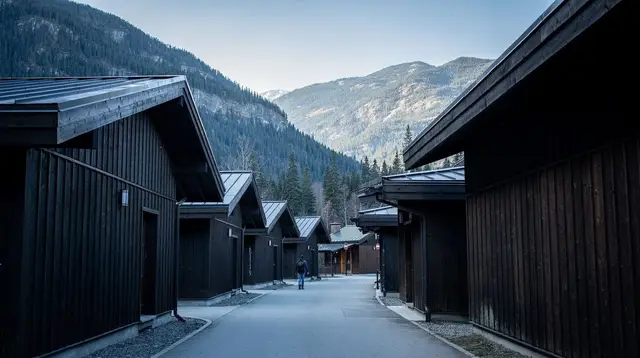
GetYourGuide does not provide a product photo for this activity — the image shows the meeting point, photographed by us.