Lost Lake and the Valley Trail: A Walking Guide from Whistler Village
Can you walk to Lost Lake from Whistler Village without a car?
Yes. Lost Lake sits on Whistler's paved Valley Trail network, roughly a 15 to 20 minute walk from the Village Stroll, with no car needed. The lake has sandy beaches and supervised swimming that is usually warm enough from around July to early September, though the exact window shifts every year with the weather.
Walking from the Village to Lost Lake, Step by Step
Of all the questions visitors ask about getting around Whistler without a rental car, this one has the easiest answer. Yes, you can walk to Lost Lake from Whistler Village, and yes, you can swim there once you arrive. No shuttle, no rideshare, no parking fee — just a paved path and, in the right months, water warm enough to get into.
Lost Lake sits at the northeastern edge of the resort, close enough to the village core that most visitors underestimate how quickly they can be standing on its beach. From the main Village Stroll, the walk to the lake covers a little over a kilometre and takes most people 15 to 20 minutes at an unhurried pace, entirely on flat, paved path. There is no meaningful elevation gain, no technical footing, and no need for hiking boots — trainers are fine, and a stroller or a pair of rollerblades works just as well as feet. Several entry points lead in from around the village and from the day-lot side near the highway, all of them well signed and lit.
This is the single biggest reason Lost Lake works so well for people without a car in Whistler: it was built into the resort’s pedestrian-first design from the start, not retrofitted for tourists later. The Whistler valley was laid out around a car-light village core, and Lost Lake was planned as its nearest green space and swimming spot, connected by path rather than by road.
The Valley Trail: Whistler’s Paved Backbone
Lost Lake isn’t an isolated walking destination — it’s one stop on a much larger paved network called the Valley Trail, which loops and threads through roughly 40 km of the Whistler valley. The Valley Trail links the village to Alta Lake, Green Lake, the Train Wreck Trail, and outlying neighbourhoods, all on flat or gently rolling paved and packed-gravel surface shared by walkers and cyclists.
It’s the reason a determined visitor can spend an entire week in Whistler exploring lakes, forest, and viewpoints without ever renting a car — a point worth keeping in mind if you’re weighing up whether you need one at all; see our note on skipping the rental car in a pedestrian-only village.
Approximate walking distances and times from the Village Stroll along the Valley Trail:
| Destination | Distance from Village | Walking time |
|---|---|---|
| Lost Lake main beach | ~1.1 km | 15–20 min |
| Alta Lake (Rainbow Park) | ~2.5 km | 30–40 min |
| Train Wreck Trail trailhead | ~2 km | 25–30 min |
| Green Lake viewpoint | ~5 km | 60–75 min |
None of these require a car, a bus, or a paid transfer. Bikes can be rented in the village if you’d rather cover the Valley Trail faster, but for Lost Lake specifically, walking is the simplest option — the distance is short enough that a bike barely saves time once you factor in unlocking and parking it.
What’s Actually at Lost Lake Park
Once you’re there, Lost Lake Park is a proper lakeside park rather than a quiet backcountry pond. Expect a sandy main beach with a roped-off swimming area, a floating dock partway out, grassy space for picnics and towels, washroom and change facilities near the beach, and a second, quieter beach area a short walk around the shore for anyone who wants more space from the crowds. On a warm midsummer afternoon, the main beach fills up with locals and visitors alike — it is one of the more popular swimming spots in the valley, not a hidden secret, so arriving earlier in the day tends to mean more room on the sand.
The lake is entirely walk-in and swim-only in the sense that matters for trip planning here: this guide covers walking to Lost Lake and swimming once you’re there, not paddling. The valley’s well-known paddle route, the River of Golden Dreams, is a separate stretch of gentle current between Alta Lake and Green Lake, covered in its own guide on the canoe route from Alta to Green.
If you’re deciding between a lake day and a paddle day, our comparison of swimming and paddling conditions at Alta Lake and whether Green Lake works for paddling and swimming covers the other two lakes on the same trail network.
When Is Lost Lake Actually Warm Enough to Swim?
This is the part worth being precise about, because it’s easy to find confident-sounding dates online that don’t hold up year to year. Whistler’s lakes, Lost Lake included, are fed and surrounded by mountain snowmelt, and how quickly they warm up depends entirely on that year’s snowpack, spring temperatures, and how hot the summer runs.
As a general rule, the lakes in the valley become comfortably swimmable from around July through to early September. That is a genuine, useful planning window — but it is indicative, not a guarantee tied to a calendar date. A cool, late spring can push the start of swimmable water later into July; a hot, early summer can have people in the water by late June. Early September can still be pleasant in a warm year and noticeably cold in an early one.
The practical takeaway: if a swim at Lost Lake is a fixed item on your itinerary rather than a “if the weather’s good” option, build your trip around the broad July-to-early-September window rather than a specific week, and check current conditions once you’re closer to travel dates rather than relying on a fixed date printed months in advance.
Beyond the Beach: Loops and Connections from Lost Lake
Lost Lake isn’t only a destination in itself — it’s also a junction for further walking if the short approach from the village left you wanting more distance. A loop trail circles the lake itself through forest, adding roughly an hour of easy, mostly flat walking beyond time spent at the beach.
From the Lost Lake area, the Valley Trail also continues on toward the Train Wreck Trail, another short, flat, family-friendly walk through the forest to a set of abandoned rail cars, and further still toward Ancient Cedars for those wanting old-growth forest on the same general side of the valley, though that walk involves more elevation than anything around Lost Lake itself.
None of these extensions require backtracking to the village first — the paved and packed trail network connects them directly, so a single afternoon can combine a swim at Lost Lake with a walk onward to the Train Wreck cars, all without a car and largely without retracing your steps.
What Lost Lake Is Not the Place For
Two activities get mentioned in the same breath as Lost Lake often enough that it’s worth being direct about the distinction. First, canoeing: Lost Lake is not part of the River of Golden Dreams paddle route. That gentle, guided-or-independent paddle connects Alta Lake to Green Lake on the opposite side of the village, and it’s a different outing with its own put-in and take-out points — see the dedicated River of Golden Dreams canoe guide if that’s what you’re planning.
Second, mountain biking: the Whistler Mountain Bike Park is a lift-served, ticketed downhill park on Whistler Mountain itself, an entirely different location, price point, and skill level from a walk to a lake. If gravity-fed trails are what you’re after, our Mountain Bike Park beginner guide covers that separately. Lost Lake does have its own network of easy, mostly flat cross-country trails used for gentle riding and, in winter, skiing — but that’s a different kind of trail experience from the downhill park, and not the focus here.
Lost Lake in Winter
Once the swimming season ends, Lost Lake’s role in the valley changes rather than disappears. The same trail network that carries walkers and swimmers in summer becomes a groomed cross-country ski and snowshoe area once the snow sets in, popular with visitors who want a day off the alpine lift lines without leaving the valley floor. The lake itself freezes over, and the beach areas that were full of towels in August sit quiet under snow. It’s a useful thing to know if your trip straddles seasons: don’t expect swimming and don’t expect the summer beach atmosphere outside the warmer months — the two experiences don’t overlap.
Planning the Visit: Cost, Timing, and Getting There
| Item | Detail |
|---|---|
| Distance from Village Stroll | ~1.1 km, paved Valley Trail |
| Walking time | 15–20 minutes, flat terrain |
| Entry to the park | Free |
| Vehicle parking (day lots) | Paid in peak season if you drive |
| Typical swimmable window | Roughly July to early September, varies by year |
| Lifeguard supervision | Present at the main beach in the busy summer months |
| Best time of day for space | Morning or early afternoon, before the beach fills up |
If you’re building a broader plan around lakes and easy trails rather than just this one stop, our one day in Whistler Village itinerary works Lost Lake in alongside the village core, and a family summer week in Whistler uses it as a recurring, low-effort afternoon option between bigger outings. For the full menu of easy and moderate walks in the valley, the hiking trails category is the place to browse further options once Lost Lake is ticked off.
If You’d Rather Have a Guide
Lost Lake itself needs no guide — the path is obvious and the beach is self-explanatory. But if the appeal of an easy, car-free walk has you wanting a longer guided day in the same spirit, without renting gear or planning a route yourself, a guided wilderness hike through Whistler’s forest and alpine terrain extends the same walking-not-driving idea into a fuller day with a local guide handling the route and the wildlife knowledge.
For something more ambitious than Lost Lake’s flat paths, a guided hike to Cheakamus Lake in Garibaldi Provincial Park covers a genuine alpine lake walk with a guide who knows current trail conditions. And if the plan is to pair a relaxed lakeside afternoon with a good meal rather than more walking, the self-guided Whistler Culinary Pass lunch discovery lets you wander the village afterward on your own schedule.
Lost Lake Walking and Swimming: Frequently Asked Questions
Can you walk to Lost Lake from Whistler Village?
Yes. Lost Lake is connected to Whistler Village by the paved Valley Trail, and most walkers cover the distance in 15 to 20 minutes at an easy pace. No car, shuttle, or bus is required.
Is Lost Lake good for swimming?
Yes, Lost Lake has sandy beach areas and is one of the more popular swimming spots in the valley in summer. Whistler’s lakes generally become warm enough to swim in from around July to early September, though this window varies from year to year with the weather rather than falling on fixed dates.
How long is the Valley Trail?
The Valley Trail is a paved, mostly flat path network of about 40 km that links Whistler Village to Lost Lake, Alta Lake, Green Lake, and several other points around the valley, shared by walkers and cyclists.
Is Lost Lake free to visit?
Walking or cycling to Lost Lake Park is free. A parking fee applies to vehicles at the Lost Lake day lots in peak season, which is one more reason walking or cycling in from the village is the simpler option.
Is Lost Lake good for kids?
Lost Lake’s beach areas and gentle approach on the paved Valley Trail make it a straightforward option for families, without the steeper terrain or river current found elsewhere in the valley.
Can you paddle or canoe at Lost Lake?
Lost Lake itself is mainly used for swimming rather than paddling routes. The valley’s well-known canoe route is the River of Golden Dreams, a separate paddle between Alta Lake and Green Lake, not part of the Lost Lake walk.
Is Lost Lake part of the Whistler Mountain Bike Park?
No. The Whistler Mountain Bike Park is a separate, ticketed, lift-served zone on Whistler Mountain. Lost Lake has its own cross-country trail network, but it is not the downhill bike park.
What is Lost Lake like in winter?
In winter, the trails around Lost Lake are used for cross-country skiing and snowshoeing rather than swimming, and the lake itself freezes. Summer swimming and winter snow sport seasons do not overlap.
Hiking on GetYourGuide
Verified deep-linked GetYourGuide tours. Book through these links and we earn a small commission at no cost to you.
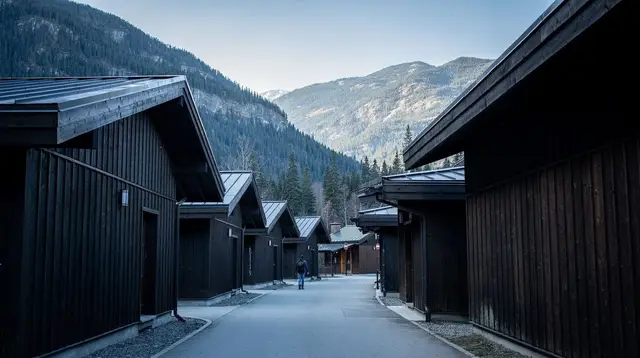
GetYourGuide does not provide a product photo for this activity — the image shows the meeting point, photographed by us.