The Black Tusk Hike: Walk, Scramble, or Both?
Is the Black Tusk hike a walk or a scramble?
It is both. Roughly 10 km of maintained trail gets you to the base, then a genuine hands-on scramble over loose volcanic rock gains the last stretch to the summit ridge at about 2,319 m. Treat it as a long, exposed mountain day, not a casual extension of the Garibaldi Lake walk.
What the Black Tusk Actually Is
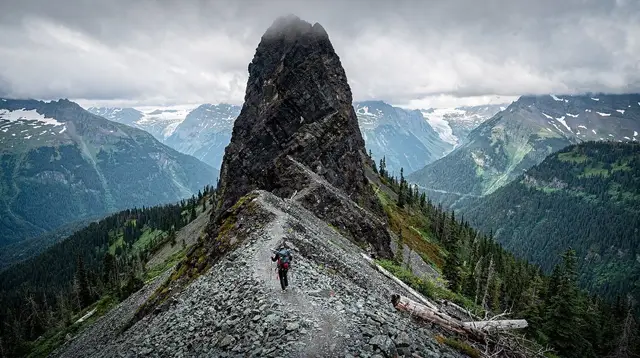
Drive north on the Sea to Sky Highway past Squamish and you will eventually see it: a black, jagged spire standing above the surrounding ridgelines like something out of place. That is the Black Tusk, a volcanic plug inside Garibaldi Provincial Park that tops out at roughly 2,319 m.
It is the eroded remnant of a much larger volcano — the softer material around the original vent has worn away over hundreds of thousands of years, leaving only the hardened core of dark andesite standing exposed. That geology matters for anyone planning to climb it, because it means the rock underfoot near the top is loose, angular and unstable rather than the solid granite you would find on something like the Stawamus Chief.
The Black Tusk sits deep inside Garibaldi Provincial Park, reached from the same Rubble Creek trailhead that serves Garibaldi Lake and Panorama Ridge. Those two destinations have their own detailed guides on this site, because each is a legitimate full-day objective in its own right. This page answers one narrower and more practical question: once you are on that trail system, is the push to the Black Tusk summit a hike, or does it turn into a scramble? The short answer is both, and the distinction matters enormously for who should attempt it.
The Route, In Outline
From the Rubble Creek trailhead, the trail climbs through switchbacks for several kilometres before levelling out at Taylor Meadows, a subalpine basin of wildflower meadows with the Tusk already visible ahead. From Taylor Meadows, a signed junction sends most hikers left toward Garibaldi Lake and right toward the Black Tusk and, further on, Panorama Ridge. The Black Tusk trail continues across a rolling alpine plateau, crosses a small saddle, and then arrives at the base of the formation itself, where the maintained trail effectively ends.
From that base, roughly the final 400 to 500 vertical metres are not a built trail at all. A rough, unofficial track picks its way up a gully of loose volcanic scree to a notch just below the summit blocks. From the notch, a short, exposed scramble over broken rock — using hands as well as feet in places — gains the true summit, a narrow platform with a drop on more than one side. This last stretch is the entire reason the “hike or scramble” question exists, and it is short in distance but disproportionate in difficulty and consequence.
Hike or Scramble? Where the Line Actually Is
Treat the Black Tusk day as two very different activities stitched together.
The approach — from Rubble Creek to the base of the formation — is a hike, full stop. It is long and it gains real elevation, but it follows a maintained, signed trail the whole way, the kind of trail that connects to Garibaldi Lake and the guides covering how long the Panorama Ridge hike takes. Anyone reasonably fit who has done a long day hike before can walk this section.
The final push from the base to the summit is a scramble in the mountaineering sense: no rope, no fixed protection, just hands and feet on rock that shifts underfoot, with real exposure at the top. It shares nothing with the guided, hardware-protected routes covered under via ferrata climbing near Whistler or the roped climbing on the Stawamus Chief — this is unprotected scrambling on a mountain that actively sheds rock. Do not read “no technical gear required” as “no risk.” People turn back at the notch every summer, and that is the right call more often than not.
Distance, Elevation and Time
| Segment | Distance (one way) | Elevation gain | Typical time |
|---|---|---|---|
| Rubble Creek trailhead to Taylor Meadows | ~9 km | ~700 m | 2.5–3.5 hours |
| Taylor Meadows to Black Tusk base | ~4.5 km | ~350 m | 1.5–2 hours |
| Base to summit (scramble) | ~0.5 km | ~450 m | 1–2 hours |
| Round trip, trailhead to summit and back | ~27–29 km | ~1,700 m | 9–12 hours |
These figures assume good conditions and a fit party moving steadily. Add time for the summit itself — most people spend 20 to 30 minutes there, weather and nerve permitting — and build in a buffer, because the return trip after a long scramble day is where fatigue and rushed decisions cause most incidents.
Is It Dangerous? What “Scramble” Actually Means Here
“Scramble” is a specific grade, not a vague warning. It sits between hiking and technical climbing: you use your hands for balance and upward progress, but no rope or harness is standard practice. On the Black Tusk, that translates into a gully of loose andesite scree that can send rocks downhill onto hikers below, followed by a short exposed traverse near the summit blocks where a slip has real consequences. There is no fixed protection anywhere on the route.
Practical implications:
- A helmet is a genuinely good idea in the summit gully, both for your own footing and because parties above can dislodge rock.
- Trekking poles help on the scree approach but should be stowed for the hands-on section.
- Snow or ice on the final pitch — common into July in a heavy snow year — turns the scramble into a fall hazard that has caused serious accidents; if you cannot see clean, dry rock the whole way, turn around.
- Groups should stay spread out on the gully, never directly above or below each other.
- This is not a route to attempt in fog, in a thunderstorm, or in the last hours of daylight.
If that list gives you pause, it should. Plenty of strong hikers reach the base, look at the gully, and decide the summit is not for them that day — that is a sound decision, not a failure, and Panorama Ridge or the shores of Garibaldi Lake both deliver a full alpine day without it.
Permits: The Same BC Parks Pass as the Rest of the Park
The Black Tusk trail is inside Garibaldi Provincial Park, and BC Parks requires a free day-use pass for this area during the high season, reserved online in advance. This is the identical system covered in the guide on getting a Joffre Lakes day-use pass and in the explanation of Joffre Lakes’ permit rules and past closures: a fixed daily quota of passes, released online, that sells out on good-weather weekends.
Do not assume you can simply drive to Rubble Creek and start walking in July or August. Check the current BC Parks page for the Garibaldi Lake area before you leave Whistler or Vancouver, because a sold-out pass at the end of a two-hour drive is the single most avoidable disappointment on this trip. There is no walk-up alternative and no ranger station selling passes at the trailhead.
When to Go
The Black Tusk scramble is a summer-only proposition. Snow typically lingers on the final pitch well into July, and an early-season attempt on snow-covered scree is a mountaineering situation, not a scramble — several serious falls on this exact route have happened to hikers who pushed on despite visible snow near the top. Late July through September is the realistic window, matching the best time to visit Whistler for high alpine terrain generally.
September brings cooler temperatures, thinner crowds and often the clearest, driest rock of the season, though days are shorter and afternoon cloud can move in fast. Whatever the month, start early: the trailhead parking lot fills before sunrise on clear summer weekends, and starting late means finishing the exposed scramble in fading light.
What to Bring
A day this long, at altitude, with a technical finish, deserves proper preparation rather than a light-hiking kit:
- Sturdy, broken-in hiking boots with real ankle support — trail runners are a poor choice on the loose scramble section
- A helmet, if you own one, for the summit gully
- Layers: temperatures at 2,300 m can be 10–15°C colder than the valley floor, even in August
- 2–3 litres of water and high-energy food; there is no water source near the summit
- A map or downloaded GPS track, since the scramble section is unmarked
- A headlamp, always, in case the day runs long
- Sun protection — the alpine plateau has almost no shade
If You Would Rather Skip the Scramble
Not every visitor to Garibaldi Provincial Park needs to stand on the Black Tusk’s summit block, and there is no shame in choosing an equally rewarding day without the exposed finish. A guided day hike to the turquoise waters of Garibaldi Lake covers much of the same approach trail with an experienced guide and none of the scramble. For a gentler alpine introduction with old-growth forest and a glacier-fed lake, a guided hike to Cheakamus Lake stays almost entirely flat and is well suited to families or first-time hikers in the park.
Those who want the big alpine payoff of ridge-top views without hands-on scrambling can join a guided hike up to Panorama Ridge, which looks directly across at the Black Tusk from a safer vantage point. And for a fully supported version of the Garibaldi Lake approach with transport included from Whistler or Squamish, a guided Garibaldi Lake day tour removes the logistics of the permit system and the early trailhead start.
For hikers building a longer stay around this kind of terrain, the alpine hiking week in Whistler itinerary sequences Black Tusk alongside gentler days so the body has time to recover between long outings, and the things to do: hiking trails hub lists the full range of trails in the region by difficulty.
Black Tusk Hike: Frequently Asked Practical Questions
Is the Black Tusk hike a scramble or just a hike?
Both. The approach from the Rubble Creek trailhead is a well-built hiking trail. The final few hundred metres to the summit ridge are an unmarked, unmaintained scramble over loose volcanic scree and rock, with a short exposed section near the top.
How long is the Black Tusk hike round trip?
About 27 to 29 km round trip from the Rubble Creek trailhead, with roughly 1,700 m of total elevation gain. Most parties need 9 to 12 hours car to car, longer with a rest at Taylor Meadows or Garibaldi Lake.
Do I need any climbing gear for Black Tusk?
No ropes or technical climbing gear are used on the standard scramble route, but sturdy boots, trekking poles and a helmet are strongly recommended because of loose rock. This is not the same activity as the guided via ferrata routes near Whistler.
Do I need a permit to hike Black Tusk?
Yes. Garibaldi Provincial Park requires a free BC Parks day-use pass, reserved online in advance, for the Garibaldi Lake and Black Tusk area in the busy season. Check the current BC Parks page before you drive out, since capacity is limited and the park has closed access on short notice in past seasons.
Can beginners hike to Black Tusk?
Only very fit, well-prepared beginners with a hiking partner who knows the route. The distance and elevation gain rival a full alpine day, and the final scramble has exposure that intimidates people who are otherwise comfortable on a trail. Most first-time visitors are better served by Garibaldi Lake or Cheakamus Lake.
When is the best time to hike Black Tusk?
Late July through September, once the final scramble is free of snow and ice. Earlier in the season the loose rock is often glazed or buried, which turns a scramble into a genuine mountaineering hazard.
Can you see Black Tusk without hiking to the summit?
Yes. The distinctive black spire is visible from Taylor Meadows, from Panorama Ridge and from the Sea to Sky Highway on clear days, so many visitors photograph it without ever leaving the main Garibaldi Lake trail.
Hiking on GetYourGuide
Verified deep-linked GetYourGuide tours. Book through these links and we earn a small commission at no cost to you.
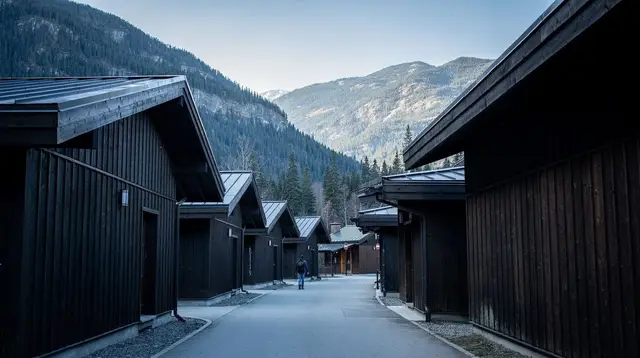
GetYourGuide does not provide a product photo for this activity — the image shows the meeting point, photographed by us.