Cheakamus Lake: The Easier Hike in Garibaldi Park
Is Cheakamus Lake an easier hike than Garibaldi Lake or Panorama Ridge?
Yes. Cheakamus Lake's trail is close to flat, with only around 100 m of elevation gain over roughly 14 km return, compared with about 800 m of climbing on the Garibaldi Lake trail and a full alpine day on Panorama Ridge. It is a different lake in the same provincial park, not a shorter path to the same view.
Garibaldi Park has more than one lake, and they are not interchangeable
Search for hikes near Whistler and three names keep surfacing from the same provincial park: Garibaldi Lake, Panorama Ridge and Black Tusk. All three share a trailhead near Rubble Creek, all three demand a long day of climbing, and all three are frequently fully booked out under BC Parks’ day-use pass system in summer.
Cheakamus Lake is a different body of water entirely, reached from its own trailhead on the opposite side of Garibaldi Provincial Park, and it solves a genuinely different problem: how do you get the forested, glacier-carved scenery of this park without an alpine ascent or a lottery for a parking spot.
This page covers Cheakamus Lake on its own terms. If you already know you want Garibaldi Lake, Panorama Ridge or Black Tusk, each has its own dedicated guide with the real numbers for that specific trail — see the links above. What follows here is Cheakamus Lake, and only Cheakamus Lake.
What Cheakamus Lake actually is
Cheakamus Lake sits inside the southeastern portion of Garibaldi Provincial Park, fed by glacial meltwater and ringed by old-growth forest rather than the bare alpine rock that surrounds Garibaldi Lake higher up the same park. The trailhead is reached via a forest service road off Highway 99 near Whistler, on the opposite side of the highway from the Rubble Creek access point used for Garibaldi Lake, Panorama Ridge and Black Tusk. That separation matters: driving directions, parking situation and trail conditions for one route tell you nothing reliable about the other.
The trail itself follows the Cheakamus River upstream through mature forest before opening onto the lakeshore. It is, by the standards of this park, gentle: hikers describe it as closer to a long forest walk than a mountain hike, with the lake itself as the reward rather than a summit or a ridge.
The numbers, and why they must not be borrowed from Garibaldi Lake
This is the one place hikers get Cheakamus Lake wrong, usually by accident: repeating the distance or elevation figures for Garibaldi Lake as if they applied here. They do not. The two trails share a park boundary and not much else.
| Trail | Distance (return) | Elevation gain | Terrain |
|---|---|---|---|
| Cheakamus Lake | roughly 14 km | around 100 m | forest walk, close to flat |
| Garibaldi Lake | roughly 18 km | around 800 m | steady climb, alpine finish |
| Panorama Ridge | roughly 30 km | well over 1,000 m | long alpine day, early start required |
| Black Tusk | long, from the same base as Garibaldi Lake | significant, plus exposed scrambling near the summit | rock scramble at the top |
Cheakamus Lake’s roughly 100 m of elevation gain over 14 km return is close to flat by the standards of this park. Garibaldi Lake’s climb of around 800 m, by contrast, is a genuine mountain ascent even before Panorama Ridge or Black Tusk add further distance and elevation above the lake. If a route description for Cheakamus Lake quotes 800 m of climbing or an 18 km round trip, it has confused the two lakes — check which trailhead it is actually describing before you commit a day to it.
Most hikers cover the Cheakamus Lake trail in four to six hours including a stop at the shore, walking at an easy, conversational pace rather than the sustained climbing rhythm that Garibaldi Lake demands.
Getting to the trailhead — the part that can go wrong
The Cheakamus Lake trailhead is reached by a forest service road that has, in recent years, been affected by washouts, and vehicle access along it has at times been restricted well short of the original trailhead. When that happens, hikers park earlier and walk the closed section of road on foot, which can add several extra kilometres each way on top of the marked trail distance above — turning what is otherwise the easier lake hike in the park into a considerably longer day. Road conditions on Sea to Sky forest service roads change from one season to the next, so confirm current access before driving out, rather than assuming the road is open because it was last year.
This is also the practical case for the guided option covered below: a driver who already knows whether the road is open removes the single biggest source of wasted time on this hike.
How it compares to the other Garibaldi Park hikes
Versus Garibaldi Lake. Garibaldi Lake is the park’s signature turquoise, glacier-fed lake, and its trail climbs roughly 800 m over about 18 km return to reach it — a full mountain day. Cheakamus Lake trades that alpine payoff for an easy forest walk with a fraction of the effort and elevation. Neither is a substitute for the other; they are different lakes with different outputs for a day’s hiking. See the dedicated Garibaldi Lake difficulty and length guide if the alpine lake is what you are actually after.
Versus Panorama Ridge. Panorama Ridge starts from the same Rubble Creek trailhead as Garibaldi Lake and adds a long alpine ridge walk above it, for a round trip in the region of 30 km — one of the longest day hikes commonly attempted in the corridor. It is not a fair comparison to Cheakamus Lake in either distance or difficulty. Full details are on the Panorama Ridge length guide.
Versus Black Tusk. The volcanic plug of Black Tusk is reached from the same base as Garibaldi Lake and finishes with an exposed rock scramble near the summit, which is a different category of hike again — technical footing, not just distance. See is the Black Tusk hike a scramble before considering it.
Versus Joffre Lakes. Joffre Lakes, north near Pemberton, is a separate provincial park entirely with its own day-use pass system and its own history of temporary closures. It is a fair comparison in terms of relative ease — a shorter, less technical hike than Garibaldi Lake — but it is not in Garibaldi Provincial Park and the two should not be confused when planning. The Joffre Lakes permit and closures guide and the direct Joffre Lakes versus Garibaldi Lake comparison cover that ground if it is relevant to your trip.
Permits and BC Parks rules
Garibaldi Lake and Joffre Lakes both require a free day-use pass booked online in high season, introduced by BC Parks to manage crowding on the busiest trails in the region. Cheakamus Lake has not been subject to the same pass requirement. Rules on BC Parks trails do change, and a closure or new booking requirement introduced partway through a season is exactly the kind of thing a guidebook page cannot promise to stay current on — check the official BC Parks page for Garibaldi Provincial Park before you drive out, whichever of its trails you plan to hike.
If there is a backcountry campground near the lake’s outlet, reservations run through the same BC Parks booking system used for the park’s other overnight sites; most visitors, though, treat Cheakamus Lake as a long day hike rather than a reason to carry an overnight pack.
When to hike it
The forest-and-river setting of the Cheakamus Lake trail means it is workable across a longer window than the high alpine routes in the same park, which typically only clear of snow by midsummer. Snow can still linger into early summer at the lake itself in a heavy year, and the forest service road access described above is the more likely obstacle earlier in the season. Late June through September is the most reliable stretch. Outside of that, the best time to visit Whistler guide covers how the wider hiking season in the Sea to Sky corridor opens and closes month by month, and it is worth reading before locking in dates for any hike in this park.
Bears are active in this forested valley through the warmer months, as they are across the Whistler area generally — carry bear spray, make noise on the trail, and never approach or feed wildlife.
Doing it guided versus on your own
Hiking to Cheakamus Lake independently costs nothing beyond a tank of gas and the time on the trail, and the route is well marked once you are past any road-access complications. The case for going guided is really the case for removing the two variables covered above: whether the forest service road is currently drivable, and whether you would rather someone else handle navigation and safety briefing on bear country.
A guided day hike to Cheakamus Lake in Garibaldi Provincial Park bundles transport, a guide familiar with current road and trail conditions, and a paced itinerary into the forest and back — a guided Cheakamus Lake hike from Whistler covers exactly that.
If, after reading the comparison above, the alpine turquoise lake is actually what you pictured rather than a forest walk, the guided alternative for that hike is a full-day guided hike to Garibaldi Lake, which handles the steeper 800 m climb with a guide setting the pace. And for visitors staying in Vancouver rather than Whistler who want a single day covering the drive up the Sea to Sky Highway plus a hike, a Sea to Sky and Whistler day tour from Vancouver is worth comparing against organizing your own transport and trailhead logistics from scratch.
What to bring
Even on a comparatively flat trail inside a mountain park, conditions can shift quickly. Bring layers, since the forest canopy keeps temperatures cooler than the open highway a short drive away; sturdy footwear, as the trail crosses roots and can be muddy after rain; bear spray and the knowledge of how to use it; more water than you think you need, since there is no facility at the lake; and a paper map or downloaded offline map, since cell coverage on forest service roads and inside the park is unreliable. If road access has been restricted and you end up walking an extra stretch of forest service road on foot, budget the extra time and daylight for it rather than discovering the shortfall partway through the return leg.
Planning the rest of the day or trip
Cheakamus Lake works well as a single-focus day from a Whistler base, without needing to be combined with anything else — it is a full but unhurried outing on its own. Visitors building a longer stay around Garibaldi Provincial Park’s various trails, rather than picking just this one, may find the four-day Whistler and Garibaldi Park itinerary a more useful starting point than trying to fit Cheakamus Lake, Garibaldi Lake and a rest day into a shorter visit.
For a broader sense of how many days a Whistler trip needs before adding hikes at all, see how many days do you need in Whistler. And for the full spread of trail options in the area, including easier walks close to the village for anyone hiking with young children or limited time, the hiking trails category page lists every route the site covers, sorted from valley strolls to full alpine days.
Mountain bikes and the trail beyond the lake
Unlike most trails inside Garibaldi Provincial Park, cycling is permitted on the Cheakamus Lake Trail as far as the lake outlet, making it one of the few mountain-bike-accessible routes within the park boundary. Past the outlet the trail switches to hiking-only and continues along the lake’s north shore before climbing toward Helm Creek, where it joins the same trail network used to reach Black Tusk and Garibaldi Lake from the north side of the park.
That connection turns Cheakamus Lake into one end of a multi-day traverse rather than only an out-and-back day hike: backpackers enter here and exit at the Rubble Creek trailhead near Garibaldi Lake, or the reverse, camping at a backcountry site along the way. Because the two trailheads sit on opposite sides of the park and are not linked by a through-road, this route needs a car shuffle or arranged transport between them, not a there-and-back drive.
Water, fishing and facilities at the trailhead
The lake is glacier-fed and stays cold through summer, so a swim here is a short, bracing dip rather than a lingering one even in August; most visitors wade rather than swim out. Cheakamus Lake holds trout, and fishing is allowed with a valid BC freshwater licence under the catch-and-release rules that apply across most of Garibaldi Provincial Park, worth confirming before packing a rod. The trailhead has a small parking area and a pit toilet, but no drinking water and no food service, so fill bottles before leaving Whistler rather than counting on anything at the trailhead itself. Dogs are permitted on the trail but must stay leashed throughout, as elsewhere in the park, and owners are expected to pack out waste.
Hiking on GetYourGuide
Verified deep-linked GetYourGuide tours. Book through these links and we earn a small commission at no cost to you.
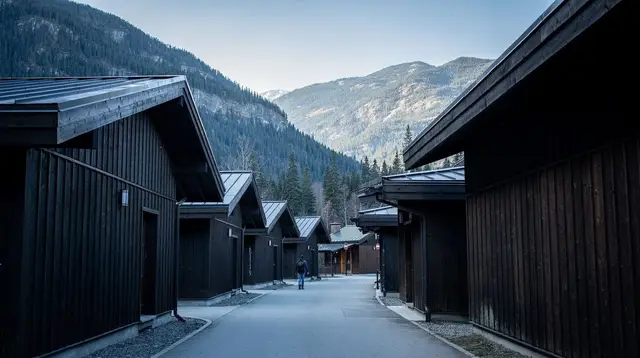
GetYourGuide does not provide a product photo for this activity — the image shows the meeting point, photographed by us.