How Many Days Do You Need in Whistler?
How many days do you need in Whistler?
Plan on two to three full days to see Whistler Village, ride the PEAK 2 PEAK Gondola and walk one lake trail. Skiers and riders chasing the resort's 8,000-plus acres and 200-plus runs, or hikers working through the alpine trail network, usually need four to seven days to feel like they have actually used the place rather than glimpsed it.
What actually decides your day count
The honest answer is that Whistler scales to whatever time you give it, and the wrong question is “how many days is normal” — it is “how many days does what I want to do actually take.” A skier who only wants to feel the terrain once and a hiker aiming to walk the alpine trails around Garibaldi Provincial Park are not planning the same trip, even though they might book the same hotel in Whistler Village.
Two numbers set the scale of the place. Whistler Blackcomb spans more than 8,000 acres of skiable terrain across over 200 marked runs, three glaciers and two mountains linked by the PEAK 2 PEAK Gondola — far more than a single day, or even three, can meaningfully cover on skis.
On the ground, the paved Valley Trail alone runs about 40 kilometres through the valley, linking Alta Lake, Lost Lake, Green Lake and the Train Wreck Trail into a network that easily fills several full days of walking, cycling or paddling without ever leaving the valley floor. Whichever season brings you, treat those two figures as the reason Whistler resists a single “right” number of days.
This guide sets out realistic day counts by scenario. It does not cover getting here from Vancouver — that is a separate question — and it does not try to string destinations together into a full itinerary; for that, the dedicated multi-day itineraries are the better starting point once you know roughly how many days you are working with.
Day counts at a glance
| Trip type | Days | What it realistically covers |
|---|---|---|
| Day trip, no overnight | 1 | Village, PEAK 2 PEAK Gondola, one short lake walk |
| Quick overnight | 2 | Village and gondola, plus one lake, hike, or bike-park session |
| Long weekend | 3 | The above, plus one full mountain or alpine activity day |
| Balanced first visit | 4–5 | Skiing or biking across both mountains, one alpine hike, one rest or spa day |
| Dedicated ski, ride, or hike trip | 6–7+ | Multiple mountain days, a long alpine hike, lake time, and slack for weather |
One day: what it forces you to skip
A single day in Whistler, arriving and leaving the same day, is a real option and a common one for visitors based in Vancouver, but it is worth being blunt about its limits before you build a trip around it. In practical terms, one day covers Whistler Village itself — a pedestrian core walked end to end in about 15 minutes — a ride on the PEAK 2 PEAK Gondola between Whistler Mountain and Blackcomb Mountain, and perhaps a short walk at Lost Lake or along the Train Wreck Trail. That is a genuinely good half-day-plus of sightseeing, and it is enough to answer “what is Whistler like.”
It is not enough for skiing, for the bike park, for any of the alpine hikes, or for Squamish and the wider Sea to Sky corridor. If your goal is scenery and a taste of the gondola system, one day works. If your goal involves skis, a bike, or hiking boots, treat one day as a preview rather than the trip itself, and budget a return visit.
Two to three days: the workable minimum
Two days is where a first visit starts to feel complete rather than glimpsed. The pattern that works best puts the village, the gondola and general orientation on day one, then dedicates day two to a single mountain activity chosen deliberately rather than squeezed in: a morning on the lower slopes of the Whistler Ziplining Experience, an easy lake walk, or a first lap through part of the Whistler Mountain Bike Park if you ride.
Three days adds real breathing room. It is enough to add a proper hike, such as the gentler stretches of the Valley Trail or the approach to Cheakamus Lake, or to fit in one of the guided options that combine several short activities in a single outing, like a guided wilderness hike through the forest around Whistler. Three days is also the minimum sensible length if you want to add an evening activity such as the Vallea Lumina night walk without feeling rushed the next morning.
For context on how this compares with longer plans, the two-day first-timer itinerary and the three-day village-and-lakes itinerary lay out hour-by-hour versions of exactly this scale of trip.
Four to five days: the sweet spot for most visitors
Four to five days is where Whistler stops feeling squeezed. This is enough time to split skiing or riding across both Whistler Mountain and Blackcomb Mountain without repeating the same runs, or to combine a full day at the bike park with a full alpine hiking day and still have a slower day left over for the lakes or a spa visit. It is also the first length of trip where weather stops being a real threat to the whole plan — the Sea to Sky corridor gets its share of rain and low cloud, and a spare day means one bad-weather day does not sink the entire visit.
At this length, a genuine alpine hike becomes realistic. The approach to Garibaldi Lake or the trail to Panorama Ridge inside Garibaldi Provincial Park are long days on their own — treat each as consuming an entire day of your trip, not a morning. The same is true of Joffre Lakes, north of Pemberton, which is popular enough, and closed often enough under its current agreement with local First Nations, that it deserves its own day and its own checking of current access rules rather than being bolted onto another outing.
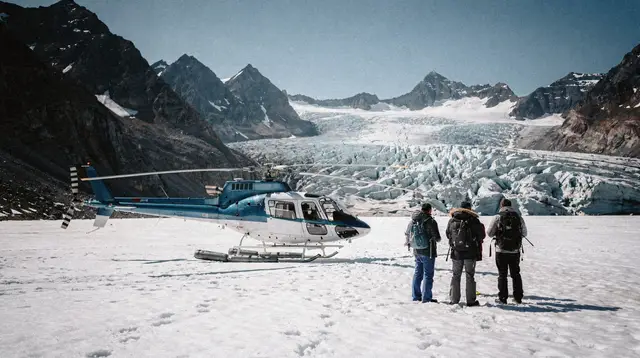
Four to five days is also long enough to fit in an activity that needs a clear weather window, such as a helicopter tour over Whistler Blackcomb, since a spare day gives you a second chance if the first is clouded in.
For structured versions of this length, see the four-day Whistler and Garibaldi Park itinerary and the five-day Whistler and Sea to Sky corridor itinerary.
A week or more: for skiers, hikers, and bike-park regulars
A full week starts to do justice to the numbers that make Whistler Blackcomb the largest ski area in North America by skiable terrain. Skiers and riders get several full mountain days across both peaks and all three glaciers, plus at least one lower or backcountry-adjacent day away from the lift lines. Mountain bikers can work through the graded trails of the bike park from green runs up toward the harder black-diamond lines without cramming it into one or two exhausting days.
Hikers benefit the most from extra time, since the marquee alpine trails — Garibaldi Lake, Panorama Ridge, Black Tusk and Joffre Lakes — are each full days, and weather or trail closures can knock out a planned day entirely. A week gives enough slack to reschedule a hike rather than lose it, and still leaves time for a rest day around the lakes or at a spa.
Longer stays are also where day trips out to Squamish — the Stawamus Chief, Shannon Falls and the Sea to Sky Gondola — fit comfortably as an extra day rather than a rushed detour. See the seven-day Whistler, Sea to Sky and Vancouver itinerary and the Whistler mountain biking getaway for two very different ways to use that much time.
Winter days versus summer days
Winter and summer days in Whistler are not interchangeable units, which is part of why a day count that works for one season can be wrong for the other. A winter day is anchored to lift hours and daylight, which is shorter in the deep winter months, and a single ski day can genuinely exhaust the legs before it exhausts the terrain — three or four consecutive ski days is a realistic ceiling for most visitors before a lower-key day is welcome.
Never plan around fixed opening or closing dates for the season: the mountains typically run from late November into spring on Whistler and a little later into the season on Blackcomb, but exact dates shift every year with snowfall, so check current lift status before committing days to skiing specifically.
Summer days run longer and cover more ground per day, since daylight stretches well into the evening and activities like the bike park, lake swimming and paddling on the River of Golden Dreams can all fit into a single day without the fatigue that a full ski day carries. This is also why the 40-kilometre Valley Trail matters as a planning figure in summer specifically — it is walkable or rideable in sections across several days without repeating scenery, which is a different kind of “day count” problem than winter’s lift-hour limits.
Reasons to add a day that first-time planners miss
A few things push a sensible day count higher without visitors realising it in advance. Black bears are commonly seen around the valley between roughly May and October, and a dedicated guided viewing outing is worth its own slot rather than being tacked onto a hiking day. Late September into October brings the golden larches to the alpine trails, a short and popular window that some visitors add an extra day specifically to catch.
Festivals such as Crankworx in August fill the village and its accommodation, which argues for arriving a day early rather than cutting it close. And permit or access rules at Garibaldi Provincial Park and Joffre Lakes can change with little notice, so a trip built with zero spare days has no room to absorb a closure on the one day it was scheduled.
The drive in eats into your first day
Whistler has no train or scheduled rail link from Vancouver: the only ways in are by car, coach or shuttle along Highway 99, and the drive itself takes roughly two and a half to three hours from Vancouver or Vancouver International Airport in normal conditions, longer with weekend traffic through Squamish. That is not a side note when you are counting days — a midday flight into YVR followed by the drive routinely turns a planned “day one” into an evening arrival with nothing left but dinner.
Winter adds a legal constraint on top of the time cost: winter tyres or chains are required by law on Highway 99 from 1 October to 30 April, whether you are driving your own car or a rental, and turning up without them risks being turned back or fined. Anyone booking a rental car for a winter trip needs to confirm winter tyres are fitted before pickup, not assume it.
What an extra night actually costs
Accommodation prices quoted online are before tax. Whistler stacks 5% GST with 8% PST and a 3% Municipal and Regional District Tax on top of the room rate, so the real cost of a night runs about 16% above the advertised figure. Restaurants expect a further 15–20% tip on the bill. Neither charge shows up when comparing nightly rates between a three-day and a five-day trip, so the gap between those two plans is wider in practice than the headline prices suggest, particularly once two or three dinners are added for the extra nights.
How many days to spend in Whistler: FAQ
Is one day enough to visit Whistler?
One day covers Whistler Village, a ride on the PEAK 2 PEAK Gondola and a short lake walk, but nothing more. It works as a day trip from Vancouver, not as a real visit to the mountains.
How many days do I need for skiing or snowboarding at Whistler Blackcomb?
Three to five days lets you sample both mountains without repeating runs constantly, since the terrain spans more than 8,000 acres and over 200 marked runs. A week suits skiers who want to explore alpine bowls and both glaciers properly.
How many days should I spend in Whistler in summer?
Three to five days covers the bike park, one or two lake days and a hike, but the Valley Trail alone runs about 40 kilometres, and the high alpine trails add a full extra day each if you want to include them.
Is two days enough for a first visit to Whistler?
Two days is a workable minimum: one for the village and gondola, one for a lake, a short hike or the lower bike park. It leaves out longer alpine days and most mountain activities.
Do I need extra days for hikes like Garibaldi Lake or Panorama Ridge?
Yes. Garibaldi Lake and Panorama Ridge are long alpine days on their own, each best treated as a dedicated day rather than combined with anything else in the valley.
Should I add days for bear viewing or the bike park?
Both work well as half-day additions rather than full days, so they fit alongside a lake visit or a village day without needing a separate night in Whistler.
Is a week too long to spend in Whistler?
Not for skiers, riders or hikers who want to work through the terrain properly. A week lets you mix the bike park, several lakes, one long alpine hike and a rest day without rushing.
Multi-Day Tours on GetYourGuide
Verified deep-linked GetYourGuide tours. Book through these links and we earn a small commission at no cost to you.
GetYourGuide does not provide a product photo for this activity — the image shows the meeting point, photographed by us.