Green River Whitewater Rafting Near Whistler: Who It's For
Who is Green River whitewater rafting near Whistler for?
It suits first-time to intermediate rafters who want a genuine whitewater trip without a long drive from Whistler Village. The Green River is fed directly by the valley's lakes and glaciers, so its rideable whitewater season is short and tied to snowmelt, running from roughly June to August.
Who actually wants to raft the Green River
Not every visitor to Whistler wants to get wet and cold on purpose, and that is exactly the filter worth applying before booking. The Green River whitewater trip is built for people who want a real rafting experience — actual rapids, a guide calling paddle commands, a splash in the face — without driving an hour or more out of the valley to find one. If your image of a good afternoon involves gentle scenery and dry feet, this is the wrong page; if it involves laughing through a wave train and comparing bruises afterwards, keep reading.
It works well for solo travellers looking to join a group trip, for couples wanting a shared adrenaline hit that does not require technical skill, and for groups of friends who want one genuinely active outing to anchor a longer stay based in Whistler Village. It is a poor fit for very young children, for anyone with a heart or back condition that rules out sudden jolts and cold-water immersion, and for travellers hoping for a calm, scenic float — that is a different product, covered below.
This page is specifically about the dedicated Green River whitewater rafting product sold out of Whistler. It does not cover Elaho River rafting near Squamish, which is a separate river, a separate outfitter drive, and a separate guide on this site, and it does not cover the Cheakamus Splash family float, which is a gentler, distinct trip aimed at younger kids and first-time paddlers who want scenery rather than rapids.
The river: fed by the valley’s own lakes and glaciers
The Green River is not an abstract “whitewater run” bolted onto the Whistler itinerary — it is the actual drainage of the valley the resort sits in. Its flow is built from snowmelt and run-off coming off the peaks around Whistler Blackcomb, fed in turn by the lake system that also includes Alta Lake and Green Lake. That lineage matters practically: because the river’s volume tracks the mountains’ snowpack rather than a dam or a reservoir, the amount of water in the channel on any given day is a direct function of how much snow is melting upstream, and how fast.
That is also the trap worth naming plainly: this is not a year-round river trip. Unlike a dam-controlled river that can be rafted on a fixed schedule regardless of season, the Green River’s rideable whitewater window is set by the melt cycle. Flows build through late spring as the snowpack releases, peak through the warmest weeks of summer, and taper off once the high-elevation snow is largely gone.
Outside that window the channel typically runs too low, or in early spring too unpredictable, to support the commercial whitewater trip. Never assume this run operates on the same year-round basis as, say, a scenic gondola ride or a museum visit — always check current availability before building a date around it, and treat any specific opening or closing week as a guide, not a promise, since melt timing shifts from year to year.
In practice, the commercially rafted season concentrates in the summer months, roughly June through August, when snowmelt from the surrounding glaciers and high slopes keeps the river running at a level suited to a guided whitewater trip. That overlaps neatly with the rest of Whistler’s warm-weather calendar — the Whistler Mountain Bike Park running at full tilt, the lakes finally warm enough to swim, hiking trails opening at altitude — which is one reason rafting fits naturally into a broader summer stay rather than standing alone.
What a day on the water looks like
A typical Green River rafting trip runs as a half-day outing built around a shorter stretch of actual time on the water. Expect this rough shape:
| Stage | What happens | Approximate share of the outing |
|---|---|---|
| Check-in / pickup | Meet in Whistler Village, sign waivers, get sized for gear | Short |
| Kitting up | Wetsuit, splash jacket, booties, helmet, life jacket | Short |
| Safety briefing | Paddle commands, what to do if you fall out, guide introductions | Short |
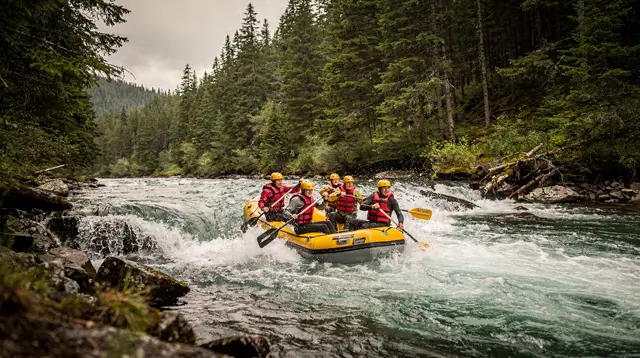
| On the river | The actual whitewater run, guided | The active core of the trip |
| Return and debrief | Change out of wet gear, return transport | Short |
Because the trip is guided rather than self-directed, no prior rafting experience is assumed. A river guide sits at the stern, reads the water, and calls forward and back paddle commands through each rapid; participants supply energy and follow instructions rather than route-finding. That structure is exactly why the trip is marketed as suitable from beginners through intermediate paddlers, rather than as an expert-only run.
Whistler’s dedicated Green River whitewater rafting trip is the catalog product built specifically around this river — worth booking directly rather than assuming any rafting trip advertised in the village covers the same water, since Whistler’s rafting operators run more than one river.
Cold water, warm air: what to expect physically
Because the Green River’s whitewater is powered by snowmelt, the water itself stays cold well into summer even when the air temperature climbing above the Squamish corridor is warm. Outfitters supply wetsuits, splash jackets, booties and helmets as standard kit, and wearing all of it properly is not a formality — it is what makes several hours near cold, moving water comfortable rather than miserable. Bring a swimsuit to wear underneath, and pack a towel and full change of dry clothes for the ride back, since you will be genuinely wet by the end.
Physically, the trip asks for enough paddling stamina to contribute through a series of active bursts, plus the nerve to stay calm if the raft dips through a bigger wave or someone briefly ends up in the water — guides train for exactly that scenario and it is part of the standard safety briefing, not a sign something has gone wrong. It is not a trip that demands technical whitewater skill; it is a trip that rewards a reasonable level of fitness and a willingness to get thoroughly splashed.
How it differs from the Elaho River and from Cheakamus Splash
Whistler and the wider Sea to Sky corridor sell more than one rafting product, and mixing them up is an easy, avoidable mistake when booking.
- Green River (this page): a dedicated whitewater trip close to Whistler itself, fed by the valley’s own lakes and glacial melt, aimed at beginner-to-intermediate paddlers, running on a snowmelt-driven summer season.
- Elaho River, near Squamish: a separate, bigger-volume glacier-fed river further from Whistler, involving a longer drive and generally bigger, more sustained rapids — covered in a dedicated guide rather than here, since the logistics, the drive and the intensity differ enough to plan for separately.
- Cheakamus Splash: a gentler, family-oriented float rather than a genuine whitewater run, designed for younger children and travellers who want river scenery without real rapids — a different trip entirely from the one described on this page.
If in doubt about which product a listing describes, check whether it names the river. “Whitewater rafting near Whistler” as a generic phrase can mean any of the three; the Green River product should say Green River, or reference the trip linked above.
Building it into a Whistler stay
Because the trip runs half a day, it slots easily alongside other summer activities rather than eating an entire day of a short stay. Pair a morning on the Green River with an easy afternoon walk around Lost Lake or a paddle on the River of Golden Dreams if the group wants a second, calmer water activity the same day, or save the afternoon for the village itself and the Scandinave Spa to warm back up.
For travellers weighing rafting against other adrenaline options in the same trip, a side-by-side off-road adventure through the backcountry covers similar territory on land rather than water, and a guided wilderness hike into the alpine suits anyone who wants exertion without immersion in cold water. Travellers who prefer to see the same glacier-fed terrain from above rather than from a raft might instead consider a helicopter tour over Whistler and Blackcomb, which covers the source of that snowmelt rather than its downstream current.
Anyone planning a longer stay around this kind of activity should read up on how many days to allow in Whistler and on the best time of year to visit, since the rafting season, the bike park season and the alpine hiking season overlap but do not align perfectly, and stacking too many weather-dependent activities into a short trip raises the odds that one of them gets rained or flowed out. If the forecast turns against an outdoor day entirely, our roundup of rainy-day adventure activities in Whistler covers the fallback options.
For travellers deciding between rivers rather than between activities, when the lakes are actually swimmable and whether Green Lake suits paddling are useful companion reads, since both draw on the same melt-driven water cycle that governs the Green River’s rafting season.
Practical logistics
Most Green River rafting trips depart from or offer pickup in Whistler Village, which keeps the day simple for travellers without a car — one more reason it fits naturally into a car-light Whistler stay. Confirm the exact meeting point when booking, since pickup locations can shift by operator and by season.
A few practical notes worth carrying into the booking:
- Minimum age and weight limits are common on whitewater trips generally; check the specific listing rather than assuming a family with young children can bring everyone.
- Weather and flow can cancel a departure. Because the river depends on snowmelt and current conditions, an outfitter may reschedule or adjust a route on short notice if flows run unusually high or low. Build a spare day into the itinerary if the rafting day matters to you.
- Photos are usually limited or unavailable mid-run, since bringing a personal camera or phone onto the water is generally discouraged; many operators offer trip photos as an add-on instead.
- Footwear matters. Closed-toe shoes that can get wet and stay on your feet work better than sandals; some operators supply booties as part of the kit.
Green River rafting near Whistler: your questions answered
Is the Green River rafting trip suitable for beginners?
Yes. It is typically run and sold as an introductory to intermediate whitewater trip, with a guide steering and calling commands, and a safety briefing before launch. No prior rafting experience is required, though a reasonable comfort level in cold moving water helps.
What months can you actually raft the Green River?
The commercially rafted whitewater season is concentrated in summer, broadly June through August, when snowmelt from the surrounding peaks and glaciers keeps flows high enough for a whitewater run. Outside that window the river typically runs too low for the trip to operate.
Is Green River rafting the same as the Cheakamus Splash family float?
No. The Green River trip covered here is a dedicated whitewater product with genuine rapids, distinct from the gentler, family-oriented Cheakamus Splash float, which is a separate, calmer product aimed at younger children and nervous first-timers.
Is this the same river as Elaho River rafting near Squamish?
No, they are two different rivers and two different trips. The Elaho, rafted out of Squamish, is a bigger-volume, more remote glacier-fed river with a longer drive and bigger rapids; the Green River trip runs closer to Whistler itself. See our separate guide to Elaho River rafting for that option.
How cold is the water on the Green River?
Cold. The river is fed by snowmelt, lakes and glacial run-off from the mountains around Whistler, so the water stays cold even on a hot summer day. Wetsuits, splash jackets and booties are standard-issue gear, not optional extras.
Do I need to book in advance in July and August?
Booking ahead is strongly recommended in peak summer. Green River rafting is a popular, weather- and flow-dependent product with limited daily departures, and the best time slots sell out during the busiest weeks of July and August.
What should I bring on a Green River rafting trip?
Bring a swimsuit to wear under the wetsuit the outfitter provides, a towel and dry clothes for afterwards, secure footwear if you have your own, and sun protection for before and after the river. Leave valuables at your accommodation or in a locker if one is offered.
How long does the trip take, including transport from the village?
Counting pickup or check-in in Whistler Village, gearing up, the safety briefing, the time on the water and the return, plan for roughly half a day. The time actually spent paddling on the river itself is shorter than the total outing.
Whitewater Rafting on GetYourGuide
Verified deep-linked GetYourGuide tours. Book through these links and we earn a small commission at no cost to you.
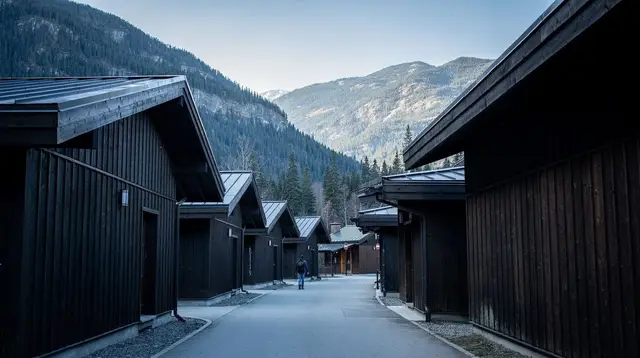
GetYourGuide does not provide a product photo for this activity — the image shows the meeting point, photographed by us.