Snowshoeing at the Top of the Sea to Sky Gondola
Can you go snowshoeing at the top of the Sea to Sky Gondola without any winter hiking experience?
Yes. The gondola lifts you above Squamish to marked, mostly gentle snowshoe trails around the Summit Lodge, and guided tours supply snowshoes, poles and a guide, so no prior winter mountain skills are needed. This is a Squamish activity on the gondola's own trail network, entirely separate from skiing or snowboarding at Whistler Blackcomb, which sits about 60 km further north.
No Ski Poles, No Problem: What This Trail Actually Is
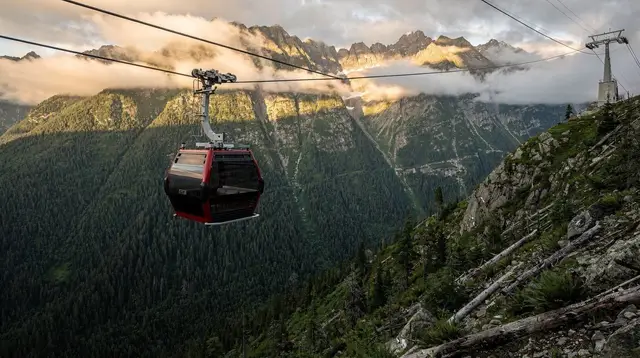
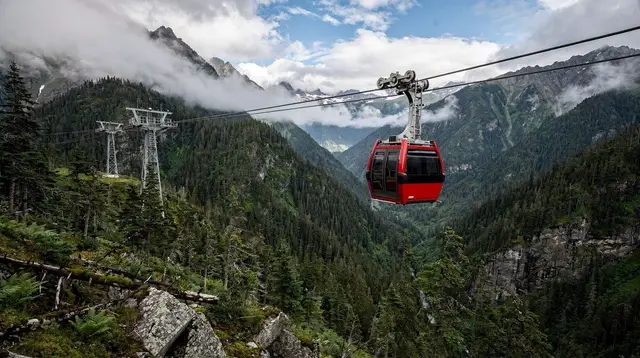
Snowshoeing at the top of the Sea to Sky Gondola is one of the easiest ways to stand in real alpine snow near Vancouver without owning a single piece of winter gear or having ever strapped on a snowshoe before. The gondola does the hard part: it lifts you roughly 885 m above the highway in about ten minutes, from the parking lot outside Squamish to the Summit Lodge, where a network of marked winter trails opens up right outside the building. From there, walking on snowshoes is closer to a brisk hike than a technical skill — the equipment simply spreads your weight so you do not sink into soft snow.
This is worth stating clearly because the two most common questions about this activity both come from confusing it with something bigger. First: no, you do not need winter hiking experience, ice axe skills, or a fitness level suited to backcountry travel. The summit loops are short, marked, and graded for visitors who have never left pavement in winter. Second, and more important for trip planning: this is not skiing.
Snowshoeing here happens on the Sea to Sky Gondola’s own summit network above Squamish, a separate mountain and a separate business from the ski runs at Whistler Blackcomb, which sit about 60 km further north along the same highway. If your plan for the day is downhill skiing or snowboarding, that is a different destination, different lift tickets, and a different guide on this site — see the Whistler Blackcomb ski season guide and the Epic Pass pricing guide instead.
Getting to the Trailhead: The Gondola Ride Up
The trailhead for summit snowshoeing is not a parking lot at the base of a mountain — it is the top station of the gondola itself. You buy admission, board a cabin at the base near the highway, and ride up through the forest to the Summit Lodge. The ride itself is short and scenic, with views opening over Howe Sound as you climb, and it is covered in more detail in the guide to what to expect on the Sea to Sky Gondola.
Worth knowing before you go: the gondola’s cable has been deliberately cut twice in its history, in 2019 and again in 2020, both times rebuilt and reopened — a story covered fully in the guide to the gondola’s cable-cut history, included here only because visitors sometimes ask about it, not because it affects current operations.
Because the snowshoe trails start right at the upper terminal, there is no additional hike or transfer once you arrive — you step off the gondola, collect your rental snowshoes if you have not already fitted them at the base, and the trail network begins within a few metres of the Summit Lodge deck. This is a meaningful difference from most snowshoe destinations, where reaching the snow line is itself part of the effort. Here, the effort is entirely optional and entirely on top.
The Trails: What a First-Timer Will Actually Walk
The marked winter trails around the Summit Lodge range from flat, wide loops close to the building to slightly longer routes that dip into the forest and along ridgelines with views back down toward Squamish and Howe Sound. Distances are modest: most loops fall somewhere between 1 and 3 km, and a relaxed pace with stops for photos generally takes 30 minutes to a little over an hour. None of the marked trails require technical terrain, scrambling, or route-finding — they are signed and packed by regular foot traffic, which is a large part of why this suits people with no winter hiking background.
That said, conditions at 885 m are genuinely different from the parking lot below. Wind is stronger and more constant at the summit, temperatures run several degrees colder, and after a fresh snowfall the trails can be soft underfoot until they are packed down again. None of this changes the difficulty rating of the walking itself, but it does change what you should wear, which is covered below. Families with children generally manage the flatter loops near the lodge comfortably, though most guided tours set a minimum age, commonly in the 6 to 8 range, so check the specific listing before booking if you are travelling with young kids.
For visitors who want to go further than the marked loops, the gondola area also connects toward viewpoints and, in summer, to alpine hiking routes — but those extended routes move into more serious terrain and are not part of the beginner-friendly snowshoeing described here. If your interest is really in bigger alpine days once the snow melts, that belongs with hikes like Panorama Ridge or the trails around Black Tusk, not with this winter walk.
Guided Tour or On Your Own
There are two ways to snowshoe at the summit, and the right one depends on how much you want handled for you.
A guided tour puts you with an instructor who fits your snowshoes, explains the basic mechanics of walking in them, and leads a set route while pointing out the surrounding peaks and any wildlife tracks in the snow. This is the simplest option for someone with genuinely zero winter experience, because every decision — pace, route, what to look at — is made for you. It is also the option most likely to include gondola admission and rental gear bundled into one price, which avoids the risk of arriving without a ticket or the right equipment.
Going independently means renting snowshoes at the Summit Lodge (or bringing your own) and walking the marked loops at your own pace, stopping wherever you like and taking as long as you want. This suits visitors who are reasonably comfortable outdoors in winter conditions and who would rather explore without a set schedule. The trade-off is that you handle your own gondola ticket, your own gear, and your own route decisions, and there is no one to explain trail conditions if the snow has changed since the last update.
For a first-time visitor with no winter hiking background — which is the situation this guide is written for — the guided route removes the most points of friction:
a guided snowshoeing outing at the summit, with snowshoes, poles and an instructor includedIf you already know you want to do the walking on your own and just need to get up the mountain, a straightforward admission ticket covers the ride and leaves the rest to you:
a Sea to Sky Gondola admission ticket that gets you up to the snowAnd for visitors coming from Vancouver without a car, a day tour that bundles transport, the gondola ride and often a stop at Shannon Falls removes the need to arrange the drive up the Sea to Sky Highway yourself:
a day tour from Vancouver that includes the gondola ride and drop-off along the wayWhat to Wear and Bring
Because the summit is meaningfully colder and windier than the highway below, dressing for the parking lot rather than the mountain is the most common mistake first-timers make. A workable list:
| Item | Why it matters |
|---|---|
| Waterproof winter boots | Snow works into low or non-waterproof shoes quickly |
| Warm layers (base + insulating + shell) | Wind chill at the summit is sharper than at the base |
| Gloves or mittens | Hands get cold fast holding poles in the wind |
| Hat covering the ears | Wind exposure is the main discomfort reported by visitors |
| Sunglasses or goggles | Glare off snow is strong even on overcast days |
| Water and a snack | The Summit Lodge has food, but a bottle keeps you moving |
Snowshoes and poles themselves do not need to be brought from home — rental at the base or the summit, or inclusion in a guided tour, covers this for almost every visitor. If you are combining this with other winter activities on the same trip, the general packing advice in what to pack for Whistler in winter applies just as well here, since conditions across the Sea to Sky corridor in winter are broadly similar.
Don’t Mix This Up With Whistler Blackcomb
It is worth repeating plainly, because it is the single most common planning mistake tied to this activity: snowshoeing at the top of the Sea to Sky Gondola happens above Squamish, roughly 60 km south of the village of Whistler and its ski resort. It shares a highway with Whistler Blackcomb, and both are winter destinations, but they are not the same place, do not use the same tickets, and are not interchangeable in an itinerary.
If someone in your group is looking for downhill skiing or snowboarding on marked runs, that is Whistler Blackcomb terrain, sold through the Epic Pass or a day lift ticket, and covered in the Whistler Blackcomb ski season guide. If the plan is a gentle, guided walk in the snow with sweeping views over Howe Sound and no lift-served runs involved, that is the Sea to Sky Gondola summit, and this guide covers it. The confusion usually comes from both places advertising “snow” and “mountain views” in similar language — the difference is entirely in what you do once you get to the top.
For a broader sense of how the gondola compares to Whistler’s own lift system, the PEAK 2 PEAK versus Sea to Sky Gondola comparison lays out the two side by side, and the PEAK 2 PEAK’s own length and ride time is covered separately if that is the gondola you are actually asking about.
Combining Snowshoeing With the Rest of the Summit
Because the gondola ride itself is the main cost of the day, most visitors treat snowshoeing as one part of a longer visit to the summit rather than the sole reason to go up. The Summit Lodge has a restaurant and viewing decks, short walking paths beyond the snowshoe loops are open to anyone on foot, and the general character of the site — including its suspension bridge and viewpoints — is described fully in the Sea to Sky Gondola overview.
If your visit to Squamish also includes time at the base, Shannon Falls is a five-minute walk from its own parking lot nearby, and the granite face of the Stawamus Chief dominates the view from the gondola’s lower station — worth noticing even if you have no plan to climb it.
Visitors building a longer loop out of Vancouver sometimes fold this stop into a wider Sea to Sky Highway road trip, pairing the gondola with a night in Whistler and other stops along Highway 99. For groups that want the flexibility of a private vehicle rather than a fixed-departure day tour, a private option covering the highway and its stops removes the scheduling constraints of a group tour:
a private Sea to Sky Highway tour that can build in time at the gondolaThe broader category of gondola rides and the full list of things to do at the Sea to Sky Gondola are useful starting points if you are still comparing this against other ways to spend a winter day in the corridor.
Best Time to Go
Reliable summit snow generally runs from December through March, though exact dates shift from year to year with how much snow falls and how it holds. Early and late in the season, coverage can be thin or patchy, and the gondola operator adjusts which trails are open accordingly. Because conditions genuinely vary, check current summit conditions on the gondola’s own website before locking in a date, rather than assuming a fixed calendar window — the same caution that applies to lift openings across the region, as covered in the guide to when Whistler’s lifts open and close.
Midweek mornings tend to be quieter than weekend afternoons, particularly during the December and February school-holiday periods, when both the gondola and the Summit Lodge see their heaviest traffic. Arriving earlier in the day also means better light for photos and less crowding on the shorter loops near the lodge.
Snowshoeing at the Sea to Sky Gondola: Frequently Asked Questions
Do I need snowshoeing experience to do this?
No. The summit trails around the Sea to Sky Gondola are graded for visitors with zero winter hiking background, and a guided tour walks you through fitting the snowshoes and using poles before you set off.
Do I need to bring my own snowshoes?
No. Guided snowshoeing tours at the summit include snowshoe and pole rental in the price, and you can also rent gear separately at the Summit Lodge if you prefer to walk the marked trails on your own schedule.
How long is the snowshoe trail at the top of the gondola?
The main loops are short, generally in the range of 1 to 3 km, taking most visitors 30 minutes to just over an hour depending on pace and how many viewpoints they stop at.
Is this the same place as skiing at Whistler Blackcomb?
No. This snowshoeing happens on Squamish’s Sea to Sky Gondola, reached from the highway between Vancouver and Whistler. Whistler Blackcomb’s ski runs are a separate resort about 60 km north, with its own lift tickets and terrain.
What should I wear for snowshoeing at the Sea to Sky Gondola?
Waterproof winter boots, warm layers, gloves, a hat and sunglasses for the glare off the snow. Temperatures at the summit are noticeably colder and windier than at the parking lot below.
Can kids go snowshoeing at the top of the gondola?
Yes, the flatter loops near the Summit Lodge suit families, though most guided tour operators set a minimum age, commonly around 6 to 8 years old, so check the specific tour before booking.
Do I need a separate ticket for the gondola and the snowshoe tour?
Some guided snowshoeing tours bundle the gondola admission into the price; others assume you already hold a gondola ticket. Read the tour description before booking so you are not paying for admission twice.
When is the best time of year to snowshoe here?
Typically from December through March, whenever snow cover at the summit is reliable. Coverage varies year to year, so check current conditions on the gondola’s own site before planning a specific date.
Gondola Rides on GetYourGuide
Verified deep-linked GetYourGuide tours. Book through these links and we earn a small commission at no cost to you.
GetYourGuide does not provide a product photo for this activity — the image shows the meeting point, photographed by us.