The PEAK 2 PEAK in Summer: Your Way Into the Alpine Trails
What is the PEAK 2 PEAK Gondola used for in summer?
In summer the PEAK 2 PEAK Gondola runs alongside the regular Whistler and Blackcomb sightseeing lifts and is the access point for the alpine hiking network above the treeline, including the High Note, Half Note and Harmony Lake trails. It is not only a way to cross between the two mountains — it is the trailhead.
More than a ride across the valley
Most descriptions of the PEAK 2 PEAK Gondola stop at the numbers: the 4.4-kilometre span, the unsupported crossing, the height above the valley floor. Those figures matter, and they belong on their own page — this one is about what the gondola actually does for you once summer arrives and you are standing at the top with hiking boots on. Between roughly June and October, the PEAK 2 PEAK is not primarily a sightseeing ride between Whistler Mountain and Blackcomb Mountain. It is the lift system that gets you above the treeline in the first place, and from there, the trailhead for one of the more rewarding short alpine hiking networks in the Sea to Sky corridor.
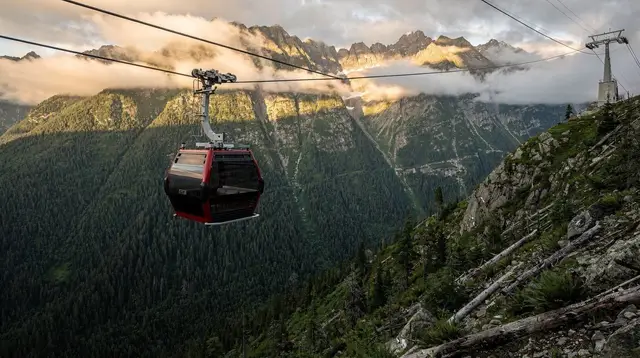
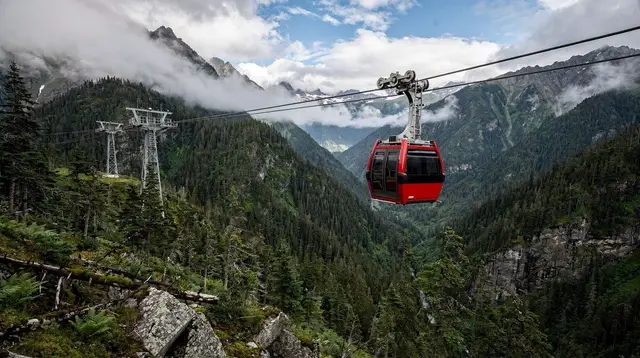
That distinction is easy to miss because almost every photo of the gondola is a summer shot of it hanging over green forest with glaciers behind it, sold as a scenic ride. It is that. But treating it only as a lift you ride up, admire the view, and ride back down on skips the actual reason a serious hiker plans a whole morning around it: once you step off at the Roundhouse Lodge or continue across to Blackcomb, a network of marked alpine trails — High Note, Half Note and Harmony Lake among them — starts right where the gondola drops you.
Two mountains, two summer lift systems, one alpine network
Whistler Blackcomb operates its full lift system in both winter and summer, which is unusual among ski resorts and is precisely what makes this alpine access possible. In summer, the Whistler Village Gondola carries hikers up from the base to the Roundhouse Lodge on Whistler Mountain. From the Roundhouse, the Peak Express and Harmony Express chairs continue higher still, onto genuinely alpine ground above 2,000 metres.
The PEAK 2 PEAK Gondola then links this Whistler-side system to the equivalent lifts on Blackcomb, so a hiker — or someone who simply wants to see both mountains in a single outing — can ride up one side, cross the valley by cable, and come down the other without ever driving between the two base areas.
This is the part worth stating plainly: the alpine trailheads are on the Whistler side. High Note and Half Note both begin from around the Roundhouse and the top of the Peak chair, while Harmony Lake starts near the top of Harmony Express, a short walk from the same hub. Blackcomb’s own summer alpine trail network exists but is smaller and less developed than Whistler’s.
In practice, most people planning a High Note or Harmony Lake hike do not need the PEAK 2 PEAK at all — the Whistler Village Gondola alone gets them to the start. The PEAK 2 PEAK becomes relevant when someone wants to combine the hike with a crossing to Blackcomb, for the ride itself, for a different set of viewpoints, or for lunch and a second gondola experience without repeating the same lift twice.
That single fact reframes how to plan the day. If the goal is purely to hike, buy the sightseeing ticket that gets you up the Whistler side and skip the crossing. If the goal is to see both mountains and treat the alpine walk as one part of a bigger day out, the full PEAK 2 PEAK loop earns its place.
What actually waits for you at the top
None of the three trails is covered in depth here — each has its own dedicated page with distance, elevation gain and difficulty, because they deserve real detail rather than a paragraph apiece. What belongs on this page is the framing: these are not casual boardwalk loops next to a viewing deck. They are genuine alpine trails, above the treeline, on exposed ground where weather changes fast and footing matters.
Harmony Lake is the gentlest introduction, a shorter out-and-back to a small alpine tarn that is often still holding snow well into July. Half Note runs along a ridge with sweeping views back toward Blackcomb and across the valley. High Note is the longest and most demanding of the three, tracing a high ridgeline with some of the best glacier views anywhere in the resort, and it typically opens later in the season than the lower trails because snow lingers on its upper sections. None of them is a stroll in trainers: expect loose alpine rock, sustained exposure to wind and sun, and a real need for layers even on a warm valley-floor day, because temperature and wind conditions 1,600 metres higher can be a different world entirely.
The category page for alpine hiking trails is the right next stop if you want trail-by-trail detail before committing to one. The point to take from this page is narrower: the gondola network is what makes any of these three hikes a half-day outing instead of a multi-day backcountry trip, because it removes well over 1,000 metres of climbing that would otherwise stand between the village and the alpine.
Building a summer day around the gondola
A typical alpine-hiking day starts early, both because afternoon thunderstorms are common on exposed ridgelines in summer and because the lifts open earlier than most people expect. Riders take the Whistler Village Gondola from the base of Whistler Village up to the Roundhouse, connect onto Peak Express or Harmony Express, and start walking from there. The PEAK 2 PEAK crossing to Blackcomb, when it is part of the plan, usually comes either before the hike — as a scenic warm-up and a look at the other side of the valley — or afterward, as a way to close the loop and descend via the Blackcomb Gondola instead of retracing the same route down.
Timing the return matters more than people expect. Lifts run on posted schedules that shift through the season, and the last descent of the day is a hard cutoff, not a suggestion — missing it means a long walk down a service road rather than a quick gondola ride. Because the alpine trails sit well above the last lift stations, it is worth allowing a real buffer: finishing a hike with twenty minutes to spare before the last ride down feels comfortable; finishing with five does not.
For visitors who want the gondola experience and the alpine access folded into an organised day rather than worked out lift by lift, a guided option removes the planning entirely. A day trip from Vancouver that includes the PEAK 2 PEAK crossing covers transport, the lift tickets and the logistics of connecting both mountains, leaving the hiking itself as the only thing to decide on the day. Travellers coming up from the coast without their own car often prefer this route simply to avoid the return drive on Highway 99 after a full day on the mountain.
Reaching the alpine without hiking at all
Not every visitor wants to walk the ridgelines, and the gondola system does not require it. Riding the PEAK 2 PEAK end to end and back is a complete outing on its own, with views that need no trail at all — three glaciers, the full width of the valley, and, on a clear day, sightlines well past the resort boundary.
Comparing it against the other cable ride in the area is worth doing before choosing one: the Sea to Sky Gondola near Squamish climbs a single mountain to a viewing deck and suspension bridge, while the PEAK 2 PEAK crosses an open valley between two peaks — different rides, different payoffs, and a fair number of visitors do both on the same trip through the corridor.
For anyone who wants altitude and views without walking the exposed ridgelines, a helicopter flight over both mountains covers terrain the trails cannot reach at all — glacier landings and high alpine bowls well beyond where the lift network ends. It is a different kind of experience from a hike, priced accordingly, but it answers the same underlying question: what does the alpine above Whistler actually look like up close.
Guided hiking versus doing it yourself
Because the trailheads sit right at the top of a public lift, nothing stops an independent hiker from riding up with a map and walking any of the three trails alone — trail markers are clear and the routes are well used in summer. Some visitors prefer a guide anyway, particularly for High Note, where a local guide adds route-finding confidence, pacing for a group, and context on the glaciers and geology that a solo hiker would otherwise miss. A guided alpine hiking outing bundles the lift access with a knowledgeable guide, which suits first-time visitors more than seasoned hikers who already know how to read alpine weather and terrain.
Either way, the lift tickets and the trail access are the same for guided and independent hikers — the gondola does not distinguish between the two. What differs is preparation: a guide carries the route knowledge and weather judgment that an independent hiker needs to bring themselves.
Practical notes worth knowing before you go
Opening dates for the higher trails, especially High Note, shift from year to year depending on snowpack, and Whistler Blackcomb posts current trail status rather than a fixed calendar date — checking that status the morning of your hike is worth the two minutes it takes, since a trail can still be snow-covered well into what feels like full summer elsewhere in the valley. The same applies to lift operating hours: they extend through the height of summer and contract in the shoulder weeks of June and September, which changes how early you need to start and how much daylight margin you have for a longer route like High Note.
Weather on an exposed ridge changes faster than weather in the village 1,500 metres below. A warm, still morning at the Roundhouse can turn windy and cold within an hour on the open ridgeline, and afternoon cloud building over the glaciers is a normal summer pattern, not a sign anything is wrong — it is simply a reason to be on the trail earlier rather than later. None of the three trails has services once you leave the lodge decks, so water, sun protection and a spare layer belong in every pack regardless of how the day starts.
Anyone weighing whether to prioritise the alpine trails against everything else Whistler offers in summer should read the broader seasonal picture first: when to visit for the best mix of trail conditions and quieter crowds covers how July, August and September differ from each other on the mountain, beyond just the gondola schedule. And for the lift economics behind all of this — what a ticket actually costs and how the Epic Pass changes the calculation for a multi-day stay — the dedicated pricing guide lays out the numbers this page deliberately leaves aside.
Putting it together
The PEAK 2 PEAK’s real summer job is easy to undersell: it is the piece of infrastructure that turns a genuine alpine hike into a half-day activity accessible to anyone who can ride a gondola and walk a few kilometres above the treeline. The scenic crossing between Whistler and Blackcomb is a bonus layered on top of that, not the main reason the lift matters in July and August. Whether the plan is a self-guided walk to Harmony Lake, the full ridgeline push to High Note, or simply riding the cable back and forth for the views, the trip starts the same way: up the Whistler-side lifts, out onto the alpine, and back down before the last car of the day.
For a full multi-day plan that folds this into a broader stay, the alpine hiking week in Whistler itinerary sequences High Note and its neighbouring trails alongside the resort’s other alpine days, and the gondola rides category rounds up every lift-based option in the corridor for comparison.
Frequently asked questions about summer alpine access via the PEAK 2 PEAK
Do I need a separate ticket to hike after riding the PEAK 2 PEAK?
No. The sightseeing ticket that includes the PEAK 2 PEAK also covers the Whistler Village Gondola or Blackcomb Gondola ride up, and hiking the alpine trails from the top stations costs nothing extra once you are up there.
Which mountain do I need to be on for the alpine trails?
The High Note and Half Note trails start from the Roundhouse Lodge on Whistler Mountain, while the Harmony Lake trail starts higher up, from Harmony Express on the same mountain. Blackcomb’s summer trail network is smaller and less developed than Whistler’s alpine side.
Can I do these hikes without taking the PEAK 2 PEAK itself?
Yes. You only need the Whistler Village Gondola to reach the Roundhouse and start hiking; the PEAK 2 PEAK trip across to Blackcomb is optional and adds a return crossing, not the trailhead access itself, which comes from the Whistler-side lifts.
Is the PEAK 2 PEAK open every day in summer?
It normally runs daily through the summer season alongside the sightseeing gondolas, but Whistler Blackcomb schedules maintenance closures on some lifts during shoulder weeks, so check the current day’s operating status before planning a hike around it.
How late can I ride down after hiking?
Last descent times vary through the summer and are usually posted for both the gondola and the connecting lifts; missing the last ride down means a long walk on a service road, so build in a buffer rather than aiming for the final departure.
Are the alpine trails from the gondola suitable for beginners?
They are alpine hikes above the treeline with real elevation, loose rock and afternoon weather risk, not paved viewpoints — fitness and proper footwear matter even though a lift does the first 1,000-plus metres of climbing for you.
What should I bring for a summer alpine hike from the gondola?
Layers for wind and sudden temperature drops, sun protection, sturdy shoes, water and snacks, since services thin out quickly once you leave the lodge decks and walk onto open alpine terrain.
Gondola Rides on GetYourGuide
Verified deep-linked GetYourGuide tours. Book through these links and we earn a small commission at no cost to you.
GetYourGuide does not provide a product photo for this activity — the image shows the meeting point, photographed by us.