Whistler Mountain vs Blackcomb Mountain: Which One Should You Ski?
What is the difference between skiing Whistler Mountain and Blackcomb Mountain?
They are two peaks of the same resort, Whistler Blackcomb, owned by Vail Resorts and covered by one lift ticket or Epic Pass. Whistler Mountain tops out around 2,182 m and closes in late April, while Blackcomb reaches about 2,284 m, keeps three glaciers and usually skis into late May.
One resort, two mountains: what actually differs
The single most important thing to understand before you ever put on a boot is that Whistler Mountain and Blackcomb Mountain are not competing resorts. They are the two halves of one resort, Whistler Blackcomb, owned by Vail Resorts and sold on a single lift ticket or a single Epic Pass. You do not choose between “Whistler” and “Blackcomb” the way you might choose between two towns to visit. You choose which mountain to ski that morning, and nothing stops you from lapping the other one after lunch.
That said, the two mountains do feel different underfoot, and the differences are real enough to plan around. Whistler Mountain tops out at roughly 2,182 m above sea level. Blackcomb Mountain climbs slightly higher, to about 2,284 m, and keeps three glaciers near its summit that Whistler Mountain does not have. Together the two peaks make up a combined ski area of more than 8,000 acres with over 200 marked runs, the largest skiable terrain of any resort in North America. This guide breaks down what that means for a skier standing at the base trying to decide which gondola to ride first.
This page is about choosing which mountain to ski. It does not cover the PEAK 2 PEAK Gondola that links the two mountains mid-mountain — that link deserves its own explanation, in our dedicated PEAK 2 PEAK guide.
The numbers side by side
| Whistler Mountain | Blackcomb Mountain | |
|---|---|---|
| Summit elevation | About 2,182 m | About 2,284 m |
| Glaciers | None significant | Three glaciers |
| Typical season end | Late April | Late May |
| Village base | Whistler Village Gondola | Excalibur Gondola, Upper Village |
| General reputation | Broader, more beginner-friendly | Steeper, more glacier and alpine terrain |
| Vertical drop | Over 1,500 m | About 1,609 m |
Both figures for vertical drop and elevation move slightly depending on which base point is used, and neither mountain should be reduced to a single number. What the table does capture accurately is the direction of the difference: Blackcomb is higher, colder at altitude, and stays skiable later into spring because its glaciers hold snow long after Whistler Mountain’s alpine bowls have gone bare.
For the full picture of the combined terrain — acreage, marked runs, bowls and the base numbers behind them — see our breakdown of Whistler Blackcomb’s terrain size.
Whistler Mountain: the broader, friendlier side
Whistler Mountain rises directly above Whistler Village, and its base area, served by the Whistler Village Gondola, is where most first-time visitors start their day. The lower mountain carries wide, well-groomed green and blue runs that give beginners room to find their edges without feeling squeezed onto a single narrow trail.
Above the treeline, Whistler Mountain opens into a set of genuinely serious alpine bowls — Symphony, Harmony, Peak and West Bowls among them — so it is not accurate to call the mountain “easy” as a whole. It is more accurate to say Whistler Mountain offers the gentlest on-ramp of the two mountains at the bottom, while still holding advanced and expert lines higher up for skiers who want them.
Whistler Mountain also carries most of the resort’s Olympic history on this side of the valley: the 2010 Winter Olympics alpine skiing events were held on Whistler Creekside, a third base area on the mountain’s lower flank, separate from the main village base. Families with mixed abilities often gravitate to Whistler Mountain because a nervous beginner and a confident intermediate can ride up together and split off at very different points on the same mountain.
The trade-off is timing. Whistler Mountain’s season typically wraps up in late April, several weeks before Blackcomb closes, because it lacks Blackcomb’s glacier coverage. If your trip falls in the back half of the season, that gap matters — check when Whistler Blackcomb’s lifts actually open and close before you book, since exact dates shift every year with snowpack and are never fixed in advance.
Blackcomb Mountain: higher, glaciated, and open longer
Blackcomb Mountain is entered from the Upper Village, on the Excalibur Gondola side of the valley, and its defining feature is what sits near the summit: three glaciers, including the Blackcomb Glacier itself, which keep snow on the upper mountain long after most of the resort has gone to bare rock and dirt at lower elevations. That glacier coverage is the direct reason Blackcomb typically stays open into late May while Whistler Mountain closes in late April — the two mountains are skiing the same storms all winter, but only one of them has permanent ice holding the base together in spring.
Blackcomb’s reputation among locals leans more advanced than Whistler Mountain’s. The glacier terrain, the steep pitches feeding into Blackcomb Glacier, and zones like the Horstman Glacier area draw stronger skiers looking for sustained steep pitches and late-season corn snow. That does not mean Blackcomb has no beginner terrain — it does, particularly lower on the mountain near the Upper Village base — but the overall balance of runs skews toward intermediate and advanced compared with Whistler Mountain’s broader spread across all levels.
Blackcomb is also where much of the resort’s summer glacier skiing and snowboard camps have historically operated, trading on the same glacier coverage that extends its winter season. If snow quality and a longer season matter more to your trip than gentle beginner runs, Blackcomb is generally the mountain locals point toward.
So which one should you actually ski?
Neither mountain is objectively “better” — the right answer depends on who is skiing and when. A few patterns hold up well in practice:
- First-time skiers and mixed-ability families tend to do well starting on Whistler Mountain, where the lower-mountain green and blue terrain is wide and forgiving, with an easy retreat to Whistler Village if anyone needs a break.
- Strong intermediates and advanced skiers chasing steeper, more sustained pitches often prefer Blackcomb Mountain, especially its glacier-fed upper terrain.
- Anyone visiting in April or May should lean toward Blackcomb, since Whistler Mountain will likely already be closed for the season by the time Blackcomb is still running lifts.
- Powder days are shared weather across both mountains — neither one reliably gets more snow than the other, though Blackcomb’s higher glacier terrain can hold snow quality a little longer into a warming spell.
- Skiers who want to try both in one trip simply buy one ticket and ride whichever base is closer to where they are staying that morning, since Whistler Blackcomb’s single ticket covers lifts on both.
Most repeat visitors end up doing exactly that: sampling both mountains across a multi-day trip rather than committing to one for an entire stay. With over 200 marked runs and three glaciers between them, a single day rarely exhausts either mountain’s terrain, let alone both.
Beyond downhill: what else each side offers
Skiing is not the only reason to pick a side. Blackcomb’s Upper Village base sits close to Whistler Olympic Plaza and the resort’s Olympic legacy sites, including the Whistler Sliding Centre, where visitors can book public bobsleigh and skeleton runs in winter. For guided backcountry access away from the groomed runs on either mountain, an introductory day is the safer way to start — our introduction to backcountry skiing and splitboarding around Whistler pairs an early lesson with guided touring outside the resort boundary, rather than heading into the backcountry solo.
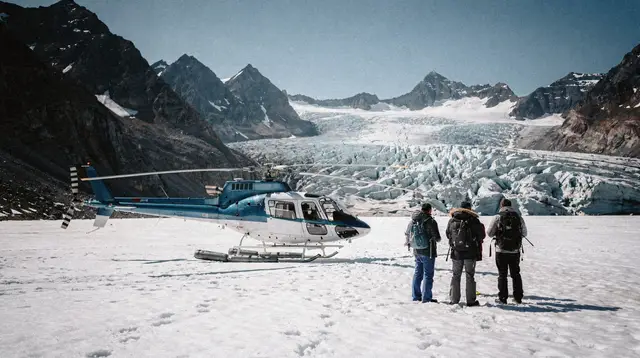
For a different vantage point on both mountains at once, a helicopter flight over the Whistler Blackcomb massif shows how the two peaks and their glaciers connect above the lift lines — see the Blackcomb helicopter tour over the ski terrain for a scenic loop, or step further out onto glacier ice itself with a glacier helicopter tour that includes a mountain landing near the peaks that feed Blackcomb’s late-season snow.
Nordic skiers and anyone wanting quiet, low-key snow time away from the lift lines should also look at Whistler Olympic Park’s Nordic terrain in the Callaghan Valley, a completely separate — and much flatter — kind of skiing from either alpine mountain.
Getting oriented before you go
Both mountain bases sit within walking distance of central Whistler Village, so choosing a side does not mean choosing where to stay — most accommodation is a short walk or free shuttle ride from either gondola. What it does affect is which base you head to first thing in the morning, since ski boots and a five-minute walk are far more pleasant than a longer one before 9 a.m.
Before booking, check current terrain status and season dates directly, since snow coverage on both mountains — and the exact days the chairlifts and gondolas run — shifts from year to year. It is also worth reading up on the best time to visit Whistler generally, and packing accordingly with our winter packing guide, since conditions on Blackcomb’s glacier terrain in particular can run noticeably colder than the village base.
Getting up each mountain: crowds, timing and lift holds
The Whistler Village Gondola is the default starting point for most visitors, which also makes it the busiest. Queues build fastest between about 8:30 and 10 a.m., and worse than usual on weekends, holiday weeks and the morning after fresh overnight snow, when everyone is chasing first tracks. The Excalibur Gondola, loading from the Upper Village onto Blackcomb, generally sees a shorter line at the same hour, partly because habit sends more skiers to the Whistler side even when their hotel sits closer to Blackcomb’s base.
On a genuine powder morning, do not assume every lift will be spinning at first chair. Ski patrol has to complete avalanche control work on the alpine terrain before opening it, and that routinely holds back the upper-mountain lifts — Peak Chair, Harmony Express and Symphony Express on Whistler Mountain, and Glacier Express and the Showcase T-bar on Blackcomb — for an hour or more after the base lifts are already running. Lower-mountain terrain opens first in that scenario, so check the posted lift status rather than heading straight for the alpine and finding the chair still on hold.
Wind affects the two mountains unevenly. The exposed upper lifts and T-bars close for wind more often than the treed runs lower down, and this hits Blackcomb’s glacier-area lifts and Whistler’s Peak Chair harder than it hits either mountain’s base terrain — worth keeping in mind if a windy forecast is the deciding factor in which side to ski.
Whistler Creekside, the resort’s third and older base a short drive south of the village along Highway 99, gives direct access onto Whistler Mountain and typically has noticeably shorter lift lines than the Whistler Village Gondola, since fewer visitors base themselves there. The trade-off is that Creekside sits apart from the main village’s shops, bars and restaurants, so it suits skiers prioritising lift access over après-ski convenience.
Parking and moving between the two bases
Paid day parking near the Whistler Village Gondola and the Excalibur Gondola fills first on weekends, holiday weeks and any morning after a fresh snowfall. Arrive after mid-morning on one of those days and it is common to be directed to an outlying lot with a shuttle bus connection, which adds time to the start of the ski day that first-timers rarely budget for. Deciding which base to drive to is worth doing the night before, based on the snow forecast, rather than improvising on arrival.
A public transit bus links Whistler Village, the Upper Village and Creekside, which is the practical way to reach the other mountain’s base without moving the car or paying for a second day of parking. On foot, the walk between the Whistler Village Gondola base and the Excalibur Gondola base through the pedestrian village takes roughly 15 to 20 minutes — manageable in ski boots but slow enough that most skiers commit to one base for the whole day rather than walking across at lunchtime. The mid-mountain PEAK 2 PEAK Gondola, covered in its own guide, is a separate way to cross between the mountains once you are already up on the lifts, not a substitute for the base-to-base walk or shuttle.
Winter tyres or chains are a legal requirement on Highway 99 between 1 October and 30 April for anyone driving up from Vancouver or Squamish, regardless of which base they are heading for, and this applies on the access road into Creekside as much as the main village exits.
Whistler Mountain vs Blackcomb Mountain: frequently asked questions
Popular Whistler experiences on GetYourGuide
Verified deep-linked GetYourGuide tours. Book through these links and we earn a small commission at no cost to you.
GetYourGuide does not provide a product photo for this activity — the image shows the meeting point, photographed by us.