Whistler Olympic Park: What to Do Beyond Downhill Skiing
What can you do at Whistler Olympic Park besides downhill skiing?
Whistler Olympic Park, in the Callaghan Valley, hosted cross-country skiing, biathlon and ski jumping at the 2010 Winter Olympics and now runs year-round as a Nordic venue. Visitors can cross-country ski and snowshoe on groomed trails, try biathlon-style shooting, watch the ski jump towers, and go ice fishing nearby. It has no downhill runs and no connection to the Whistler Blackcomb ski area.
Ask anyone planning a Whistler ski trip about “Olympic Park” and they usually mean the wrong mountain. The alpine runs, the lift tickets and the Epic Pass belong to Whistler Blackcomb, on the mountains above the village. Whistler Olympic Park is somewhere else entirely: a Nordic venue tucked into the Callaghan Valley, built for the 2010 Winter Olympics and still open to anyone who wants to ski, snowshoe or shoot a biathlon rifle without ever clipping into a downhill binding.
A Nordic Venue Built for the 2010 Games
Whistler Olympic Park was purpose-built for the Vancouver 2010 Winter Olympics, hosting cross-country skiing, biathlon and ski jumping — the Nordic combined events that never touch Whistler Mountain or Blackcomb Mountain at all. The Games also brought sliding sports to the valley, but those runs happened at the separate Whistler Sliding Centre, which still sells public bobsleigh and skeleton experiences today; if that is what you are after, it deserves its own visit and its own planning, not a stop tacked onto a Nordic afternoon here.
After the Olympics closed, the venue did not go quiet. It is now run year-round as a public recreation and training facility, used by national ski teams, junior programs and, most of the year, ordinary visitors who simply want a low-key, scenic day in the snow. The infrastructure from 2010 — the stadium, the lodge, the groomed trail network, the biathlon range, the ski jump towers — is all still standing and still doing its job.
Not Whistler Blackcomb: Getting the Two Straight
This is the mix-up worth sorting out before you book anything. Whistler Blackcomb is the alpine resort: lifts, chairlifts, groomed downhill runs, and the terrain most people picture when they hear “skiing in Whistler.” Whistler Olympic Park is a flat-to-rolling Nordic venue in a different valley, with no chairlifts and no downhill pistes at all. The two are not connected by any lift, gondola or shuttle that treats them as one destination — they are a deliberate drive apart, in the Callaghan Valley off the Sea to Sky Highway, south-west of Whistler Village.
If your plan for the day is downhill turns on Whistler Mountain or Blackcomb Mountain, this is not that guide — see our coverage of when the Whistler Blackcomb ski season opens instead. If you want the bobsleigh track from the same Olympics, that is the Whistler Sliding Centre. Everything below is what happens once you turn off the highway toward the Callaghan Valley and leave the alpine resort behind.
Cross-Country Skiing on Olympic-Grade Trails
The trail network at Whistler Olympic Park is the main draw, and it was built to Olympic competition standard, which in practice means wide, well-groomed lanes for both classic (kick-and-glide, parallel tracks) and skate skiing, laid out across rolling valley terrain rather than steep mountainside. Trails are graded by difficulty, so newcomers can stick to short, flat loops near the day lodge while stronger skiers push out onto longer routes deeper into the valley.
None of this requires prior cross-country experience. The day lodge rents skis, boots and poles, and lessons are available for people trying the sport for the first time — classic technique is genuinely approachable in an afternoon, while skate skiing takes longer to feel natural. For visitors who want something more adventurous than groomed loops, guided introductions to backcountry and off-track skiing take the sport off the set trail and onto ungroomed terrain with proper instruction on gear and avalanche-aware travel.
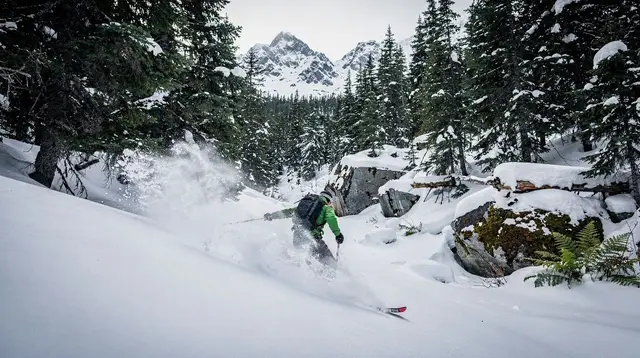
a guided introduction to backcountry skiing and splitboarding is the way to go if the groomed loops feel too tame and you want a taste of off-piste travel with an instructor managing the terrain choices, rather than heading out alone with rented gear and no local knowledge.
Try Biathlon: Skiing and Target Shooting
Biathlon — cross-country skiing punctuated by stops to shoot at a target — was one of the headline Nordic events of the 2010 Games, and the stadium and shooting range built for it are still part of the venue. For visitors, the sport is offered in an approachable, learn-to-play format: a short skiing loop combined with shooting at targets using adapted rifles, aimed at teaching the basic rhythm of the sport (raise heart rate skiing, then calm it down enough to shoot straight) rather than replicating Olympic-level competition.
It is one of the more memorable “you can’t do this everywhere” activities in the Whistler area precisely because so few places outside a former Olympic host city can offer it. Ask at the day lodge or through a guided operator about current biathlon taster sessions, since format and availability shift from one winter to the next.
Watching Ski Jumping (Without Jumping Yourself)
The ski jump towers are the most visually striking leftover from 2010 — tall, steep in-run structures rising out of the valley floor, still used by national and junior ski jumping programs for training. Visitors cannot try ski jumping themselves; it takes years of progressive training even to attempt the smaller jumps safely, and it is not offered as a drop-in activity anywhere in the world, let alone here.
What you can do is walk up to the base area and watch, when training is underway, and get a sense of scale that photos from the valley floor never quite capture. Pair it with a wander past the biathlon stadium and the cross-country stadium to see the full footprint of what the Games left behind — a fuller picture of the site’s Olympic history is in our Whistler 2010 Olympic sites guide.
Snowshoeing and an Evening on the Trails
Not every visitor wants to ski, and Whistler Olympic Park’s trail network works just as well on snowshoes. Marked snowshoe trails wind through the valley’s forest and open meadows at an easy, low-commitment pace, with none of the technique required for cross-country skiing — useful for families, mixed-ability groups, or anyone who wants to be outside in the snow without a learning curve.
The evening version adds a different kind of atmosphere: headlamp-lit trails through quiet forest, well away from the village crowds, with the valley silent except for snow underfoot.
an evening snowshoeing (or skiing) outing at Whistler Olympic Park departs from Vancouver as well as Whistler, which makes it a realistic option even for visitors basing themselves in the city rather than the resort.
Ice Fishing in the Callaghan Valley
The lakes scattered through the Callaghan Valley freeze solid enough by mid-winter to support ice fishing, and it is one of the quieter, less obvious things to do in the area — a slower-paced counterpoint to a morning spent skiing or snowshoeing. Gear, holes and technique are not things most visitors show up with, so this is realistically a guided activity rather than a do-it-yourself one.
a private ice fishing outing in the Callaghan Valley handles the equipment and the know-how, leaving visitors to sit by a hole in the ice with a hot drink and see what bites — a genuinely different pace from the rest of a Whistler itinerary.
Wildlife and Off-Season Access
Whistler Olympic Park is not only a winter story. Once the snow clears, the same valley becomes trail-running and hiking terrain, and it also sits within range of guided wildlife outings later in the year. One operator runs a bear-watching tour that includes exclusive access into the park grounds — worth flagging for anyone planning a spring or fall trip rather than a winter one, since black bear activity in the wider Whistler area peaks between roughly May and October, not in the depths of the ski season.
a guided bear-viewing tour with exclusive access to Whistler Olympic Park is worth bookmarking for a warm-season visit rather than trying to combine with a winter Nordic day — the two seasons at this venue look almost nothing alike.
Getting There and Practical Tips
Whistler Olympic Park has its own dedicated access road off Highway 99, reached from the Callaghan Valley turnoff south-west of Whistler Village — it is a drive, not a walk or a shuttle stop within the village itself. Winter tyre requirements on Highway 99 apply on the access road too, so check conditions before setting out, especially after fresh snow. Parking is at the day lodge, which also holds equipment rental, a café, washrooms and warm-up space, so it is entirely possible to arrive with no gear and leave having tried two or three activities in one visit.
For visitors without a rental car, several guided tours build the transport into the package, picking up from Whistler or even from Vancouver — a simpler option than trying to arrange a day trip independently.
| Activity | Who it suits | Gear needed | Roughly how long |
|---|---|---|---|
| Cross-country skiing (classic or skate) | First-timers to strong skiers, via graded trails | Rentals available on site | Half day to full day |
| Guided backcountry ski or splitboard intro | Visitors wanting off-track terrain with instruction | Provided on the tour | Half day |
| Biathlon taster (ski and shoot) | Anyone curious about the Olympic sport | Provided on site | 1-2 hours |
| Snowshoeing (day or evening) | Families, mixed-ability groups, non-skiers | Rentals available; evening tours provide gear | 1-3 hours |
| Ice fishing in the Callaghan Valley | Visitors wanting a slow, different pace | Provided on a guided outing | Half day |
| Ski jump viewing | Anyone curious about the Olympic venue | None — spectating only | 30-60 minutes |
When to Go
Whistler Olympic Park runs on the same snow-dependent calendar as the rest of the Sea to Sky corridor, typically operating from late November or December into spring as conditions allow, with grooming and hours adjusted through the season. Because opening and closing dates shift year to year with snowfall, check current conditions before building a day around it — the same caution that applies to when the Whistler Blackcomb lifts open and close applies here, even though the two venues run on separate schedules.
For a broader read on timing a trip to this part of British Columbia, see our guide to the best time to visit Whistler, and if driving Highway 99 yourself, our notes on driving Highway 99 in winter cover the tyre rules and closures worth knowing before you go.
Whistler Olympic Park Nordic Skiing and Biathlon: Frequently Asked Questions
Is Whistler Olympic Park the same place as Whistler Blackcomb?
No. Whistler Olympic Park is a separate, standalone Nordic venue in the Callaghan Valley, south-west of Whistler Village, reached by its own access road off Highway 99. Whistler Blackcomb is the alpine ski resort on Whistler Mountain and Blackcomb Mountain, well outside the valley, with no lifts or chairlifts connecting the two.
Can I go cross-country skiing at Whistler Olympic Park without experience?
Yes. The park grooms both classic and skate-ski lanes for all levels, and the day lodge rents equipment and offers lessons for first-timers. Guided introductions to backcountry and off-track skiing are also available for visitors who want more instruction than a self-guided lap on the groomed network.
Can visitors try the biathlon course used at the 2010 Olympics?
The biathlon stadium and shooting range built for the Vancouver 2010 Games are still part of the venue, and the site runs learn-to-play biathlon sessions that combine cross-country skiing with target shooting on adapted rifles. It is a taster format, not the competitive biathlon athletes trained on for the Olympics.
Can I try ski jumping at Whistler Olympic Park?
No. The ski jump towers built for the 2010 Games are still standing and still used by national training programs, and visitors can view them from the base area, but ski jumping is not offered as a public activity — it requires years of progressive training and is far too dangerous to try casually.
How do I get to Whistler Olympic Park from Whistler Village?
Whistler Olympic Park sits in the Callaghan Valley, reached by a dedicated access road off Highway 99 south-west of the village. It is a short drive rather than a walk or transit trip, so most visitors arrive by rental car, shuttle or a guided tour that includes transport from Whistler.
What else is there to do at Whistler Olympic Park in winter?
Beyond skiing and biathlon, the park offers snowshoeing on marked trails, including guided evening outings, and the surrounding Callaghan Valley has lakes used for ice fishing. The day lodge has a café, rentals and warm-up space, making it easy to combine two or three activities in a single visit.
When is Whistler Olympic Park open in winter?
The park typically operates from late November or December through into spring, following the same snow-dependent pattern as the rest of the Whistler area, with grooming and hours adjusted to snowfall. Exact opening and closing dates change every year, so check current conditions before planning a visit.
Is Whistler Olympic Park open in summer too?
Yes, the venue operates as a warm-weather trail network for hiking, running and mountain biking once the snow melts, but that is a different visit from the winter Nordic experience covered here and worth planning separately — see our notes on a winter trip to Whistler without skiing if a snow-season, non-alpine visit is what you are after.
Skiing & Snowboarding on GetYourGuide
Verified deep-linked GetYourGuide tours. Book through these links and we earn a small commission at no cost to you.
GetYourGuide does not provide a product photo for this activity — the image shows the meeting point, photographed by us.