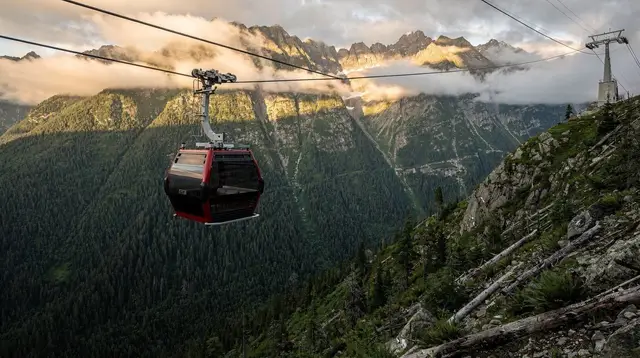
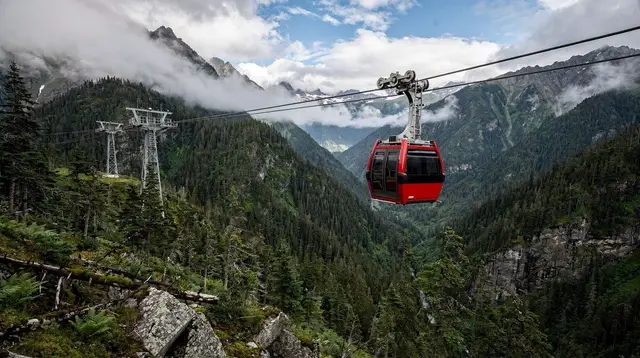
Whistler Guided E-Bike Tour with Photo Stops
Is there a bike option in Whistler for people who don't want to ride the downhill bike park?
Yes. Whistler sells a bookable guided e-bike tour that follows valley paths and forest roads with photo stops at lakes and viewpoints, at a pace suited to non-mountain-bikers. It has nothing to do with the Whistler Mountain Bike Park's lift-served downhill trails, which demand bike-specific skill and a full-face helmet.
Two very different ways to ride a bike in Whistler
Whistler is famous for one kind of cycling above all others: the lift-served downhill riding of the Whistler Mountain Bike Park, where riders load a chairlift with a full-suspension bike and descend graded dirt trails, from the green Easy Does It to the notorious A-Line. That world has its own gear, its own skill ladder and its own dedicated pages on this site — see the Whistler Mountain Bike Park beginner guide and the A-Line difficulty breakdown if that is what you are after.
This page is about the other kind of cycling in Whistler, the one that rarely gets mentioned in the same breath: a guided e-bike tour with photo stops, riding the valley’s paths and forest roads rather than the mountain’s downhill trails. It exists precisely for travelers who want to move through the Whistler landscape on two wheels without the commitment, protective gear or skill threshold of the bike park. Both activities start from the same valley in Whistler Village, and that shared starting point is exactly why they get confused. They are not the same product, they are not sold to the same rider, and mixing them up is the single easiest planning mistake to make on this subject.
What a guided e-bike tour in Whistler actually is
A guided e-bike tour is a small-group ride led by a local guide on electric-assist bicycles. The bikes look and handle much like ordinary bicycles, but a battery-powered motor adds power to each pedal stroke, which flattens out hills and headwinds and keeps the group moving at a conversational pace rather than an athletic one. The guide sets the route, controls the speed, gives a safety and equipment briefing before departure, and narrates the valley as the group rides through it — pointing out lakes, forest features and mountain views along the way.
Crucially, the route follows Whistler’s network of paved and gravel valley paths, not the mountain bike park’s dirt singletrack. There is no chairlift involved, no descent-specific braking technique to learn, and no requirement for a full-face helmet or body armor. A rider who has never set foot on a mountain bike trail can complete this tour comfortably, which is exactly the gap it is designed to fill.
a guided e-bike adventure through the Whistler valley with photo stops along the way is the most direct match for this need: a small-group ride, an electric-assist bike, and a guide who plans the stops rather than leaving riders to find their own viewpoints. A closely related option, a scenic e-bike tour with a local guide narrating the route, leans a little more on storytelling about the valley’s history and landmarks along the same style of path.
Guided e-bike tour vs the Whistler Mountain Bike Park
The confusion is understandable — both start in the Whistler valley, both put you on two wheels, and both get marketed as “Whistler biking.” The table below lays out how different they actually are.
| Guided e-bike tour with photo stops | Whistler Mountain Bike Park | |
|---|---|---|
| Terrain | Valley paths, forest roads, gentle grades | Graded downhill dirt trails on the mountain |
| Access | Ride from the valley floor, no lift needed | Chairlift access up the mountain |
| Bike type | Electric-assist bike, motor-supported | Full-suspension mountain bike, no motor |
| Skill needed | None — suitable for first-time riders | Progressive, from green to expert black trails |
| Group format | Guided group, fixed route and pace | Self-directed, riders choose their own trails |
| Typical duration | 2 to 3 hours | A half day to a full day, or a season pass |
| Season | Late spring through early autumn | Roughly late spring through early autumn |
| Photo stops | Built into the guide’s route | Not part of the experience — riders are moving |
If the goal is to see Whistler’s lakes, forest and mountain backdrops at an easy pace with someone else doing the route-planning, the guided e-bike tour is the answer. If the goal is technical downhill riding on purpose-built dirt trails, that is the Whistler Mountain Bike Park, covered separately on this site and not the subject of this page.
Who this tour actually suits
The guided e-bike tour is built for a specific traveler: someone who wants an active, outdoor morning or afternoon in Whistler without needing prior mountain biking experience, technical fitness, or protective gear. That covers a lot of ground in practice — couples looking for something more active than a village stroll, families with older children, and anyone recovering from or avoiding the physical intensity of downhill riding.
It is not aimed at experienced mountain bikers looking for a technical challenge; that rider is better served by the bike park itself, or by activities like the Squamish e-bike eco-adventure, which covers a different e-bike format on Squamish’s own trail network rather than Whistler’s valley paths. The distinction matters because “e-bike” describes the bike, not the difficulty of the ride — the same electric assist can power a gentle valley cruise or a more demanding trail ride, and this guide is specifically about the former.
Basic comfort riding a normal bicycle is the only real prerequisite. The electric motor does most of the work on any incline, so fitness level matters far less here than it does on the bike park’s climbs and technical descents.
What to expect on the day
A typical guided e-bike tour departs from a meeting point in or near Whistler Village. The guide runs through the bike’s controls — throttle or pedal-assist level, brakes, gears — and confirms helmet fit before the group sets off. From there, the ride follows a mix of valley paths, some of which overlap with the paved Valley Trail network that also serves walkers and casual cyclists around Lost Lake and Alta Lake.
Pace is set by the group and the guide, not by the individual rider, which is part of the appeal for anyone nervous about being left behind on a climb. Stops happen naturally at points of interest: a lakeside clearing, a forest opening, a spot with a clean sightline to Whistler and Blackcomb Mountains. The guide typically times these stops for photos rather than leaving riders to identify viewpoints on their own, which is the tour’s main selling point over simply renting a bike and riding solo.
Most versions of this tour run two to three hours door to door, including the safety briefing, the ride itself, and the photo stops. That makes it a half-morning or half-afternoon commitment rather than a full-day undertaking, which is one reason it pairs so easily with something else on the same day.
What the photo stops usually cover
The exact route and stops vary by guide and by day, since good guides read the group’s pace and the conditions rather than following a rigid script. That said, the general character of the stops is consistent: valley lakes such as those along the River of Golden Dreams corridor, quiet forest stretches away from the village crowds, and open points with views toward the two mountains that give Whistler its name. None of this involves climbing toward Whistler Mountain or Blackcomb Mountain itself — the ride stays on the valley floor, looking up at the peaks rather than riding on them.
Riders who want a closer, unguided look at the same general area on foot rather than by bike have the option of the Train Wreck Trail or a paddle along the River of Golden Dreams between Alta Lake and Green Lake — different pace, same corner of the valley.
Pairing the e-bike tour with something else the same day
Because a guided e-bike tour only occupies part of a day, it combines naturally with a second activity rather than standing alone. A common pairing is a midday or afternoon e-bike ride followed by a sit-down meal: a guided four-course progressive lunch tour through several Whistler Village restaurants works well as a lower-key second half to an active morning, moving between courses on foot rather than requiring more physical effort.
For travelers who want a different flavor of gentle, guided activity rather than a repeat of cycling, a guided wilderness hike around the Whistler area offers a comparable pace and skill threshold on foot instead of on a bike — useful for a multi-day stay where not every day needs to be built around the same activity. Travelers who do want more adrenaline on the same trip, just not on a bike, sometimes add a Ziptrek zipline experience with a bear-viewing component through the forest canopy as a separate half-day booking.
None of these pairings require advance coordination with the e-bike tour operator — they are independent bookings that happen to fit around each other well because each one only takes up part of a day. For a broader look at how to structure several half-day activities across a longer stay, see how many days you need in Whistler and the dedicated mountain biking getaway itinerary, which contrasts a bike-park-focused trip with a gentler, valley-based one.
Season, timing and what to check before booking
Guided e-bike tours run on Whistler’s snow-free valley paths, which generally means late spring through early autumn — the same rough window in which the Whistler Mountain Bike Park itself operates, though the two are not tied to the same schedule. Once snow covers the valley trail network, the same paths become unsuitable for e-bikes and the tour is not offered; winter visitors looking for a guided outdoor activity should look at snowshoeing or snowmobiling options instead. For a season-by-season view of what else is open and closed around the same window, see the best time to visit Whistler.
Because Whistler Village itself is pedestrian and most valley paths are shared with walkers and casual cyclists, no car is needed to reach the meeting point or to get around afterward — one more reason this tour suits travelers who have chosen to go car-free for their stay. As with any outdoor activity in the corridor, checking the day’s weather and trail conditions before setting out is worth the two minutes it takes, particularly earlier and later in the season when conditions can shift quickly.
Frequently asked questions about the Whistler guided e-bike tour
What exactly is a guided e-bike tour in Whistler?
It is a small-group ride on electric-assist bikes, led by a local guide, that follows the valley’s paved and gravel paths rather than the mountain’s downhill trails. The guide sets the pace, narrates the surroundings, and stops the group at scenic points for photos.
Is the guided e-bike tour the same thing as the Whistler Mountain Bike Park?
No, and this is the most common mix-up. The Whistler Mountain Bike Park is a lift-served downhill facility with graded, purpose-built dirt trails and protective gear requirements. The guided e-bike tour rides flat-to-rolling valley paths at a relaxed, guided pace and needs no bike-park skills at all.
Do I need mountain biking experience for the e-bike tour?
No. The tour is designed for riders with little or no off-road cycling background. Basic comfort on a bicycle and the ability to follow a guide’s instructions are enough; the electric assist absorbs most of the effort on hills.
How long does a guided e-bike tour in Whistler last?
Most guided e-bike tours around Whistler run for two to three hours including the photo stops, with a short briefing on the bike and its controls before setting off.
What will I actually see on the photo stops?
Typical stops include valley lakes, forest sections, and open viewpoints toward Whistler and Blackcomb Mountains, chosen by the guide along the way rather than a fixed checklist.
What season can I book a guided e-bike tour?
These tours run on snow-free valley paths, broadly from late spring through early autumn. Winter conditions on the valley trail network make the same route unsuitable for e-bikes.
Can I combine the e-bike tour with another activity the same day?
Yes. Because it only takes up part of a morning or afternoon, it pairs easily with a separate lunch tour, a wilderness hike, or another half-day activity booked on its own.
Is the guided e-bike tour suitable for families or older travelers?
It generally suits a wider range of ages and fitness levels than the bike park, since the terrain is gentle and the electric assist reduces physical effort, but any age or fitness restriction is set by the tour operator, not by this guide.
Mountain Biking on GetYourGuide
Verified deep-linked GetYourGuide tours. Book through these links and we earn a small commission at no cost to you.
GetYourGuide does not provide a product photo for this activity — the image shows the meeting point, photographed by us.