Paddling the River of Golden Dreams: Alta Lake to Green Lake
Can you canoe or SUP easily between Alta Lake and Green Lake in Whistler?
Yes. The River of Golden Dreams links the two lakes in a short, flat, slow-moving stretch of water that beginners paddle with no prior experience, usually taking one to two hours one way. It only works from around July to early September, once spring runoff has dropped and lake levels allow a clean launch.
The valley’s easiest paddle, but only for part of the year
Ask a Whistler local which paddle to do first and almost all of them say the same thing: the River of Golden Dreams, the short, slow-moving channel that connects Alta Lake to Green Lake through the middle of the valley. It has become the classic canoe or stand-up paddleboard route in the resort for a simple reason — it is flat, it is short, and it does not demand any prior paddling skill. That reputation is well earned, but it comes with one condition that is easy to miss when you are planning a trip from a photo online: the river only behaves this way for about ten weeks of the year, and outside that window it is either too fast, too low, or too cold to enjoy.
This guide covers what the paddle actually involves, when it works, who it suits, and what to do instead if paddling is not for you. It does not cover kayak rental in Squamish, which is a different, saltwater trip on Howe Sound with its own considerations — see Squamish kayak rental: do you need experience for that route.
What the River of Golden Dreams actually is
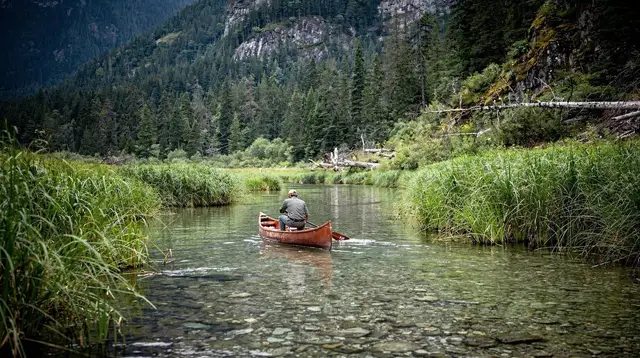
The River of Golden Dreams is a short, meandering waterway that drains Alta Lake at the north end of Whistler Village and carries that water into Green Lake, a few kilometres further along the valley floor. It is not a whitewater river in the way the name might suggest to someone unfamiliar with the area — there are no rapids on the section paddlers use, and the gradient is gentle enough that the current does most of the steering work for you rather than pushing you around.
Paddlers put in near the public access points around Alta Lake, close to Wayside Park, and follow the lake shoreline before threading into the river channel itself. The channel narrows and winds through wetland and forest, past the Train Wreck Trail area, before opening back out where it meets Green Lake. Most people paddle the route in one to two hours, though wind on the open sections of both lakes can add time, and stopping to watch birds or simply drift adds more.
How easy is it, honestly
This is a beginner route, and it earns that label. The water is flat with only a gentle current, there are no rapids, no significant obstacles under normal summer flow, and the corridor is narrow enough that navigation is straightforward — follow the channel and it takes you where you are going. Local outfitters and rental operators treat it as suitable for families, first-time paddlers and anyone who has never sat in a canoe or stood on a paddleboard before.
That said, “easy” assumes summer conditions. A few things are worth knowing before you set out:
- Wind matters more than current. Both Alta Lake and Green Lake are open water, and an afternoon breeze can make the lake crossings at either end of the river noticeably harder than the river section itself. Mornings tend to be calmer.
- The channel narrows. Sections of the river are tight enough that oncoming canoes need to pass carefully, and low branches or fallen wood can appear after a storm.
- Water levels shift through the summer. Early in the season the river carries more volume from snowmelt; later in the season it can drop enough that a loaded canoe scrapes bottom in the shallowest stretches.
None of this makes the paddle difficult in absolute terms, but it does mean this is not a route to attempt for the first time in high wind, at dusk, or with small children who cannot swim and are not wearing a properly fitted life jacket.
When to go: the season is short and non-negotiable
The single most important planning fact on this page is that the River of Golden Dreams is a summer activity, full stop. It is not paddleable, or not comfortably paddleable, for most of the year:
| Period | Conditions | Verdict |
|---|---|---|
| December – April | River partly frozen or ice-affected in places, extremely cold water | Do not paddle |
| May – June | Snowmelt runoff, higher and faster flow, cold water | Not recommended for beginners |
| July – early September | Stable, warm-enough water, gentle current, lakes swimmable | The paddling window |
| Mid-September – November | Water levels dropping, cooling fast, shorter days | Marginal, check locally before going |
The practical takeaway: plan this trip for roughly July through the first half of September. Outside that window, either skip it or check current conditions with a local outfitter before committing — do not assume a summer photograph online means the river looks the same in May or October. For a broader view of how this fits the rest of the year, see best time to visit Whistler and Whistler summer versus winter, which season.
Swimming at both ends: Alta Lake and Green Lake
Because the paddling season and the swimming season overlap almost exactly, most visitors treat this as one combined summer day rather than two separate activities. Alta Lake, on the village side, has several public beaches with roped swimming areas, and Green Lake, at the far end of the paddle, is colder and less developed but still swims well on a hot afternoon. Both lakes are generally warm enough to swim in from roughly July to early September, the same window that makes the river itself worth paddling.
A simple way to spend the day: launch from Alta Lake in the morning while the water is calm, paddle down to Green Lake, swim or picnic at the far end, then either paddle back or arrange a shuttle if you have organised one-way transport. Families sometimes do a shorter version instead, sticking to Alta Lake for swimming and a short paddle without committing to the full river crossing — see swimming with kids at Lost Lake and when can you swim and paddle Alta Lake for lake-specific detail, and is Green Lake good for paddling and swimming for the far end of the route.
Canoe, kayak or paddleboard: does it matter which you choose
All three craft work on this route, and the choice comes down to preference rather than the river demanding one over another:
- Canoe. The traditional choice, good for two people or a family, with enough space to carry a cooler or dry bag. Slightly less manoeuvrable in the tightest bends of the channel than a kayak.
- Kayak. Easier to steer through the narrower, winding sections of the river, and a natural choice for solo paddlers.
- Stand-up paddleboard (SUP). Increasingly popular on this route in calm conditions. It gives a better view over the reeds and wetland grass than sitting low in a canoe, though balance takes a few minutes to find for first-timers, and it is less forgiving if the wind picks up on the open lake sections.
Rental operators around Alta Lake typically offer all three, by the hour or for a half or full day, and can advise on current river conditions on the day — a useful check given how much conditions shift through the summer.
Not paddling? The Valley Trail follows the same corridor
Not everyone wants to get on the water, and this is one of the few paddling routes anywhere that has a genuinely good land-based equivalent running almost alongside it. Whistler’s paved Valley Trail, roughly 40 kilometres of connected path through the resort, tracks close to much of the Alta Lake to Green Lake corridor, giving walkers, joggers and cyclists a way to see the same wetlands, forest and lake shoreline without a canoe or a paddling background.
This makes the area a rare case in the valley where paddlers and non-paddlers can genuinely share a day: one half of the group paddles the river while the other walks or cycles a parallel section of trail, meeting up at Green Lake or back at Alta Lake. For a full route description, see the Lost Lake and Valley Trail walking guide, and for a short, flat option near the same area, the Train Wreck Trail makes an easy add-on either before or after paddling.
Wildlife and etiquette on the water
The wetland sections of the River of Golden Dreams are good birdwatching territory, and paddlers regularly see herons, ospreys and waterfowl along the slower stretches. Black bears are present in the Whistler valley through the warmer months and are occasionally seen along the shoreline from the water — treat any sighting the same way you would on land: keep distance, do not approach, and never offer food.
Because the channel narrows in places, basic paddling etiquette matters more here than on open water: keep right where the channel allows two-way traffic, give way to canoes coming downstream if you are working against a light current, and avoid rafting up or blocking the narrowest bends where other paddlers need to pass.
Combining the paddle with the rest of a Whistler day
A morning paddle from Alta Lake to Green Lake leaves most of the afternoon free, and plenty of visitors use it as the calm half of a more active day. If the group wants something with more adrenaline once the canoes are back on shore, a Green River whitewater rafting trip sits at the opposite end of the paddling spectrum from the gentle River of Golden Dreams and runs the same summer season. For a slower contrast on dry land, a guided wilderness hike covers forest trail rather than water and works well the same afternoon or the next day.
Families splitting the day between water and culture sometimes add a stop at the Audain Art Museum in the Upper Village, an easy, weather-proof option if the wind picks up and the paddle plan needs a backup. And for anyone who wants a completely different perspective on the same lakes and river before or after paddling them, seeing the valley from above on a scenic flight puts the whole Alta Lake to Green Lake corridor in context from the air — worth planning as a separate morning or afternoon rather than the same day as paddling, since both are best done fresh.
If a multi-day trip is being built around a quieter, water-focused stretch of the visit, see family summer week in Whistler for how this paddle fits alongside other lake and trail days, and the broader kayaking and paddling category for other water-based options in the valley. Locals who paddle this route every summer have their own take on why it stays a favourite — see the River of Golden Dreams: the paddle locals actually do for that perspective, and check the best time tool when lining this up against the rest of a trip.
River of Golden Dreams paddle: frequently asked questions
Do I need paddling experience for the River of Golden Dreams?
No. The current is gentle and there are no rapids on the classic Alta Lake to Green Lake run, so most operators and rental shops treat it as a beginner route suitable for canoes, kayaks and stand-up paddleboards alike.
How long does the paddle from Alta Lake to Green Lake take?
Most paddlers cover the river and connecting sections of the lakes in one to two hours, depending on wind, how many stops they make, and whether they paddle round trip or arrange a one-way shuttle.
When is the best time to paddle the River of Golden Dreams?
The reliable window is roughly July to early September, after spring snowmelt has eased and before autumn water levels and weather turn. Outside that window the river can be too low, too fast, or simply too cold to enjoy.
Can you swim in Alta Lake and Green Lake as well as paddle?
Yes. Both lakes are warm enough for swimming during the same broad window, roughly July to early September, making a paddle day easy to combine with time in the water at either end.
Is the River of Golden Dreams open in winter or spring?
Not in any practical sense. Spring runoff makes the current too fast and cold for a casual paddle, and by late autumn and winter the river is too low, too cold, or partly frozen. Treat this strictly as a summer activity.
Do I have to paddle to see this part of Whistler?
No. The paved Valley Trail runs alongside much of the same corridor between Alta Lake and Green Lake, so walkers and cyclists can follow a similar route on foot or by bike without getting on the water at all.
Where do you rent a canoe, kayak or paddleboard for this route?
Rental outlets sit at the public access points on Alta Lake, near Wayside Park and the River of Golden Dreams put-in, with equipment available by the hour or for a half or full day through the summer season.
Is this the same as kayaking in Squamish?
No. Squamish kayaking trips head out onto the salt water of Howe Sound, a different environment with tides and boat traffic. The River of Golden Dreams is a freshwater, no-experience-needed paddle entirely within the Whistler valley.
Kayaking & Paddling on GetYourGuide
Verified deep-linked GetYourGuide tours. Book through these links and we earn a small commission at no cost to you.
GetYourGuide does not provide a product photo for this activity — the image shows the meeting point, photographed by us.