Whistler Helicopter Glacier Landing: Cost and What to Expect
How much does a helicopter glacier landing cost near Whistler?
A helicopter tour that actually lands on a glacier near Whistler typically runs from around CAD 350 to CAD 500+ per person for a shared flight of roughly 30 to 45 minutes including 10 to 20 minutes on the ice, while a flightseeing tour with no landing costs less and runs shorter. Prices in Canadian dollars vary by operator, group size and season, so always confirm the current rate and exact flight time at booking.
Two different products: flightseeing and glacier landing
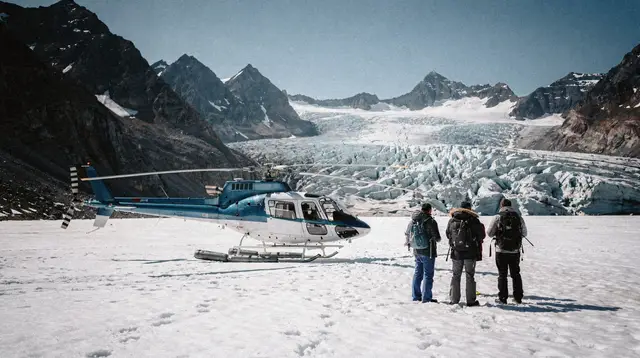
Search for a Whistler helicopter tour and two very different experiences come up side by side, priced and timed differently. A flightseeing tour stays in the air the whole time: the helicopter circles the peaks, glaciers and alpine bowls around Whistler Blackcomb for 20 to 30 minutes and lands back where it started. A glacier landing tour follows a similar route but sets down on a glacier for 10 to 20 minutes, so passengers step out onto the ice, take photos and feel the cold before climbing back in.
This guide is about the second kind: what a real glacier landing costs, how long it takes, what the flight actually shows you, and the details that trip people up when they book. If what you actually want is the view without ever touching down, the flightseeing-only version is covered in a dedicated guide rather than here, and a seaplane transfer between Vancouver and Whistler — a way of getting there, not a glacier tour — has its own page too.
Why Whistler has glaciers to land on
It is easy to think of Whistler Mountain and Blackcomb Mountain purely as a ski resort, but the terrain behind the marked runs is real high-alpine glaciated ground. Whistler Blackcomb’s terrain includes three glaciers and a vertical drop of roughly 1,500 metres from the alpine to the valley floor, which is part of why it is the largest ski area in North America by skiable acreage. Helicopter operators based near the resort use that same glaciated terrain, plus the wider Coast Mountains around it, as their landing zone — flying guests up and over ground most visitors would otherwise only see from a chairlift or a distant viewpoint.
Beyond the resort’s own glaciers, typical routes climb toward Wedge Mountain, the highest peak in Garibaldi Provincial Park, and toward the distinctive black volcanic plug of the Black Tusk, one of the most recognisable summits in the Garibaldi Provincial Park skyline and normally reached only by a long, serious hike from the ground. Seeing the Black Tusk from the air, and then landing nearby on a glacier, compresses a two-day backcountry trip into less than an hour. Exact routing depends on the operator, the day’s wind and cloud, and which glacier is in the best landing condition — pilots choose the site that day, not a fixed itinerary printed in a brochure.
What a glacier landing tour actually costs
Prices are in Canadian dollars (CAD), and this is the single detail worth double-checking before comparing options, since some search results mix in US-dollar listings from other regions. As a planning range rather than a fixed number:
| Tour type | Typical duration | Typical price per person (CAD) |
|---|---|---|
| Flightseeing only, no landing | 20–30 minutes | Lower end of the range, roughly CAD 200–300 |
| Glacier landing, shared flight | 30–45 minutes total, 10–20 min on the ice | Roughly CAD 350–500+ |
| Glacier landing plus extended alpine loop | 45–60+ minutes | Above CAD 500, rising with flight time |
| Private charter (landing) | Set by group, not per seat | Several times the shared-flight per-person rate |
These figures move with fuel costs, group size, season and which operator is flying that day, so treat the table as a way to compare product types rather than a quote. The only reliable number is the one shown at checkout for a specific date. A useful sanity check: if a listed price for a “glacier tour” looks close to the flightseeing-only range above, check the fine print for the word landing — it is common for search results to blur the two together, and the price difference is the fastest way to tell them apart before reading the details.
a glacier helicopter tour with a mountain landing near Whistler is the most direct way to book the experience described in this guide, and it is worth reading the operator’s own duration and landing-site notes before choosing a date, since conditions can shift which glacier is used.
Inside the flight: what actually happens
Check-in. Arrive earlier than the flight time itself — most operators ask for 20 to 30 minutes to weigh passengers and bags, brief the safety procedure, and assign seats by weight for balance. This is standard for small aircraft and not specific to any one company.
Take-off and climb. The helicopter lifts from a helipad in or near Whistler and climbs quickly out of the valley, giving an immediate view down onto Whistler Village and the Peak 2 Peak Gondola line strung between the two mountains — a view very few visitors get from any other angle.
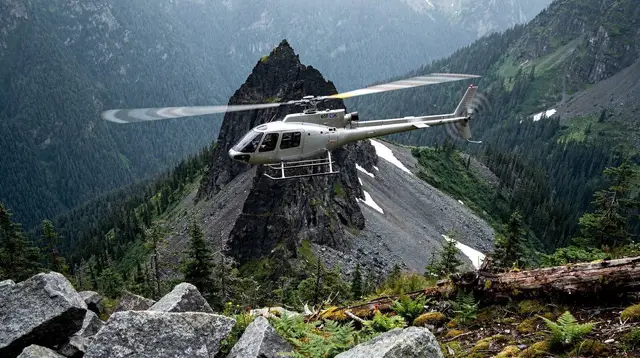
The alpine leg. The route then threads between granite peaks and glaciated bowls, typically working toward Wedge Mountain and the Black Tusk area on the edge of Garibaldi Provincial Park, with the pilot narrating landmarks over the headset intercom. This is the segment shared with flightseeing-only flights.
The landing. On a glacier landing tour, the pilot sets the aircraft down on a flat section of snow or ice chosen for that day’s conditions. Passengers step out onto the glacier for roughly 10 to 20 minutes — enough time for photos and a short guided walk on the landing pad, not a hike. Wind chill at altitude is real even on a sunny summer day, so this stop is colder than it looks in photos.
The return. The flight back generally takes a different line than the way up, giving a second set of views before descending back into the valley and landing at the helipad.
Season by season
Glacier landings run through most of the year, but the glacier itself looks different depending on when you fly. In deep winter, heavy snow cover can open up more of the surface to a soft, snow-covered landing. By late summer, more of the underlying ice and any crevasses are exposed, and pilots are more selective about exactly where they set down. Neither season rules out a landing — operators simply choose their site accordingly — but it means the postcard image of a snow-white glacier under a clear sky is more of a winter-into-spring look, while late-summer flights show more bare-ice texture and deeper blue crevasse lines.
Whatever the season, every flight is weather-dependent: wind, low cloud or poor visibility on the peaks can delay or cancel a flight at short notice, more often than a bright day in the valley would suggest. Building a free morning or afternoon around the booking, rather than scheduling it right before a flight home, avoids the worst of that risk.
What to wear, what to bring
- A warm mid-layer even in summer — wind chill at altitude on the glacier is colder than the village temperature that day.
- Closed shoes; specialist hiking boots are not needed for the short, guided walk on the landing pad.
- Sunglasses, since glare off snow and ice at altitude is stronger than it looks from the ground.
- A camera or phone, secured before boarding — most aircraft have limited space for loose bags, and cabin crew will brief exactly where to store anything not held in hand.
- Valid ID and the booking confirmation for check-in, along with a buffer of time before the scheduled departure.
How this fits around the rest of a Whistler trip
A glacier landing tour is a half-morning or half-afternoon activity, not a full day, which makes it easy to combine with time in Whistler Village, a walk around Lost Lake, or a ride on the Peak 2 Peak Gondola on the same day. Because it depends on weather, it is worth scheduling it earlier in a multi-day stay rather than on the last available morning, leaving a fallback day if the flight gets postponed.
Travellers planning the wider trip often ask how many days to allow in Whistler in the first place, and whether the resort is worth the cost relative to a shorter visit — both questions are covered in dedicated planning guides rather than here. Anyone weighing this against the resort’s other big-ticket spend, a multi-day Epic Pass lift ticket for Whistler Blackcomb, will find the two costs are genuinely separate line items in a Whistler budget, not substitutes for each other.
For visitors based in Pemberton or elsewhere along the Sea to Sky corridor rather than in the village itself, check departure points carefully: most glacier landing operators fly from a helipad in or immediately around Whistler, so factor in the drive to get there and back, and confirm exactly which base airfield is used at booking rather than assuming it matches the resort centre.
Booking notes and related tours
a Sea to Sky helicopter tour that includes a glacier landing is a good option for travellers who also want a wider look at the Sea to Sky corridor’s peaks on the same flight rather than staying focused purely on the immediate Whistler alpine.
For a route weighted more toward the Black Tusk and the glaciers closest to Garibaldi Provincial Park, a helicopter tour combining glacier landings with a Black Tusk flyover covers more of that specific terrain in one booking.
Travellers building a full Whistler and Sea to Sky day without their own car sometimes pair a helicopter segment with a guided ground tour of the corridor’s roadside stops — Brandywine Falls, the Tantalus lookout, and the towns along Highway 99 — on a separate day rather than the same one, since the two are priced and paced independently.
Frequently confused: landing tours, flightseeing, and seaplane transfers
It is worth stating plainly what this guide does not cover, because the three products get mixed up in search results. A flightseeing tour with no landing is shorter and cheaper, and has its own dedicated guide with duration and pricing specific to that product. A seaplane flight between Vancouver and Whistler is a mode of transport, not a sightseeing or landing product — it lands on water at each end and is covered separately, including how it compares to a road transfer. Neither of those is what is described on this page: everything above refers specifically to a helicopter tour where the aircraft sets down on a glacier and passengers step outside.
Whistler glacier helicopter tours: common questions
What is the difference between a glacier flightseeing tour and a glacier landing tour?
A flightseeing tour circles the peaks and glaciers without ever touching down, usually 20 to 30 minutes long. A glacier landing tour follows a similar flight path but sets the helicopter down on a glacier for 10 to 20 minutes so passengers can step out, take photos and stand on the ice. The two are priced and timed differently, and operators sell them as separate products.
How much does a Whistler glacier helicopter landing cost in Canadian dollars?
Expect roughly CAD 350 to CAD 500 or more per person for a shared glacier landing tour of 30 to 45 minutes total flight time, with private charters costing significantly more. Flightseeing-only tours without a landing are usually cheaper and shorter. Prices change with fuel costs, season and group size, so treat these as a planning range rather than a fixed number.
Which glaciers and peaks do these tours fly over?
Whistler Blackcomb has three glaciers on its own terrain, and helicopter operators based near the resort typically route flights over peaks such as Wedge Mountain, the volcanic plug of the Black Tusk, and the Fitzsimmons and Overlord icefields, landing on one of the more accessible glaciers depending on wind and snow conditions that day.
How long does a glacier landing tour actually last?
Total time from take-off to landing back at the helipad is usually 30 to 45 minutes for a standard glacier landing package, of which 10 to 20 minutes is spent standing on the glacier itself. Longer premium itineraries that add a second landing or a wider loop over Garibaldi Provincial Park can run 45 minutes to over an hour.
Is a helicopter glacier landing safe, and is there a weight or fitness requirement?
Commercial helicopter operators in the Whistler area fly under Transport Canada regulation with certified pilots and standard weight-and-balance checks at check-in, and no hiking fitness is needed since the glacier stop is a short, guided walk on a flat landing area. Flights are weather-dependent and can be postponed or cancelled for wind, cloud or visibility, so build a flexible day around the booking rather than a tight connection.
What should I wear and bring for a glacier landing?
Even in summer, wind chill on a glacier at altitude can be cold, so bring a warm layer, closed shoes and sunglasses; sturdy hiking boots are not required for the short walk on the landing pad. Cameras and phones are welcome, though loose items should be secured before boarding, and most operators weigh passengers along with any bags for the aircraft’s balance.
Can I book a glacier landing tour year-round?
Glacier landings run through most of the year, but conditions and exact landing sites shift with the season: deep winter snow can open more of the glacier surface to a soft landing, while late summer exposes more crevasses and bare ice, which operators account for when choosing where to set down. Whichever season, flights depend on the day’s weather and can be delayed at short notice.
Do these tours depart from Whistler itself or from Vancouver?
Most glacier landing helicopter tours depart from a helipad in or near Whistler, which keeps the flight time and cost focused on the glaciers and peaks around the resort. A day trip from Vancouver that includes a helicopter segment is a different, longer product, and a seaplane transfer between Vancouver and Whistler is a separate mode of transport rather than a glacier landing tour.
Helicopter & Seaplane Tours on GetYourGuide
Verified deep-linked GetYourGuide tours. Book through these links and we earn a small commission at no cost to you.
GetYourGuide does not provide a product photo for this activity — the image shows the meeting point, photographed by us.