The Stawamus Chief: Why This Granite Monolith Draws Climbers From Everywhere
Why is the Stawamus Chief a world-class rock climbing destination?
The Stawamus Chief is one of the largest granite monoliths in the world, rising about 700 m above Highway 99 near Squamish, with three distinct summits and hundreds of routes on clean, high-friction granite. Climbers have been pushing new lines here since the early 1960s, and the walls now span everything from short single-pitch routes to committing multi-pitch big-wall climbs.
One of the largest granite monoliths on the planet
Drive north from Vancouver on the Sea to Sky Highway and, just past the town of Squamish, a wall of bare granite fills the windshield. This is the Stawamus Chief, and it is not a minor local landmark: it is regularly ranked among the largest granite monoliths in the world, a single mass of rock rising about 700 m above Howe Sound and the highway at its base. For climbers, that combination — a mountain of exposed, unbroken granite standing almost directly over a paved road, less than an hour from a major international airport — is close to unique. Most walls of this size sit days from the nearest trailhead. The Chief sits a five-minute walk from a parking lot.
That accessibility, paired with genuinely excellent rock, is the whole reason the Chief has become a fixture on the world climbing map rather than a regional curiosity. This guide covers why the mountain earned that reputation: its geology, its climbing history, its three summits, and the range of routes that keep climbers coming back decade after decade. It does not cover the hiking trail that reaches the summits on foot using fixed chains and ladders, which is a separate, non-technical activity with its own guide, and it does not walk through a beginner climbing lesson step by step — guided introductions to the sport are their own experience, bookable separately.
The rock: why granite here climbs so well
The Stawamus Chief is a granodiorite pluton — a body of granite-family rock that cooled slowly, deep underground, tens of millions of years ago. Glaciers later scoured away the softer rock around it, leaving the harder pluton standing proud as a monolith. That geological history matters to climbers for a practical reason: this kind of granite tends to be strong, coarse- grained, and full of long, continuous crack systems, with a surface texture that grips rubber climbing shoes reliably even when the air is damp, which is often in this part of British Columbia.
The same forces that carved Shannon Falls next door and shaped the fjord of Howe Sound are why Squamish has world-class rock instead of the crumbling volcanic or sedimentary cliffs found elsewhere on the coast.
Unlike sandstone or limestone crags, where routes are often short and disconnected, the Chief’s granite forms faces and cracks that run for hundreds of metres in a single continuous line. That is what makes true multi-pitch climbing possible here: a party can climb for several hours, belay stance to belay stance, without ever reaching the ground.
A brief history: from first ascents to international reputation
Technical climbing on the Chief goes back to the 1950s, but the moment that put Squamish on the international map came in 1961, when climbers Jim Baldwin and Ed Cooper completed the first ascent of the Grand Wall, a long, steep multi-pitch route on the Chief’s most imposing face. At the time it was one of the hardest big walls attempted in Canada, and news of the ascent travelled through North American climbing circles quickly. Over the following decades, climbers kept adding routes — some free-climbed with hands and feet alone, others originally climbed using aid techniques (mechanical equipment to make upward progress on holds too small to grip) and later free-climbed as standards rose.
By the 1970s and 1980s, Squamish and the Chief had a reputation as a proving ground: a place where a strong local and visiting climbing community tested new gear, new techniques, and new grades, on rock that punished sloppy technique and rewarded good footwork. That reputation has held. Today the Chief carries several hundred documented routes, and it remains the anchor of a climbing culture that fills the town’s campgrounds and cafés every spring through fall.
Three summits, three different climbing experiences
Locally, the Chief is really three connected peaks, and each has a distinct identity for climbers, not just for hikers:
- The First Summit faces the highway most directly and holds many of the mountain’s most famous long routes, the Grand Wall among them — sustained, steep, and committing climbing on clean rock.
- The Second Summit sits behind the First and offers a mix of slabbier, lower-angle friction climbing alongside steeper sections, attracting a broader range of ability levels.
- The Third Summit, the highest and farthest from the road, sees fewer climbing parties and keeps a quieter, more remote feel despite being part of the same monolith.
Each summit has its own approach trail through the forest to the base of its walls, and its own microclimate of sun and shade through the day — a detail experienced local climbers plan around, since a wall in full afternoon sun in July can be uncomfortably hot while a shaded face nearby stays climbable.
Route styles: from single pitches to multi-day walls
Part of what makes the Chief a genuine destination rather than a one-route curiosity is the sheer range of what is on offer:
| Route type | What it involves | Typical climber |
|---|---|---|
| Single-pitch sport and trad | One rope-length, bolted or gear-protected, back on the ground within an hour | Visiting climbers building local mileage |
| Moderate multi-pitch | Several linked pitches, a few hours car-to-car | Confident intermediate climbers with a partner |
| Long free routes (e.g. the Grand Wall) | Ten-plus pitches, most of a day, sustained difficulty | Experienced multi-pitch climbers |
| Big-wall and aid lines | Can involve an overnight on the wall, specialised gear | Advanced and expert climbers |
This is the point worth underlining, because it is the easiest fact about the Chief to garble: the mountain’s 700 m of relief describes the monolith itself, from the highway to the summits. Individual climbing routes are measured in their own terms — number of pitches and metres of rock climbed — and even the longest free routes on the wall climb a fraction of that total relief, weaving up the steepest, cleanest sections of granite rather than going straight up the full height of the mountain. A route description quoting “300 m” or “12 pitches” is describing the climb, not the mountain.
Climbing season and conditions
The reliable climbing season on the Chief runs roughly from April to October, when the granite dries out and stays dry for stretches long enough to plan a full day on the wall. Squamish’s coastal climate means rain is common outside that window, and even in season an afternoon shower can shut down climbing on exposed faces for the rest of the day, since wet granite is markedly less secure underfoot.
Midsummer (July–August) brings the longest days and the most reliable weather, but also the most crowded classic routes and hot afternoon sun on south- and west-facing walls; many local climbers shift toward early starts or shaded lines during that stretch. Spring and fall bring cooler, often better friction conditions and thinner crowds, at the cost of a shorter usable day and a higher chance of a wet forecast.
Access, base camp, and the climbing town around it
The Chief’s walls rise directly from Stawamus Chief Provincial Park, and the approach trails to most climbing areas start from the same parking area used for the hiking trail, just off Highway 99 south of the town centre. That proximity is a large part of why Squamish built an entire climbing-focused local economy: gear shops, guiding companies, a climbing gym for rainy days, and a campground within walking distance of the crag are all clustered in a town that, a generation ago, was known mainly for logging.
Squamish itself has earned a nickname among climbers — sometimes called Canada’s answer to Yosemite — for exactly this reason: a serious granite big wall standing over a small, climbing- oriented town, rather than hours down a remote valley. The comparison is useful but not exact: the Chief is smaller in scale than Yosemite’s biggest walls, sits much closer to a highway, and sees far more rain, all of which shape a shorter season and a different climbing culture than its Californian counterpart.
For visitors who want to experience the rock without arranging their own gear, partner, and route-finding, a guided day is the most direct route onto the granite: a guided rock climbing day on Squamish granite, with equipment and instruction included is built for exactly that: climbers with little or no experience get roped up on appropriately graded rock with a qualified guide, rather than attempting to self-organise a first outing on one of the world’s more storied walls.
If you’d rather look up than climb up
Not every visitor to the Chief wants to rope up, and the mountain rewards onlookers too. The hiking trail to the summits — a separate, well-known route using fixed chains and ladders rather than ropes and harnesses — is the classic way to stand on top without technical gear: a guided hike up the Stawamus Chief summit trail runs that route with a local guide setting the pace and pointing out what to look for.
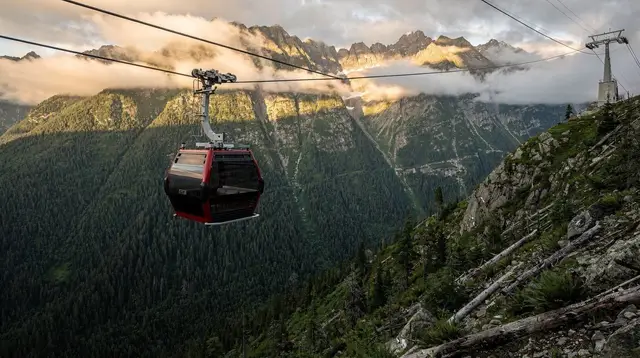
Across the highway and up the valley, the Sea to Sky Gondola lifts visitors to a viewing deck with some of the best straight-on views of the Chief’s full height, without any hiking or climbing at all — a good option for anyone travelling with people who simply want to see the wall the climbers are on.
Many visitors fold a Chief visit into a wider look at Squamish, which sits roughly halfway between Vancouver and Whistler on the Sea to Sky Highway.
A day tour built around the town’s main sights is one way to see the Chief in context alongside Shannon Falls and the harbour: a full day tour covering Squamish’s key sights, the Chief included and for a day that pairs the summit hike with something more relaxed afterward: a Stawamus Chief hike followed by a local brewery tasting combines the trail with Squamish’s small but well-regarded brewing scene, a popular way to end a day that started early on the mountain.
Climbing for beginners, without the guesswork
Because the Chief’s reputation rests on its hardest, most historic routes, first-time visitors sometimes assume the mountain is only for experts. In practice, Squamish’s guiding industry exists precisely to make the sport approachable: graded introductory routes, full equipment, and an instructor who manages the rope system mean a visitor with zero climbing background can be on real granite within an hour of arriving, on terrain chosen to suit them rather than on the Grand Wall.
A dedicated guide to that kind of first climbing day, including what to expect and how it differs from the mountain’s serious multi-pitch routes, is covered separately; the point worth knowing here is simply that the range on offer, from a single roped pitch to a full big-wall attempt, is part of what keeps the Chief relevant to every level of climber, not only the ones chasing first ascents.
Where the Chief fits on a Whistler or Squamish trip
Most visitors to Whistler reach Squamish as a stop along the Sea to Sky Highway, whether driving up from Vancouver or down from the resort for a day. Climbers with more time often base themselves in Squamish itself rather than Whistler, for the shorter walk to the wall and the town’s climbing-focused pace; anyone weighing that choice against Whistler’s own appeal can compare the two towns directly, and a two-day itinerary that pairs Whistler’s mountains with a Squamish stop is a common way to fit the Chief into a broader trip without dedicating an entire visit to it.
Frequently asked questions about climbing the Stawamus Chief
How tall is the Stawamus Chief?
The monolith rises about 700 m above the highway near Squamish. That figure describes the mountain’s overall relief, not the length of any single climbing route, which is measured separately in pitches and metres of rock.
Is the Stawamus Chief the same as the hiking trail to the summit?
No. The Chief also has a popular hiking trail with chains and ladders that reaches the summits on foot, entirely apart from the technical rock faces described here. That trail is a separate, non-technical activity.
What makes Stawamus Chief granite good for climbing?
The rock is a clean granodiorite pluton, exposed by glaciers, with a rough surface that grips climbing shoes well and forms long, continuous crack and face systems suited to both traditional and sport climbing.
When did climbing at the Stawamus Chief begin?
Technical climbing developed through the 1950s and accelerated in 1961 with the first ascent of the Grand Wall, a multi-pitch route on the Chief’s steepest face that put Squamish on the international climbing map.
How many summits does the Stawamus Chief have?
Three. Locally called the First, Second and Third summits, each has its own approach, its own cluster of routes, and its own character, from slabby friction climbing to steep, sustained walls.
Do I need to be an expert climber to try routes on the Chief?
No. Squamish has a full range of graded routes and guiding companies that run beginner-friendly, fully equipped climbing days on easier sections of rock, separate from the serious multi-pitch lines higher on the wall.
What is the best season to climb the Stawamus Chief?
Spring through fall, roughly April to October, when the granite is dry and daylight is long. Winter rain and occasional snow at the base make the rock unreliable and the approaches harder.
Is the Stawamus Chief comparable to Yosemite?
Climbers commonly draw that comparison because both offer big granite walls with long multi-pitch routes, but the Chief is smaller in scale, closer to a highway, and wetter, which shapes a distinct climbing season and style.
Climbing & Via Ferrata on GetYourGuide
Verified deep-linked GetYourGuide tours. Book through these links and we earn a small commission at no cost to you.
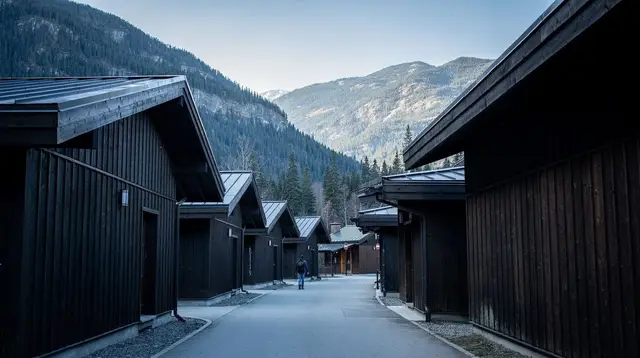
GetYourGuide does not provide a product photo for this activity — the image shows the meeting point, photographed by us.