Squamish Lil'wat Cultural Centre: A Visitor's Guide
What is the Squamish Lil'wat Cultural Centre and what will I see there?
The Squamish Lil'wat Cultural Centre opened in 2008 in Whistler's Upper Village as the joint museum of the Squamish (Sḵwx̱wú7mesh) and Lil'wat (Líl̓wat) Nations, on whose shared unceded territory Whistler stands. Inside, its two architectural forms house canoes, masks, cedar weaving, carving demonstrations and guided talks led by Squamish and Lil'wat staff, plus a short outdoor Forest Walk. It is owned and run by the two Nations themselves, not staged for visitors by an outside operator.
Two Nations, One Museum, Since 2008
The Squamish Lil’wat Cultural Centre sits in the Upper Village, a few minutes’ walk from the base of the lifts. It opened in 2008, and what it is matters more than what it looks like from the outside: it is the joint museum of the Squamish (Sḵwx̱wú7mesh) and Lil’wat (Líl̓wat) Nations, built, owned and operated by the two Nations themselves. Whistler stands on their shared, unceded territory, and the centre exists so that visitors hear that history from the people who hold it, rather than from a sign at a ski lift or a line in a brochure.
That distinction is worth stating plainly before anything else, because it is easy to misread a building like this from the road. The Cultural Centre is not a re-enactment village, not a themed attraction operated by a resort company, and not a folkloric backdrop for photographs. It is a working cultural institution: a place where Squamish and Lil’wat people present their own carving, weaving, oral history and contemporary life, on their own terms, in a building whose two halves were designed to represent each Nation’s own architectural traditions rather than a generic “Indigenous” style.
The building itself makes the two-Nations structure visible before a visitor reads a single label. One wing takes the long, low form associated with a Squamish longhouse; the other takes the round form of a Lil’wat istken, a traditional semi-subterranean pithouse. The two forms meet in the middle, which is the point: neither Nation’s building form was subordinated to the other, and the centre exists because the Squamish and Lil’wat Nations chose to tell their histories side by side rather than blended into one generic narrative.
What You Actually See Inside
Inside, the exhibits move between the historical and the current. Canoes, cedar-bark baskets, ceremonial masks and woven blankets sit alongside displays about contemporary Squamish and Lil’wat life, language revitalization and the Nations’ ongoing relationship with the land that now also holds a ski resort. Short films, told by community members, run through the day in a small theatre space. None of it is presented as something that ended in the past; the centre is explicit that Squamish and Lil’wat culture is a living, present-day thing, not an artifact from before Whistler existed.
Guided tours, led by Squamish or Lil’wat ambassadors, run through the day and are the best way to get context that the exhibit labels alone do not carry — family histories, the meaning behind specific carvings, or how a particular practice connects to a place in the Sea to Sky corridor that a visitor might drive past an hour later without knowing its significance. Live demonstrations, most often carving or weaving, happen regularly in the main hall; timing varies through the season, and it is worth asking at the desk what is scheduled the day you visit rather than assuming a fixed schedule.
A gift shop at the centre sells art and crafts made by Squamish and Lil’wat artists, which is a meaningfully different thing from a generic souvenir shop: purchases there support the artists and the Nations directly rather than an unrelated retailer using Indigenous imagery. If a carved item or print catches your eye, this is one of the more direct ways to support the people whose culture the museum represents.
The Forest Walk and Outdoor Space
Outside, a short interpretive trail called the Forest Walk loops through the trees behind the building. It is a gentle, few-minutes walk, not a hike, and it is used for outdoor teachings and traditional plant knowledge when weather and staffing allow. It is a good stop for families or for anyone who has just come off a longer day on Whistler Mountain or Blackcomb Mountain and wants something calmer before heading back into the village.
Because the centre sits inside the pedestrian Whistler Village area, there is no parking logistics to plan around if you are already staying in or near the resort core — it is a walk, not a drive, from most Upper Village hotels.
Why This Centre Is Not a Tourist Attraction Like the Others
It is worth being direct about the trap most visitors fall into with a place like this: treating it as one more stop on a checklist between the gondola and dinner. The Cultural Centre asks for something different. It is not there to entertain in the way a zipline or an evening light walk is there to entertain — it exists because the Squamish and Lil’wat Nations wanted their own history told accurately, by themselves, on the same land where a resort now brings in about three million visitors a year. Treating a visit as a quick photo stop misses the point of why the building exists at all.
This also means the centre should not be confused with, or substituted for, two other experiences that cover related but distinct ground. A separately bookable guided tour, Discover the Spirit of Whistler and First Nations Heritage, takes visitors through First Nations sites and stories across the wider Whistler area with a guide, which is a different format from a self-paced or docent-led museum visit at the centre itself — that tour has its own dedicated guide and is not covered in detail here.
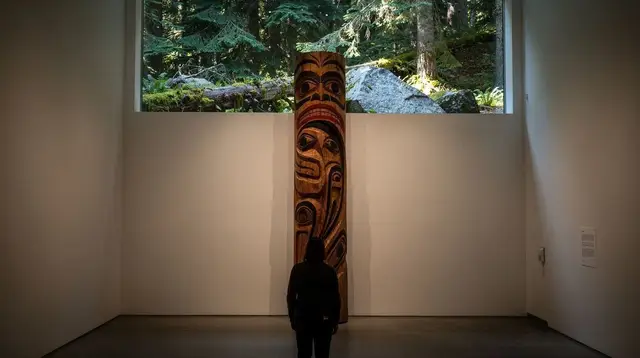
Likewise, the nearby Audain Art Museum is a separate institution with a different mandate: a privately endowed collection of British Columbian art history, including historic Northwest Coast masks, rather than the Squamish and Lil’wat Nations’ own museum about themselves. Visiting one does not substitute for the other, and neither should be described as interchangeable with the Squamish Lil’wat Cultural Centre.
Squamish Lil’wat Cultural Centre vs Audain Art Museum
Both sit a short walk apart in the Upper Village and are often mentioned in the same breath, which makes the difference worth spelling out.
| Squamish Lil’wat Cultural Centre | Audain Art Museum | |
|---|---|---|
| Opened | 2008 | 2016 |
| Owned and run by | The Squamish and Lil’wat Nations themselves | An independent, privately endowed art museum |
| Focus | The two Nations’ own history, language and present-day culture | British Columbian art history, including historic Northwest Coast masks and works by artists such as Emily Carr |
| Guides and staff | Squamish and Lil’wat ambassadors | Museum curatorial and gallery staff |
| Typical visit length | 60 to 90 minutes | Similar, often paired on the same walk |
| Outdoor component | Forest Walk interpretive trail | None |
They complement each other well as a single Upper Village morning or afternoon, but they answer different questions: one is a living institution speaking for itself, the other is a curated collection about a region’s art.
Planning a Visit: Hours, Tickets and How Long to Stay
The centre’s opening hours and admission prices change by season, so check its own website for the current schedule before you build a day around it rather than assuming it matches ski-lift hours. Tickets can be bought at the door or in advance online; advance booking is worth doing in the busier winter and summer weeks so a guided tour slot is available when you arrive rather than only a self-guided pass.
Budget at least an hour for the exhibits and a guided tour segment, and closer to 90 minutes if you also want to walk the Forest Walk and browse the gift shop properly. Because it sits inside the pedestrian Upper Village, there is no need to plan around parking or driving time — it slots easily into a morning that also includes the Audain Art Museum or a stroll along the Village Stroll.
If a museum ticket for the neighbouring gallery is on your list for the same outing, this general admission ticket to the Audain Art Museum covers that separate collection, best treated as its own stop rather than an extension of the Cultural Centre.
Pairing the Centre With the Rest of the Upper Village
A visit to the Cultural Centre pairs naturally with the rest of what the Upper Village and greater Whistler area offer around it, without needing a car for any of it thanks to the resort’s pedestrian layout.
Families travelling with children sometimes look for a hands-on craft activity to follow a museum visit; a separate, unrelated two-hour mini carving art class for kids aged eight and up in the village is one option worth knowing about, though it is a general craft workshop rather than a Squamish or Lil’wat-led program.
In the evening, once the museum day is done, the forest north of the village hosts a very different kind of nighttime experience: a multimedia night walk through the forest with light and sound installations, which some visitors combine with a Cultural Centre morning as bookends to a single Whistler day.
For visitors who want a guide-led overview of First Nations history and sites across the broader Whistler area beyond what the museum itself covers, a separate guided tour covering the spirit of Whistler and First Nations heritage sites exists as its own bookable experience — worth knowing about, though it is a different format from the self-paced Cultural Centre visit described above and has its own dedicated guide.
Beyond the museum-and-culture side of a Whistler stay, the Upper Village also connects easily on foot to things to do around Whistler more broadly, and to itinerary planning for a first Whistler visit or a longer first-timer’s trip that leaves room for a museum morning without crowding out mountain time.
Photography, Language and Visitor Protocol
Not everything inside the centre can be photographed. Some ceremonial items and works on loan carry restrictions set by the families or Nations who own them, and a sign or a guide will say so rather than leaving it to guesswork. The mistake worth avoiding is assuming a standard “no flash” museum rule covers it and photographing anyway; ask at the front desk, or of your guide, before photographing anything that looks ceremonial rather than purely decorative.
The centre also carries the two Nations’ own languages into its programming: Sḵwx̱wú7mesh sníchim, the Squamish language, and Ucwalmícwts, the Lil’wat language, appear on signage and in some guided talks alongside English, part of active revitalization work both Nations run independently of the museum itself. A guide who speaks one of these languages, when available, gives a different visit from a text-panel-only tour and is worth asking for at the desk rather than assumed.
Groups, Schools and Wet-Weather Days
The centre regularly hosts school groups and pre-booked group tours separate from individual walk-in visits. A party larger than a family should contact the centre ahead of arrival rather than expect an ad hoc guided slot, since ambassador-led tours run on a schedule shared with everyone else that day.
Because the exhibits, theatre and most of the guided route sit indoors, the centre is one of the more useful stops in Whistler on a wet or very cold day when an outdoor activity is a harder sell. Only the Forest Walk loop is weather-exposed, and skipping it shortens a visit by a few minutes rather than changing the experience. The main galleries are single-level throughout, which also makes the centre a comfortable choice for visitors travelling with a stroller or with mobility limitations, unlike several of the trail-based attractions elsewhere in the Sea to Sky corridor.
Frequently Asked Questions About the Squamish Lil’wat Cultural Centre
When did the Squamish Lil’wat Cultural Centre open, and who built it?
It opened in 2008 in Whistler’s Upper Village, developed and owned jointly by the Squamish (Sḵwx̱wú7mesh) and Lil’wat (Líl̓wat) Nations as their own institution, not a municipal or provincial museum built about them.
Is the Squamish Lil’wat Cultural Centre the same as the Audain Art Museum?
No. The Audain Art Museum, a short walk away, holds a private collection of British Columbian art including historic Northwest Coast masks. The Cultural Centre is the Squamish and Lil’wat Nations’ own museum about their living cultures, run by their own staff.
Is this a tourist attraction or a real museum?
It is a real, accredited cultural institution owned by the two Nations, not a reenactment or a show staged for tourists. The exhibits, guided tours and artist demonstrations are presented by Squamish and Lil’wat people about their own history and present-day communities.
How long should I plan for a visit?
Most visitors need at least 60 to 90 minutes to see the indoor exhibits, join a guided tour segment and walk the short outdoor Forest Walk trail. Allow longer if a carving or weaving demonstration is running.
Are the guides and staff actually from the Squamish and Lil’wat Nations?
Yes. The centre is staffed and guided by Squamish and Lil’wat ambassadors, which is part of what distinguishes it from a generic Indigenous-themed attraction run by an outside company.
Does the centre explain why Whistler sits on unceded territory?
Yes, this is central to its purpose. The centre presents Whistler and the surrounding Sea to Sky corridor as the shared, unceded territory of the Squamish and Lil’wat Nations, both before and independent of the resort’s development.
Can I combine the visit with other things to do in the Upper Village?
Yes. The Audain Art Museum, Fairmont Chateau Whistler and the start of the Village Stroll are all within a few minutes’ walk, making the Upper Village an easy half-day on foot without a car.
Museums & Culture on GetYourGuide
Verified deep-linked GetYourGuide tours. Book through these links and we earn a small commission at no cost to you.
GetYourGuide does not provide a product photo for this activity — the image shows the meeting point, photographed by us.