What Wildlife Can You See on a Howe Sound Boat Tour?
What wildlife can you actually see on a Howe Sound boat tour?
Howe Sound boat tours run on the fjord between Squamish and Vancouver and commonly spot harbor seals, bald eagles and seabirds along the shoreline. No operator promises whales or bears on this route, so treat any bigger sighting as a bonus, not the reason to book.
Someone asks it before every booking: what will I actually see out there? On Howe Sound, the honest answer sits between two extremes. It is not a whale-watching cruise, and it is not an empty stretch of water either. It is a working fjord with seals on the rocks, eagles in the trees, and a bookable tour built specifically around spotting that everyday wildlife — no bear, no orca, no promise beyond what is genuinely common out there.
Howe Sound: the fjord between Squamish and Vancouver
Howe Sound is the body of water that separates and connects Squamish from Vancouver. Squamish itself sits roughly 60 km south of Whistler on the Sea to Sky Highway, which is why most visitors think of Howe Sound as a Squamish thing, a Vancouver thing, or a stop on the drive between the two — rarely as a Whistler thing. Boats do not launch from Whistler’s lakes for this; they launch from marinas in Squamish or Vancouver, and the fjord itself is the destination.
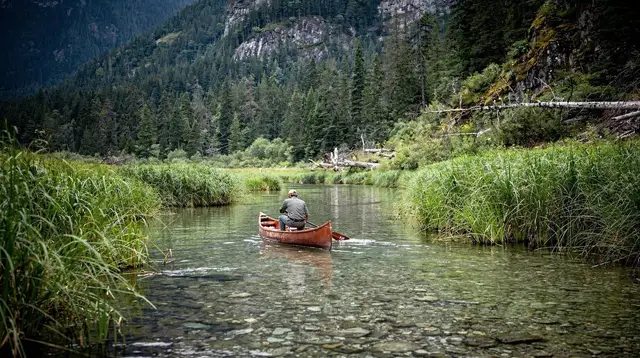
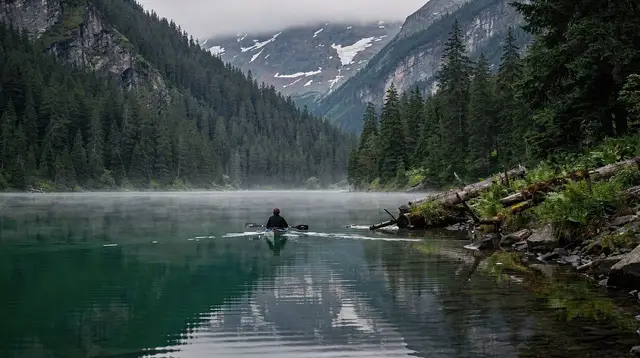
That geography matters for wildlife, because a fjord behaves differently from open ocean. Howe Sound is sheltered, lined with steep, forested shoreline, and dotted with small islands and rocky outcrops — exactly the kind of terrain harbor seals like to haul out on and bald eagles like to perch above. It is a working, lived-in body of water: log booms, ferries, fishing boats and the occasional cargo ship share it with the tour boats, and the wildlife has adapted around that traffic rather than avoiding it.
What the bookable wildlife-spotting tour actually offers
The inventory here includes a boat trip built specifically for this — the Howe Sound boat tour with wildlife spotting. It is worth reading that name literally: it is a wildlife-spotting tour, not a guaranteed-sighting tour. A guide narrates the route, points out what is visible on the day, and slows near known seal haul-outs and eagle perches, but nothing on Howe Sound is trained, fed or staged for cameras. What you see depends on the day, the tide and a fair amount of luck.
For a quieter, slower pace built more around sailing than narration, the Squamish afternoon sailing experience covers similar water at a gentler speed, which suits close-in wildlife watching. Groups wanting more space and a private schedule sometimes prefer the private yacht expedition from Vancouver into Howe Sound, which departs from the city side of the fjord rather than from Squamish.
The realistic wildlife checklist
Set expectations before the tide, wind and animals set them for you. This is what actually shows up on Howe Sound with reasonable regularity, and what does not.
| Likely to see | Possible, not guaranteed | Not part of this tour |
|---|---|---|
| Harbor seals on rocks and buoys | Harbor porpoises | Whales (any species) |
| Bald eagles perched or in flight | Sea lions | Whistler’s black bears |
| Gulls, cormorants, other seabirds | Dolphins | Orcas |
| Shoreline forest and small islands | Salmon runs (seasonal) | Grizzly bears |
Harbor seals are the most dependable sighting: they haul out on exposed rocks and navigation buoys throughout Howe Sound and are relatively unbothered by boat traffic that keeps a respectful distance. Bald eagles are common along the treed shoreline year-round, with numbers rising in late autumn and winter when salmon runs draw them in from the wider Sea to Sky corridor. Beyond those two, everything else — porpoises, sea lions, the occasional pod passing through — is a genuine bonus, not something any operator books you onto the water to guarantee.
Why this is not a whale-watching trip
It is tempting to hear “wildlife spotting” and picture a breaching whale, but nothing in the bookable Howe Sound tour promises that, and this guide will not either. Whale-watching in British Columbia is generally sold as its own specialized trip, run from ports with direct, open-water access to known whale territory. Howe Sound is a sheltered, working fjord with a very different wildlife profile — closer to shore, smaller animals, more dependable but less dramatic. If a big-animal sighting is the entire point of the trip for you, ask the specific operator directly what has been seen recently before you book, rather than assuming it from a tour title.
Why this is not the Whistler bear trip either
The other confusion worth clearing up: Howe Sound wildlife spotting has nothing to do with Whistler’s black bears. The Whistler valley holds an established population of roughly 50 black bears, seen on the ski runs, around the village and along the highway mostly from May to October — a land-based, forest-and-roadside story that plays out an hour north of Squamish. A boat on Howe Sound will not pass anywhere near that habitat.
Anyone specifically hoping to see a black bear should look at Whistler’s dedicated bear-viewing tours or read up on the best time of year to see black bears in Whistler — a completely separate activity from anything on the water. For eagles specifically, the winter Brackendale eagle run near Squamish is a stronger, more concentrated sighting than anything on a Howe Sound boat.
Boat, sail or jet: choosing the right way onto the water
Howe Sound is covered by more than one style of tour, and they are not interchangeable for wildlife watching. A slower sailboat or a modestly sized cruising boat can sit near a seal haul-out for a few minutes without disturbing it, which is exactly what the dedicated wildlife tour is built to do. A faster jet boat, like the ones covered in the Squamish jet boat guide and the Grand Loop jet boat route, prioritizes covering ground and scenery over lingering near wildlife — a great outing on its own terms, but a different one from what this page is about, and not the focus here.
For travelers who want the water experience itself, without narration built around wildlife, the Lower Mainland sailing adventure in Squamish and the 3-hour luxury sailing charter on a 50-foot yacht both put you on Howe Sound’s water without promising a wildlife checklist — seals and eagles are a likely bonus along the way, not the stated purpose of the trip.
| Style of tour | Pace | Best suited to |
|---|---|---|
| Wildlife-spotting boat tour | Slow, narrated | Seeing seals, eagles and birds up close |
| Sailing tour | Slow to moderate | A relaxed outing with wildlife as a bonus |
| Private yacht charter | Flexible, set by the group | Groups wanting space and a private schedule |
| Jet boat tour | Fast | Covering distance and scenery quickly |
Getting there and combining it with the rest of a trip
Because the tours depart from Squamish or Vancouver rather than Whistler, most visitors fold a Howe Sound boat tour into a day that already includes something else nearby. A common pattern is a morning at the Sea to Sky Gondola or a walk to Shannon Falls, followed by an afternoon boat tour before heading back up Highway 99 to Whistler, or on into Vancouver.
If Squamish and Whistler are both on the itinerary, the two-day Whistler and Squamish highlights itinerary already builds in a slot for a water-based activity like this one, and travelers deciding where to base themselves overnight can check the comparison of staying in Squamish versus Whistler. Anyone approaching from the Vancouver side without a car should also see the general guide to getting from Vancouver to Whistler, since several Howe Sound tours are sold as Vancouver departures rather than Squamish ones.
More broadly, boat and sail options on Howe Sound sit inside the site’s wider boat tours and sailing category, and everything happening specifically around the fjord — hiking, gondola, boat tours together — is grouped on the things to do in Howe Sound hub, useful for comparing this outing against a land-based day instead.
Practical tips for wildlife spotting on the water
A few habits improve the odds of a good sighting without changing the tour itself:
- Bring your own binoculars if you have them. Boats are not always close enough for a seal or eagle to fill the frame with the naked eye, and shared binoculars on board are limited.
- Dress in layers, even in summer. Howe Sound sits between mountains and open water, and it is consistently cooler and windier on the boat than on shore.
- Keep noise down near a haul-out. Guides slow the boat deliberately near seals; loud talking or sudden movement is more likely to scare them off than the engine itself.
- Morning departures tend to have calmer water. Wind typically builds through the afternoon on Howe Sound, which affects both comfort and how easy animals are to spot.
- Ask the operator what has been seen in the last few days. Wildlife sightings shift week to week; a quick question before booking sets expectations better than any guide, this one included.
Howe Sound’s recovery and what it means for sightings
Howe Sound is the southernmost fjord in North America and has been a UNESCO Biosphere Region since 2021, a designation tied directly to its recovery rather than its scenery. For most of the twentieth century the sound was degraded by industrial discharge, including copper tailings from the Britannia Mine and effluent from the pulp mill at Woodfibre, and marine life along parts of the shoreline was sparse as a result.
Clean-up work through the 1990s and 2000s brought back herring spawning grounds near Squamish and Anvil Island, and the herring run each spring now draws dense flocks of gulls and other seabirds, plus more seals following the fish, in far greater numbers than a decade ago. It is one of the few places on the coast where a boat tour can point to a documented ecological recovery rather than just describe what happens to be there. Bowen Island, the largest island in the sound, is a common landmark on the route and sometimes a stop or turnaround point depending on the operator.
Weather, sea conditions and cancellation
Howe Sound funnels wind between the mountains on either side, and afternoon outflow winds build more reliably here than on open coastal water. Operators running smaller boats and sailboats will reschedule or cancel a departure in strong wind or heavy chop rather than run it uncomfortably, so a booking is not guaranteed to go ahead exactly as scheduled, particularly in autumn and winter. Life jackets are provided on board and are standard safety equipment, not optional. Tours typically run for a set duration rather than staying out until a sighting happens, so a quiet day still ends on time.
Howe Sound wildlife, questions answered
What wildlife can you actually see on a Howe Sound boat tour?
Expect harbor seals hauled out on rocks and buoys, bald eagles perched in shoreline trees or overhead, and a mix of gulls, cormorants and other seabirds. Harbor porpoises and sea lions turn up on some outings but are far less predictable.
Will I see whales on a Howe Sound boat tour?
Possibly, but never guaranteed. Howe Sound is not a dedicated whale-watching route, and the bookable wildlife-spotting boat tour does not promise whale sightings. If seeing a whale is the goal, ask the operator directly before booking rather than assuming it from the tour name.
Can I see Whistler’s black bears from a Howe Sound boat?
No. Whistler’s roughly 50 black bears live in the forested valley around the ski resort, well inland from the water, and are typically seen from May to October on land, not from a boat on Howe Sound. Bear sightings belong to a separate, terrestrial part of a Whistler trip.
What is the best time of year for wildlife on Howe Sound?
Spring through early autumn generally offers calmer water and more daylight for spotting seals, eagles and seabirds, though bald eagles are also a strong winter draw in the wider Sea to Sky corridor. There is no single guaranteed peak month for this specific route.
Is a sailing tour or a yacht charter better for wildlife spotting?
A slower sailing tour or a smaller yacht tends to sit closer to the shoreline and moves quietly, which suits watching seals and birds. A faster jet boat covers more distance but is a different kind of outing built around speed and scenery rather than close wildlife observation.
Do I need any experience to take a wildlife boat tour on Howe Sound?
No. The bookable Howe Sound boat tour with wildlife spotting and the sailing and yacht options are guided and require no boating experience. Anyone reasonably comfortable on the water can take part.
Is Howe Sound the same place as Whistler?
No. Howe Sound is the fjord connecting Squamish to Vancouver, roughly 60 km south of Whistler by road. Boat tours on Howe Sound depart from Squamish or Vancouver, not from Whistler itself, so they are usually combined with a day in Squamish or booked as a standalone outing from Vancouver.
Boat Tours & Sailing on GetYourGuide
Verified deep-linked GetYourGuide tours. Book through these links and we earn a small commission at no cost to you.
GetYourGuide does not provide a product photo for this activity — the image shows the meeting point, photographed by us.